
Warehouse Line Painting
In Knoxville, TN
OSHA-Compliant Safety Markings
1-800-STRIPER provides professional warehouse line painting in Knoxville, TN — marking OSHA-compliant aisles, pedestrian walkways, forklift lanes, and safety zones per OSHA 29 CFR 1910.176(a) using durable epoxy and traffic paint for industrial facilities.
1-800-STRIPER® of Knoxville PROVIDes Warehouse Floor Markings Services NEAR YOU
Want your indoor space to operate more efficiently?
Warehouse and interior markings ensure clear traffic lanes, organized storage zones, and designated spaces designed to help your business operate safely and efficiently.
Benefits:
What Warehouse Line Painting Includes
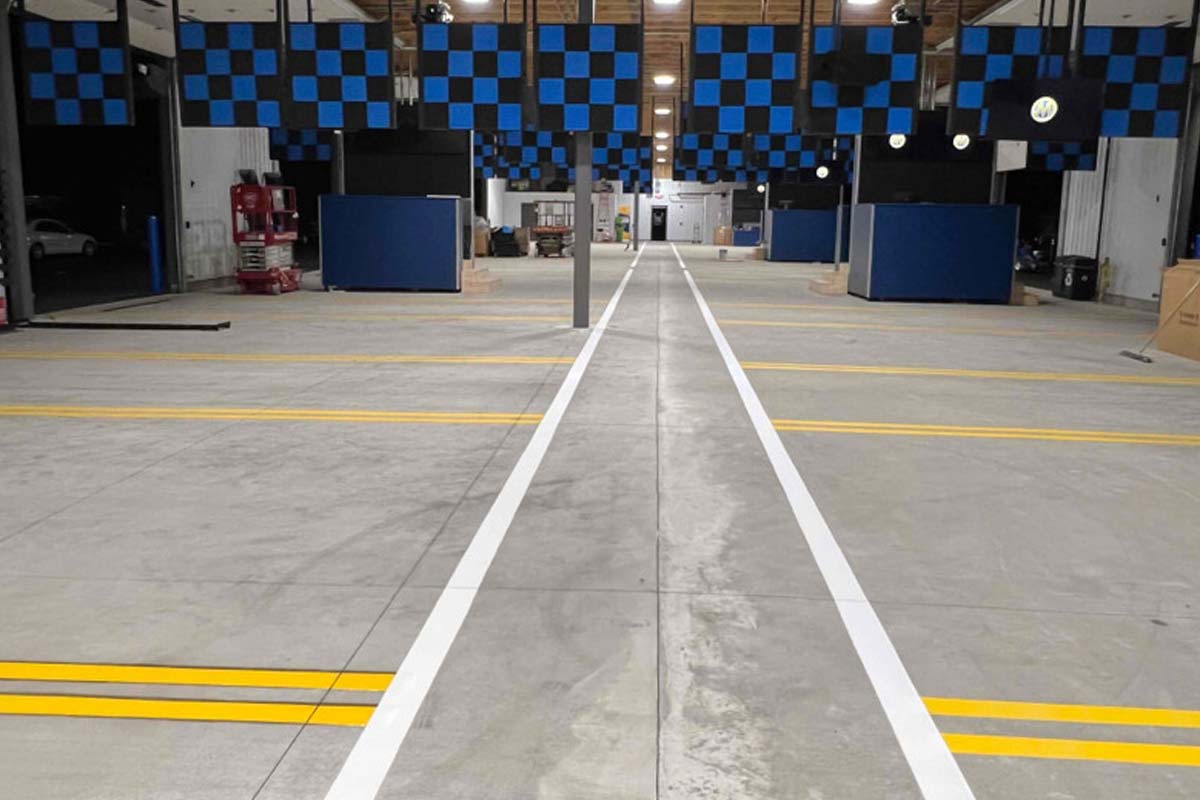
Warehouse line painting is the indoor equivalent of parking lot striping, and it does the same job: it tells everyone where to be. Inside a distribution center or plant, that means marking the aisles and passageways, the pedestrian walkways that keep people out of forklift paths, the forklift and traffic lanes themselves, and the floor zones — staging, storage, hazard, and equipment areas — that keep an operation organized.
We also lay down the specifics a working floor needs: dock and staging outlines, keep-clear zones in front of electrical panels and eyewash stations, and directional markings at blind corners. The surface matters here more than it does outdoors, so we match the coating to the traffic — durable epoxy for heavy forklift lanes, traffic paint where that is the better fit.
OSHA Aisle-Marking Requirements
The rule most warehouse managers are working under is OSHA 29 CFR 1910.176(a), and it is shorter than people expect: “Permanent aisles and passageways shall be appropriately marked.” That is the binding requirement. What it does not do is dictate a line width or a color — OSHA leaves “appropriately marked” to the facility.
That gap is worth understanding, because plenty of vendors imply a rule that is not there. There is no OSHA-mandated aisle color and no OSHA-mandated line width. What OSHA requires is that permanent aisles and passageways are marked clearly enough to be seen and kept clear. We mark to that standard and, where you want a specific convention followed, we apply a recognized one — but we will not tell you the code says something it does not.
Line Color and Marking Conventions
Since OSHA sets the requirement but not the colors, most facilities follow an industry convention so the floor reads consistently. The widely used guide is ANSI Z535.1, and a common scheme runs like this: yellow for aisleways and traffic lanes, white for equipment and workstation zones, red for defects or hold areas, and specific colors for hazards and keep-clear zones. It is a convention, not a legal mandate — but a consistent one makes a floor safer and easier for new staff to learn.
We will paint to whatever standard your operation already uses, or help you set a clean one if you are starting fresh. Consistency is the real goal: a color that means “walkway” in one aisle should mean “walkway” everywhere.
Our Warehouse Marking Process
Indoor work turns on scheduling and cure time, so we plan around your operation:
- Walk the floor. We map the aisles, walkways, lanes, and zones with you, and note the traffic each area takes.
- Pick the coating. Heavy forklift lanes get durable epoxy; lighter-traffic markings can take traffic paint. We match the product to the wear.
- Prep the slab. Coatings only bond to a clean, dry floor, so the marked areas get cleaned first.
- Mark in phases. We work zone by zone, often across a shift change or a weekend, so production keeps moving.
- Cure and hand back. We hold traffic off fresh lines until they are ready, then return the area.
Why Choose 1-800-STRIPER for Warehouse Striping in Knoxville
Warehouse floors are unforgiving — a line in the wrong place or the wrong coating gets scrubbed off by forklift traffic in weeks. We pick the coating to match the wear, prep the slab so it bonds, and phase the work around your shifts so the floor is never fully down. Just as important, we are straight about the code: OSHA requires aisles to be marked, not painted a particular color, and we mark to that requirement while following whatever convention keeps your floor consistent. Call (865) 323-1709 for a free estimate.
For a full list of our pavement marking services, visit our parking lot striping in Knoxville page.
Businesses We Serve




How it Works

GET A FREE ESTIMATE
Contact us today and we’ll have a quote to you in 24 hours

SCHEDULE A STRIPING
We’ll have your space restriped in less than 7 days, without affecting your business hours

GET A PARKING LOT THAT POPS
For a budget-friendly price, you’ll get a parking lot that looks like new
We proudly work with:


We proudly work with:


Frequently Asked Questions About Warehouse Line Painting in Knoxville, TN
Does OSHA require warehouse aisles to be marked?
Yes. OSHA 29 CFR 1910.176(a) states that permanent aisles and passageways “shall be appropriately marked.” That is a genuine requirement, and an unmarked or poorly marked aisle is a citable hazard. What the rule does not do is specify a line width or color — it leaves “appropriately marked” to the facility. We mark your aisles clearly enough to satisfy that standard and apply whatever color convention your operation follows.
What color should warehouse aisles and floor markings be?
OSHA does not mandate a color, so facilities follow an industry convention — most commonly the ANSI Z535.1 scheme, where yellow marks aisles and traffic lanes, white marks equipment and work zones, and red flags hold or defect areas. The important thing is consistency: one color should mean the same thing across the whole floor. We will match your existing scheme or help you set a clean one, but we will not claim OSHA requires a color it does not.
How wide do the aisle lines need to be?
There is no OSHA-mandated width. Common practice runs lines in the 2-to-4-inch range, with wider or doubled lines used to separate forklift lanes from pedestrian walkways where the risk is higher. The right width is driven by the traffic and how far away the line needs to be readable, not by a code number. We recommend a width based on your aisle use and keep it consistent throughout the facility.
What kind of paint holds up to forklift traffic?
For heavy forklift lanes, durable epoxy coatings hold up far better than standard paint because they bond hard to the slab and resist the scuffing and point-loading that tires create. Lighter-traffic markings — pedestrian zones, storage outlines — can use quality traffic paint. We match the coating to the wear each area takes, since putting ordinary paint under forklift tires is how markings disappear in a month.
How long before we can drive forklifts on the new lines?
It depends on the coating. Traffic paint is often ready for foot traffic within an hour and vehicle traffic within a few hours. Epoxy coatings cure harder but need longer — typically overnight to a full day for the specific product before heavy forklift traffic. We plan the marking around your schedule, usually across a weekend or between shifts, and we tell you the exact cure window for the product we are using before we start.
Can you work around our production schedule?
Yes, and we plan on it. We mark warehouse floors in phases — zone by zone, over a shift change, or across a weekend — so the operation keeps running while we work. We hold traffic off freshly coated areas until they cure, then hand each zone back as it is ready. Tell us your slow windows and dock schedule and we will build the marking plan around them rather than shutting your floor down.