Parking Lot Restriping
In Cincinnati, OH
Restripe Existing Lines and Markings
1-800-STRIPER provides professional parking lot restriping in Cincinnati, OH — refreshing faded lines, ADA stalls, fire lanes, and directional arrows using Sherwin-Williams Fast-Dry Traffic Paint and Graco LineLazer equipment for commercial properties across the Greater Cincinnati metro area.
1-800-STRIPER of Cincinnati PROVIDes Restriping Services NEAR YOU
Need to brighten up your faded parking lot?
Keep your parking lot safe and attractive by restriping annually to freshen up lines and symbols that have faded from the sun, weather, and traffic. Nothing beats a fresh coat of paint!
Benefits:
Parking Lot Restriping in Cincinnati, OH
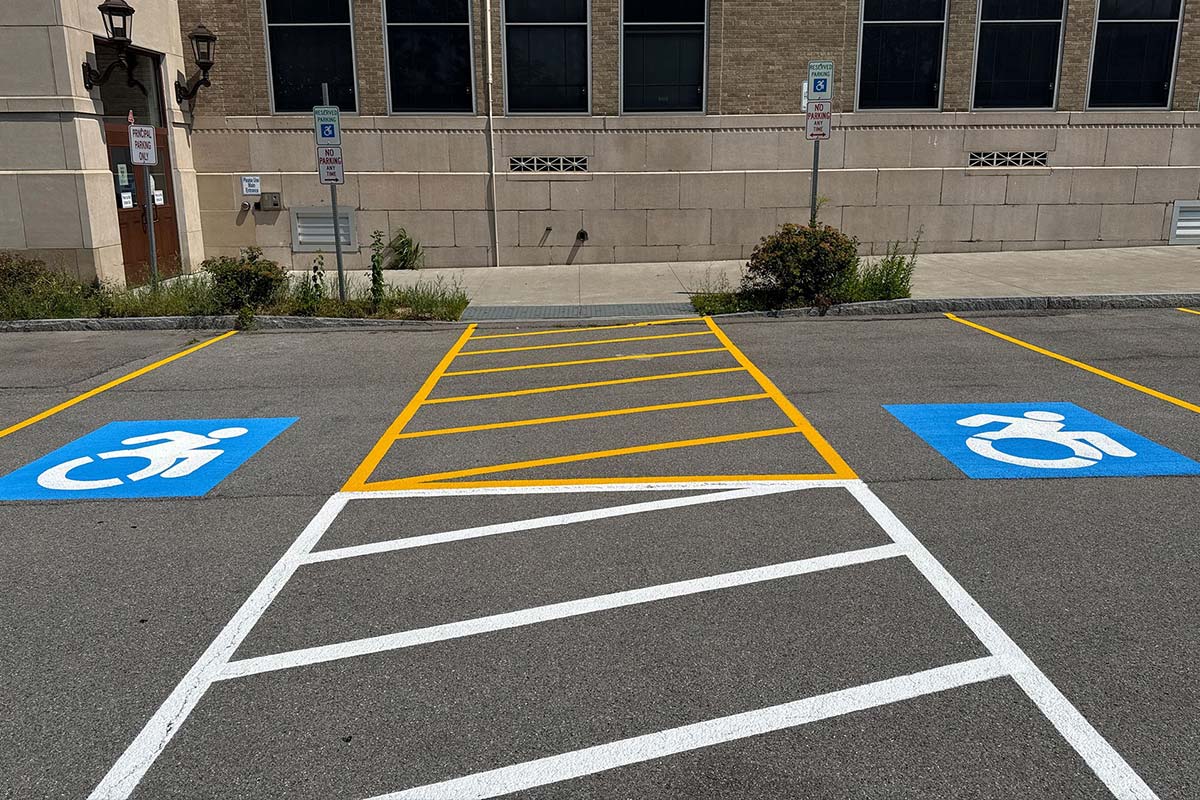
Restriping refreshes the lines on an existing lot — the stalls, ADA spaces, fire lanes, and directional arrows that have faded, worn, or fallen out of compliance. We restripe commercial lots across Greater Cincinnati, either refreshing the current layout as-is or correcting accessibility and traffic-flow issues during the same job.
Faded lines do more than look neglected. They cost you ADA compliance at the stall borders, they slow traffic when arrows and aisles disappear, and they signal deferred maintenance to every tenant and customer who pulls in. Restriping is one of the highest-visibility, lowest-disruption improvements on a property manager’s list — a lot that reads as tired one week reads as well-managed the next.
When to Restripe — Fading, Wear, and Compliance
The signal to restripe is usually visual — stalls, arrows, and crosswalks have faded to “ghost lines” you can barely see. But three separate pressures drive the decision. Fading and wear are the obvious one, accelerated in Cincinnati by winter salt and plowing. Compliance is the one that catches owners off guard: faded ADA stall borders, worn ISA symbols, and washed-out fire-lane markings can put a lot out of code and expose it to complaints or citations. And appearance is the one tenants notice — crisp lines read as a managed property.
A good rule of thumb for the Cincinnati climate is one to three years between restripes, shorter for high-traffic retail and medical lots, longer for low-traffic church and office lots. If your ADA stalls or fire lanes are fading, that clock moves up regardless of the rest of the lot, because those are the markings that carry legal weight.
Ohio’s Freeze-Thaw Cycle and Line Durability
The reason Cincinnati lots restripe more often than lots in milder climates is the freeze-thaw cycle. Greater Cincinnati runs through dozens of freeze-thaw transitions each winter — the temperature crosses freezing, moisture in the pavement expands and contracts, and the surface flexes under it. Layered on top of that are the deicing salt and the snowplow blades that scrape directly across painted lines all winter.
The combination degrades traffic paint faster than sun and rain alone. Retroreflectivity — how visibly the lines read at night and in the wet — drops first, then the paint itself abrades and thins. The ADA stall borders and fire-lane edges tend to fail first because they often sit at curb edges where plow blades hit them. This is why a lot striped in the summer can look tired by its second winter, and why the Cincinnati repaint cadence runs shorter than a national average would suggest. Choosing durable traffic paint and a clean surface prep is what stretches the interval as far as the climate allows.
What We Restripe — Lines, ADA Stalls, Fire Lanes, and Arrows
A restripe covers everything painted on the lot:
- Standard stalls — the parking lines themselves, refreshed on the existing layout or adjusted if you want to change capacity.
- ADA accessible spaces — stalls, access aisles, and ISA symbols brought back to 2010 ADA Standards dimensions.
- Fire lanes — curb paint and “No Parking — Fire Lane” stenciling refreshed to the local fire marshal’s requirement.
- Directional markings — arrows, stop bars, crosswalks, and loading-zone markings, following MUTCD pavement-marking conventions for color and pattern.
- Curb and safety markings — painted curbs, no-parking zones, and hazard markings.
Restriping is also the natural moment to correct problems — add a van-accessible stall that was missing, widen an access aisle that was under-dimensioned, or fix a confusing traffic pattern — because the crew and equipment are already on site.
Our Restriping Process
Our restriping work follows a five-step sequence that gets most lots done in a single day.
- Assessment. We walk the lot, count the existing stalls, and check the ADA spaces and fire lanes against current code so we can flag anything worth correcting during the restripe.
- Surface prep. We power-sweep the full lot to clear dirt, sand, and loose salt residue; heavily oil-stained areas get a pressure wash. Paint bonds to clean pavement and nothing else.
- Layout. We chalk the lines from the existing ghost lines, re-measuring ADA stalls and access aisles to confirm dimensions.
- Paint. We stripe with Graco LineLazer equipment and Sherwin-Williams Fast-Dry Traffic Paint — standard stalls in white, fire lanes in the required color, arrows and curbs per MUTCD conventions.
- Cure and reopen. The paint dries to the touch quickly and is traffic-ready in about an hour in warm, dry conditions, so most lots reopen the same evening.
For larger lots we stage the work in sections so the property stays operational during the restripe.
Paint and Equipment We Use
The equipment-and-paint combination matters more on restriping than on new work, because a restripe has to register exactly on the existing line locations without drifting off the ghost lines.
We stripe with Graco LineLazer airless line stripers — ride-on and walk-behind — which hold a straight, consistent line across the irregular asphalt textures common on older Cincinnati-area lots. Paint is Sherwin-Williams Fast-Dry Traffic Paint, a fast-drying traffic marking paint built for parking-lot service that sets quickly and cuts a sharp line edge, which matters when new lines have to cleanly overwrite faded ones. For color and pattern conventions — white for stalls, yellow where it applies, and the standard arrow and stop-bar shapes — we follow the MUTCD, the national reference for pavement marking. Durable paint on a properly prepped surface is what determines how long the restripe lasts before the freeze-thaw cycle brings you back.
For a full list of our pavement marking services, visit our parking lot striping in Cincinnati page.
Businesses We Serve




How it Works

GET A FREE ESTIMATE
Contact us today and we’ll have a quote to you in 24 hours

SCHEDULE AN INSTALLATION
We’ll have your installation scheduled in less than 7 days, without affecting your business hours

GET A PARKING LOT THAT POPS
For a budget-friendly price, you’ll get a parking lot that looks like new
We proudly work with:


We proudly work with:

Frequently Asked Questions About Parking Lot Restriping in Cincinnati, OH
How often should a Cincinnati lot be restriped?
Plan on every one to three years for most commercial lots, shorter for high-traffic retail and medical parking and longer for low-traffic church and office lots. The Cincinnati climate pushes the interval toward the short end — freeze-thaw cycling, deicing salt, and snowplowing wear traffic paint faster than sun and rain alone. If your ADA stalls or fire lanes are fading, restripe sooner regardless of the rest of the lot, since those markings carry legal weight.
Why do lines fade faster in Ohio?
The freeze-thaw cycle. Greater Cincinnati crosses the freezing point dozens of times each winter, and the moisture expansion, deicing salt, and snowplow blades that come with it abrade painted lines directly. Retroreflectivity fades first, then the paint thins, and the ADA and fire-lane markings at curb edges usually fail earliest because plow blades hit them. A lot striped in summer can look worn by its second winter.
Do you restripe over existing lines or remove them first?
Usually we restripe directly over the existing lines when the layout is not changing — the ghost lines guide the placement and the new paint overwrites them. When the layout is changing, or when old lines would show through and cause confusion, we black out or remove the old markings first so the new layout reads cleanly. We decide which approach fits during the assessment.
How long does restriping take?
Most lots restripe in a single day. The exact time depends on the size and complexity — a straightforward refresh of a mid-size lot is a few hours of striping after prep, while a large retail or distribution lot may run longer. For big lots we stage the work in sections so the property stays open while we move through it.
Can you restripe ADA stalls and fire lanes?
Yes — both are core to a restripe. We bring ADA accessible spaces, access aisles, and ISA symbols back to 2010 ADA Standards dimensions, and we refresh fire-lane curb paint and “No Parking — Fire Lane” stenciling to the local fire marshal’s requirement. Restriping is the natural time to correct any accessibility gaps, since the crew is already marking the rest of the lot.
What paint do you use for restriping?
Sherwin-Williams Fast-Dry Traffic Paint applied with Graco LineLazer equipment. Fast-Dry is a fast-drying traffic marking paint that sets quickly and cuts a sharp edge, which is what lets new lines cleanly overwrite faded ones. For line colors and the arrow and stop-bar shapes we follow MUTCD pavement-marking conventions.