Fire Lane Striping
In Cincinnati, OH
Code-Compliant Fire Lane Markings
1-800-STRIPER provides professional fire lane striping in Cincinnati, OH — marking compliant fire lanes, curbs, and no-parking zones per the Ohio Fire Code (OAC 1301:7-7-05) for commercial properties throughout Hamilton, Butler, Warren, and Clermont counties.
1-800-STRIPER® of Cincinnati PROVIDes Fire Lane Striping Services NEAR YOU
Is your parking lot ready for first responders?
Our team is well-versed in local fire regulations and will parter with you to design a fire lane striping plan that creates unobstructed emergency access to protect your customers and property.
Core Services:
Fire Lane Striping in Cincinnati, OH
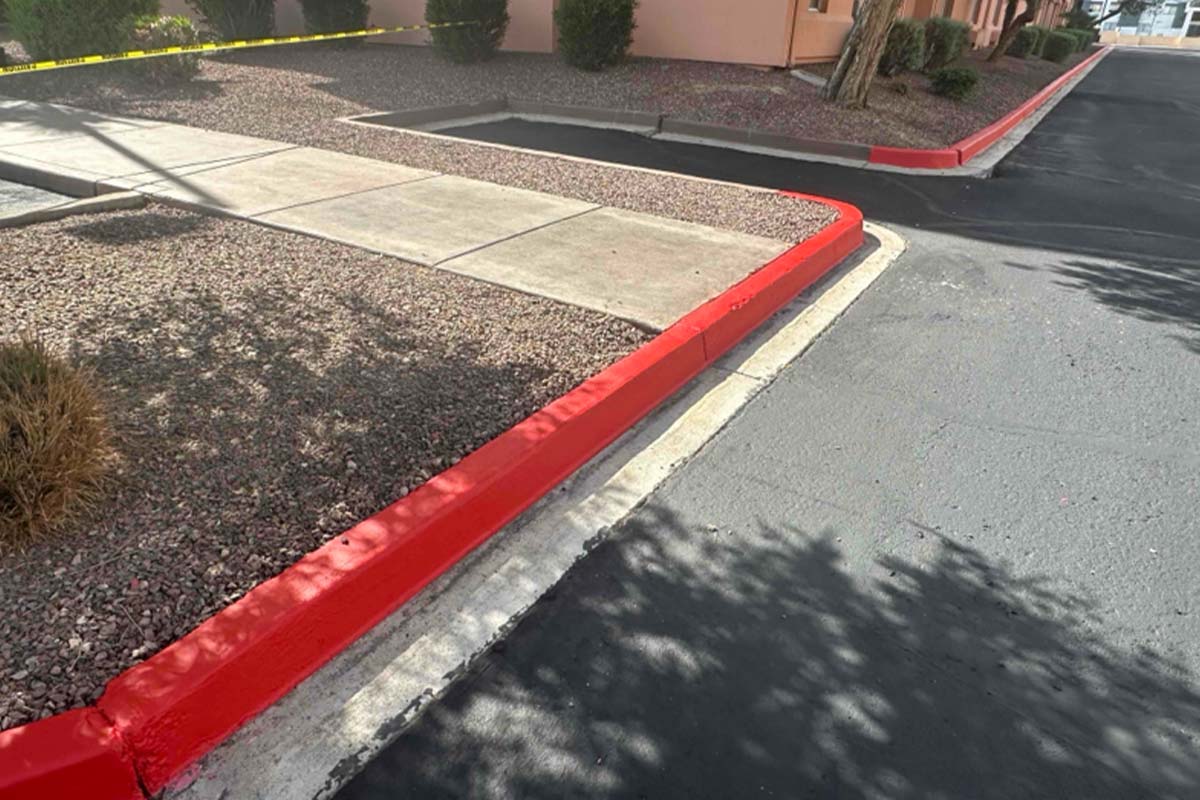
Fire lane striping keeps emergency access clear and keeps your property on the right side of the fire marshal. We mark fire apparatus access roads, paint and stencil “No Parking — Fire Lane” curbs and pavement, and lay out the no-parking zones that Cincinnati-area fire officials require on commercial properties.
A fire lane is not just a red stripe. It is a legally required, unobstructed path that fire trucks use to reach the building, and both the width of that path and the way it is marked are governed by code. Get the marking wrong and you fail inspection; leave it faded and you invite a citation the next time an inspector drives the lot. We handle the striping side of that requirement across Hamilton, Butler, Warren, and Clermont counties — new installations on freshly paved lots and refreshes on lanes that have worn down under Cincinnati winters.
Fire Lane Marking Requirements Under the Ohio Fire Code
Fire lane requirements start with a model code, get adopted at the state level, and get enforced locally. The International Fire Code is the base document. Ohio adopts it — with amendments — through the Ohio Fire Code (OAC 1301:7-7), administered by the Division of State Fire Marshal.
The core dimensional rules are consistent statewide. A fire apparatus access road has to be at least 20 feet of unobstructed width with 13 feet 6 inches of vertical clearance, and it must reach within 150 feet of all portions of the building’s exterior as measured around the outside of the structure (OAC 1301:7-7-05, mirroring IFC §503). Those numbers are why a fire lane cannot double as an overflow parking row — a parked car narrows the lane below the 20-foot minimum and the access is no longer code-compliant.
What the state code does not fix is the exact color and wording of the markings. The Ohio Fire Code delegates that to the local fire code official — in practice, the county or city fire marshal with jurisdiction over your property. That is why the striping has to be planned around the specific requirement your inspector enforces, not a one-size-fits-all template.
Where Fire Lanes Are Required on Commercial Properties
Fire lanes are required wherever a fire code official determines that emergency apparatus needs guaranteed access — and on most commercial properties, that is anywhere the building sits back from a public street. The common Cincinnati-area sites are apartment and condominium complexes, shopping centers and strip retail, warehouses and distribution centers, schools, medical facilities, and large office parks.
The determination is made by the authority having jurisdiction, usually at plan review or at the certificate-of-occupancy inspection. If your property was built before the current code edition, an inspection or a change of use can trigger a requirement to add or re-mark fire lanes that were not there originally. When we quote a fire-lane job, the first step is confirming what your local fire marshal actually requires — how much curb, which access roads, and what wording — so the striping passes on the first inspection.
Our Fire Lane Striping Process
Our fire-lane work follows a clear sequence built around the inspection at the end of it.
- Requirement check. We confirm the marking the local fire code official requires — lane locations, curb color, stencil wording, and sign placement — before any paint goes down.
- Layout. We chalk the fire-lane boundaries and curb runs against the required access-road width so the painted lane holds the 20-foot minimum.
- Surface prep. We power-sweep the pavement and curbs; clean asphalt and concrete are what durable fire-lane paint needs to bond.
- Curb and pavement paint. We paint the curbs and any pavement striping in the required color using durable traffic paint built for high-visibility markings.
- Stenciling. We stencil “No Parking — Fire Lane” wording at the code-required intervals along the lane.
- Walkthrough. We confirm the finished markings match the fire-code requirement before we leave, so the property is ready for inspection.
Paint, Curb Markings, and “No Parking” Stenciling
The visible parts of a fire lane are the curb color, the pavement stencils, and the signage — and all three follow the local fire code official’s requirement. Across most Cincinnati-area jurisdictions that means red curbs with white “No Parking — Fire Lane” lettering, repeated along the lane at the intervals the fire marshal sets, but the exact color and wording are the AHJ’s call, which is why we confirm it before painting.
We use durable traffic paint formulated for curb and pavement markings so the red holds its color and the white lettering stays legible through the freeze-thaw and salt cycle. Stencils are cut to the standard “No Parking — Fire Lane” wording and spaced along the curb so the lane reads clearly from a driver’s approach. Where the fire marshal also requires posted signs, we coordinate the pavement markings with the sign placement so the two line up.
Fire Marshal Sign-Off Across Greater Cincinnati
Fire-lane sign-off is a local decision, and our four-county footprint spans multiple authorities having jurisdiction. Properties in Hamilton, Butler, Warren, and Clermont counties answer to their respective county or municipal fire marshals, and each jurisdiction enforces the Ohio Fire Code with its own local requirements for curb color, stencil wording, and sign spacing.
Because the marking standard is set locally, the practical value of hiring a striper who works across Greater Cincinnati is that the layout is planned around the requirement your specific inspector enforces — not a generic template that passes in one township and fails in the next. We plan every fire-lane job around the sign-off at the end of it, so the markings are right the first time.
Why Cincinnati Businesses Choose 1-800-STRIPER
Cincinnati property owners and managers choose us for fire-lane work because we treat it as a compliance job, not just a paint job. We plan the markings around the local fire code official’s requirement, we use durable traffic paint that survives the Ohio winter, and we cover the full four-county Greater Cincinnati footprint.
We hold a five-star rating on Google from local Cincinnati customers, and every job starts with a free estimate. Whether you need a full fire-lane installation on a new lot or a refresh on faded markings before an inspection, we mark the lanes, paint the curbs, and stencil the no-parking zones so your property is ready to pass.
For a full list of our pavement marking services, visit our parking lot striping in Cincinnati page.
Businesses We Serve




How it Works

GET A FREE ESTIMATE
Contact us today and we’ll have a quote to you in 24 hours

SCHEDULE AN INSTALLATION
We’ll have your installation scheduled in less than 7 days, without affecting your business hours

GET A PARKING LOT THAT POPS
For a budget-friendly price, you’ll get a parking lot that looks like new
We proudly work with:


We proudly work with:


Frequently Asked Questions About Fire Lane Striping in Cincinnati, OH
What color must fire lanes be in Ohio?
The Ohio Fire Code delegates the exact color and wording of fire-lane markings to the local fire code official — the county or city fire marshal with jurisdiction over your property. In practice, most Cincinnati-area jurisdictions require red curbs with white “No Parking — Fire Lane” lettering, but because it is an AHJ decision, we confirm the specific requirement for your address before we paint rather than assuming a statewide standard color.
Who enforces fire-lane markings in Cincinnati?
Enforcement is local. Your property answers to the fire code official for its jurisdiction — a county or municipal fire marshal in Hamilton, Butler, Warren, or Clermont County. That official sets the marking requirement, conducts the inspection, and issues any citation for faded or non-compliant fire lanes. The Ohio Fire Code (OAC 1301:7-7) is the state framework they enforce, adopted from the International Fire Code with Ohio amendments.
What width does the fire code require for fire lanes?
A fire apparatus access road must have at least 20 feet of unobstructed width and 13 feet 6 inches of vertical clearance, and it must reach within 150 feet of all portions of the building (OAC 1301:7-7-05, mirroring IFC §503). That 20-foot minimum is why fire lanes cannot be used for parking — a single parked vehicle narrows the lane below code.
Do fire lanes need “No Parking” stenciling?
Yes, where the fire code official requires it — and on most commercial properties they do. Fire lanes are typically marked with a combination of painted curbs, “No Parking — Fire Lane” pavement or curb stenciling, and posted signs, spaced along the lane at intervals the fire marshal sets. We handle the pavement and curb markings and coordinate them with any required signage.
How often should fire-lane markings be repainted?
Repaint whenever the markings fade or become illegible — and in the Cincinnati climate that is usually every one to two years on active lots. Freeze-thaw cycling, deicing salt, and snowplow blades wear curb paint and stencils faster than weather alone would. Since faded fire lanes are a common citation at inspection, most managers refresh them proactively rather than waiting for a failed inspection.
Can you mark curbs and add signage too?
Yes. Fire-lane work is usually a package — painting and stenciling the curbs, striping the pavement where required, and coordinating the placement of posted “Fire Lane / No Parking” signs so the pavement markings and signage line up. We build the whole job around the local fire marshal’s requirement so it passes inspection.