Wheel Stop Installation
In Grand Rapids, MI
Concrete and Rubber Parking Stops
1-800-STRIPER provides professional wheel stop installation in Grand Rapids, MI — anchoring concrete, recycled-rubber, and plastic-composite wheel stops at stall heads to protect sidewalks, storefronts, and ADA accessible routes for commercial properties across Kent and Ottawa counties.
1-800-STRIPER® of Grand Rapids PROVIDes Wheel Stops Services NEAR YOU
Need to protect vehicles or walls from accidental damage?
Wheel stops (also called parking blocks) protect your property, enhance safety, and improve parking lot organization.
Benefits:
Wheel stops prevent vehicles from parking too far into a space or overextending into other spots, pedestrian walkways, and other areas, while also helping with vehicle alignment. They can prevent damage to buildings, curbs, or landscaping. Wheel stops also serve as clear visual cues for proper parking and are sometimes used on slopes to prevent cars from rolling.
Wheel Stop Installation in Grand Rapids, MI
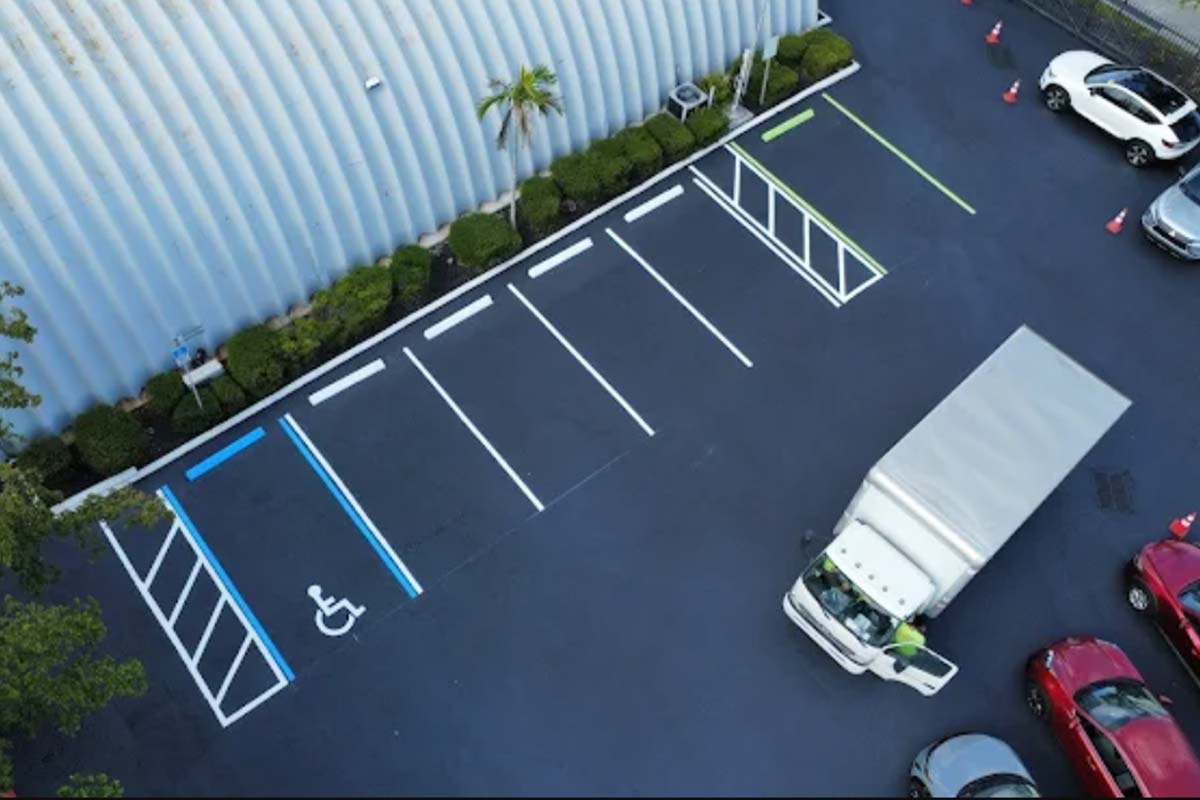
Wheel stops keep parked cars from over-pulling into sidewalks, storefronts, landscaping, and the next stall. We supply and install concrete, recycled-rubber, and plastic-composite wheel stops on commercial lots across Grand Rapids and West Michigan, anchored to stay put through winter. Set at the head of a stall, a wheel stop protects pedestrians and property, defines the parking, and is often used at accessible spaces to keep vehicles from encroaching on the route — small hardware that prevents expensive damage.
Concrete vs Rubber vs Plastic-Composite
The material sets the trade-off between weight, longevity, and winter durability.
| Material | Strengths | Considerations |
|---|---|---|
| Concrete | heavy, rigid, low cost | can crack or spall over years of freeze-thaw |
| Recycled rubber | won’t crack, resists salt, easy to replace | lighter; relies on solid anchoring |
| Plastic composite | corrosion- and salt-proof, consistent color | lighter; relies on solid anchoring |
Many Michigan properties choose rubber or composite for winter durability, and we help you weigh cost, longevity, and appearance for your lot.
ADA and Accessible-Route Placement
Wheel stops aren’t always required, but they’re commonly placed at accessible spaces to keep vehicle overhang from reducing the clear width of the accessible route or the access aisle. The 2010 ADA Standards for Accessible Design require accessible routes to stay clear, so when wheel stops are used near accessible parking we set them to protect that clearance rather than intrude on it. Correct placement keeps the route usable for wheelchairs and mobility devices.
Michigan Frost-Heave Anchoring
Anchoring is what keeps a wheel stop from sliding or being shoved out of line, and Michigan winters test it. Wheel stops are pinned to the pavement with steel spikes or bolts through pre-formed holes into asphalt or concrete; frost heave and plow contact can loosen a poorly anchored stop, so we use adequate pin length and placement for the surface. Asphalt generally takes a longer spike than concrete because it’s softer and moves more with the frost. Proper anchoring is the difference between a wheel stop that holds for years and one that wanders across the stall by spring.
Our Wheel Stop Installation Process
- Confirm layout and placement. We set wheel stops from the same stall layout as the striping, positioned so a parked vehicle stops short of the sidewalk, curb, or accessible route rather than overhanging it — typically a couple of feet back from the stall head.
- Choose the material. We help you pick concrete, recycled rubber, or plastic composite based on traffic, budget, appearance, and how the material handles Michigan freeze-thaw.
- Drill and pin. We drill through the pre-formed holes and anchor each stop with steel spikes or bolts sized for asphalt or concrete, so the stop stays put through plowing and frost.
- Align and inspect. We square each stop to the stall line and check that placement stays consistent from one space to the next.
Because we can install wheel stops on the same visit as striping or restriping, the stalls and the stops line up the first time instead of being set by two different crews on two different days.
For a full list of our pavement marking services, visit our parking lot striping in Grand Rapids page.
Businesses We Serve




How it Works

GET A FREE ESTIMATE
Contact us today and we’ll have a quote to you in 24 hours

SCHEDULE AN INSTALLATION
We’ll have your installation scheduled restriped in less than 7 days, without affecting your business hours

GET A PARKING LOT THAT POPS
For a budget-friendly price, you’ll get a parking lot that looks like new
We proudly work with:


We proudly work with:


Frequently Asked Questions About Wheel Stop Installation in Grand Rapids, MI
What are wheel stops and why install them?
Wheel stops (parking blocks or curb stops) are anchored at the head of a stall to keep vehicles from over-pulling into sidewalks, buildings, landscaping, or adjacent spaces. They protect pedestrians and structures and help define parking, and they’re often used at accessible spaces to protect the route. We install them squarely and anchor them to stay put.
Should I choose concrete, rubber, or plastic wheel stops?
Concrete stops are heavy and rigid and hold up well but can crack over years of freeze-thaw; recycled-rubber and plastic-composite stops are lighter, won’t crack or spall, resist salt, and are easier to replace. Many Michigan properties choose rubber or composite for winter durability. We help you weigh cost, longevity, and appearance for your lot.
How are wheel stops anchored so they don’t shift?
Wheel stops are pinned to the pavement, typically with steel spikes or bolts through pre-formed holes into asphalt or concrete. In Michigan, frost heave and plowing can loosen poorly anchored stops, so we use adequate pin length and placement for the surface. Proper anchoring keeps them from sliding or being pushed out of line.
Do accessible parking spaces need wheel stops?
Wheel stops aren’t always required, but they’re commonly used at accessible spaces to keep vehicles from overhanging and reducing the clear width of the accessible route or aisle. The 2010 ADA Standards require accessible routes stay clear, so when wheel stops are used we place them to protect that clearance.
Can you replace our broken or cracked wheel stops?
Yes. We remove damaged or cracked stops — common with older concrete after Michigan winters — and install new ones, and we can switch you to rubber or composite if you want a longer-lasting option. Replacing broken stops removes a trip hazard and keeps the lot looking maintained.
Do you install wheel stops and stripe the lot together?
Yes. Installing wheel stops alongside striping means stalls and stops line up correctly the first time, since both are set from the same layout. Coordinating them under one crew avoids mismatches between painted lines and stop placement. We can add wheel stops to a striping or restriping job.