Thermoplastic Striping
In Grand Rapids, MI
Long-Lasting Pavement Markings
1-800-STRIPER provides professional thermoplastic striping in Grand Rapids, MI — long-life pavement markings for stop bars, crosswalks, directional arrows, and fire lanes, heat-applied so the material bonds into the pavement and resists Michigan freeze-thaw wear per AASHTO M249.
1-800-STRIPER® of Grand Rapids PROVIDes Thermoplastics Services NEAR YOU
Want to reduce the maintenance requirements for your parking lot?
Thermoplastic pavement markings are a durable, weather and vehicle-resistant striping option for your parking lot or facility.
You can utilize them for stop bars, ADA stalls, no-parking zones, directional arrows, crosswalks, or your entire parking lot.
Benefits:
Thermoplastic Striping in Grand Rapids, MI
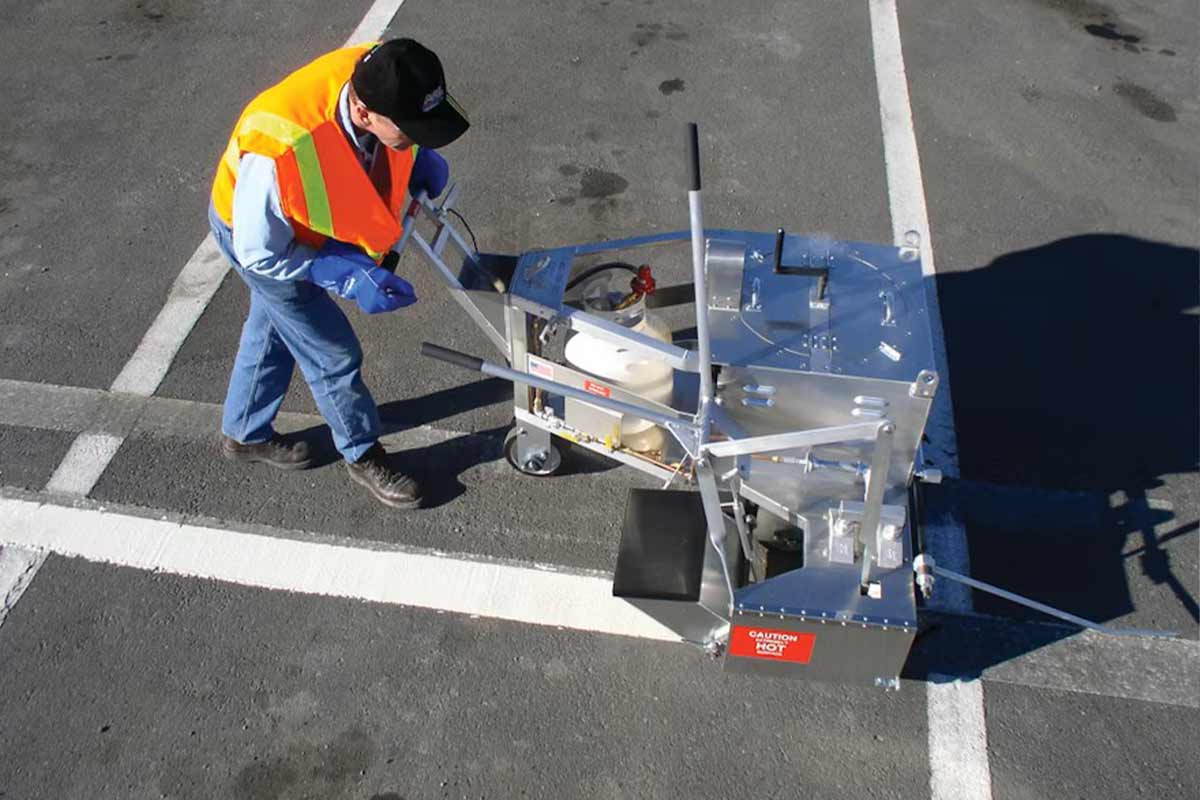
Thermoplastic striping puts down thick, long-life markings for the parts of a lot that take the most abuse. We apply thermoplastic to stop bars, crosswalks, directional arrows, and fire lanes on busy commercial lots around Grand Rapids, where its durability earns back the higher upfront cost. Because thermoplastic is heat-applied and fuses to the pavement, it lasts longer than paint on the markings that matter most for safety and traffic flow.
Thermoplastic vs Paint — Durability and Cost Over Life
Thermoplastic is thicker and bonds into the pavement, so it resists wear from traffic and plowing longer than standard traffic paint, which sits on the surface. It usually carries embedded glass beads for retroreflectivity that hold up as the marking wears. The trade-off is upfront cost and application: thermoplastic costs more to install and needs the right surface prep, while paint is cheaper and faster to recoat. On high-traffic markings the longer service life can lower how often you repaint, which is where thermoplastic pays off.
| Thermoplastic | Traffic paint | |
|---|---|---|
| Service life | longest on high-traffic markings | shorter; recoated more often |
| Bond | fuses into the pavement | dries on the surface |
| Reflectivity | glass beads embedded through the mark | beads on the surface layer |
| Application | heat-applied; needs surface prep | sprayed; fast to apply and recoat |
| Best use | stop bars, crosswalks, arrows, fire lanes | standard stall lines, lower-traffic lots |
Where Thermoplastic Fits — High-Traffic Lots, Stop Bars, and Crosswalks
Thermoplastic makes the most sense on safety-critical, high-wear markings: stop bars, crosswalks, directional arrows, and fire lanes on busy commercial lots, entrances, and drive aisles. The embedded glass beads also keep those markings reflective under headlights, which matters on a dark Michigan winter evening when a crosswalk or stop bar needs to read clearly. For standard stall lines on a lower-traffic lot, a quality traffic paint is often the practical choice. Most lots do best with a mix — thermoplastic where wear and safety are highest, paint on the rest — and we recommend the split based on how each area is used.
Freeze-Thaw Performance in Michigan
Thermoplastic’s bond into the pavement and its bead-embedded surface help it stand up to the abrasion of plowing and the reflectivity loss that wears paint down. No marking is immune to repeated freeze-thaw cycling and road salt, and the pavement underneath has to be sound for the material to hold, so we assess the surface first and tell you honestly whether thermoplastic or paint is the better value for a given area. The material itself is specified by AASHTO M249, which covers its composition and glass-bead content; Michigan DOT and MMUTCD specifications address markings on public roadways and don’t legally bind a private parking lot, but we apply to the material standard so it performs as intended.
For a full list of our pavement marking services, visit our parking lot striping in Grand Rapids page.
Businesses We Serve



How it Works

GET A FREE ESTIMATE
Contact us today and we’ll have a quote to you in 24 hours

SCHEDULE AN INSTALLATION
We’ll have your installation scheduled restriped in less than 7 days, without affecting your business hours

GET A PARKING LOT THAT POPS
For a budget-friendly price, you’ll get a parking lot that looks like new
We proudly work with:


We proudly work with:

Frequently Asked Questions About Thermoplastic Striping in Grand Rapids, MI
What is thermoplastic striping?
Thermoplastic is a durable pavement-marking material that is heat-applied so it bonds into the pavement rather than drying on top like paint. It’s thicker and longer-lasting, often with glass beads for reflectivity, and is used for high-traffic markings such as stop bars, crosswalks, arrows, and fire lanes. We apply it where longevity justifies it.
How long does thermoplastic last compared to paint?
Thermoplastic generally outlasts standard traffic paint on high-traffic surfaces because it’s thicker and fuses to the pavement, so it resists wear longer between repaints. Actual service life depends on traffic volume, surface condition, and climate. On heavily used lots the longer life can lower repaint frequency. We’ll advise whether it fits your lot.
Does thermoplastic hold up to Michigan winters?
Thermoplastic is built for durability and, with embedded glass beads, keeps reflectivity as it wears. Its bond into the pavement helps it resist the abrasion of plowing and traffic. That said, no marking is immune to repeated freeze-thaw and salt, and pavement condition matters, so we assess whether thermoplastic or paint is the better value for your surface.
Where should I use thermoplastic instead of paint?
Thermoplastic makes sense for high-traffic and safety-critical markings — stop bars, crosswalks, directional arrows, and fire lanes on busy commercial lots — where its longer life offsets the higher upfront application. For standard stall lines on lower-traffic lots, quality traffic paint is often the practical choice. We recommend a mix based on how each area is used.
What standard governs thermoplastic material?
Thermoplastic pavement-marking material is specified by AASHTO M249, which covers its composition, binder, and glass-bead content. Michigan’s DOT specifications and the MMUTCD address markings on public roadways; those highway specs don’t legally bind a private parking lot, but we apply thermoplastic to the material standard so it performs as intended.
Can thermoplastic be applied over existing paint?
It’s applied to a properly prepared surface for a good bond, which may mean cleaning or removing failing existing markings first rather than simply overlaying worn paint. We evaluate the pavement and existing markings, then prep as needed so the thermoplastic adheres and lasts. Surface prep is part of the scope we quote.