Warehouse Line Painting
In Grand Rapids, MI
OSHA-Compliant Safety Markings
1-800-STRIPER provides professional warehouse line painting in Grand Rapids, MI — marking aisles, pedestrian walkways, forklift lanes, and safety zones with durable epoxy and traffic paint per OSHA 29 CFR 1910.176(a) for industrial and distribution facilities across West Michigan.
1-800-STRIPER® of Grand Rapids PROVIDes Warehouse Floor Markings Services NEAR YOU
Want your indoor space to operate more efficiently?
Warehouse and interior markings ensure clear traffic lanes, organized storage zones, and designated spaces designed to help your business operate safely and efficiently.
Benefits:
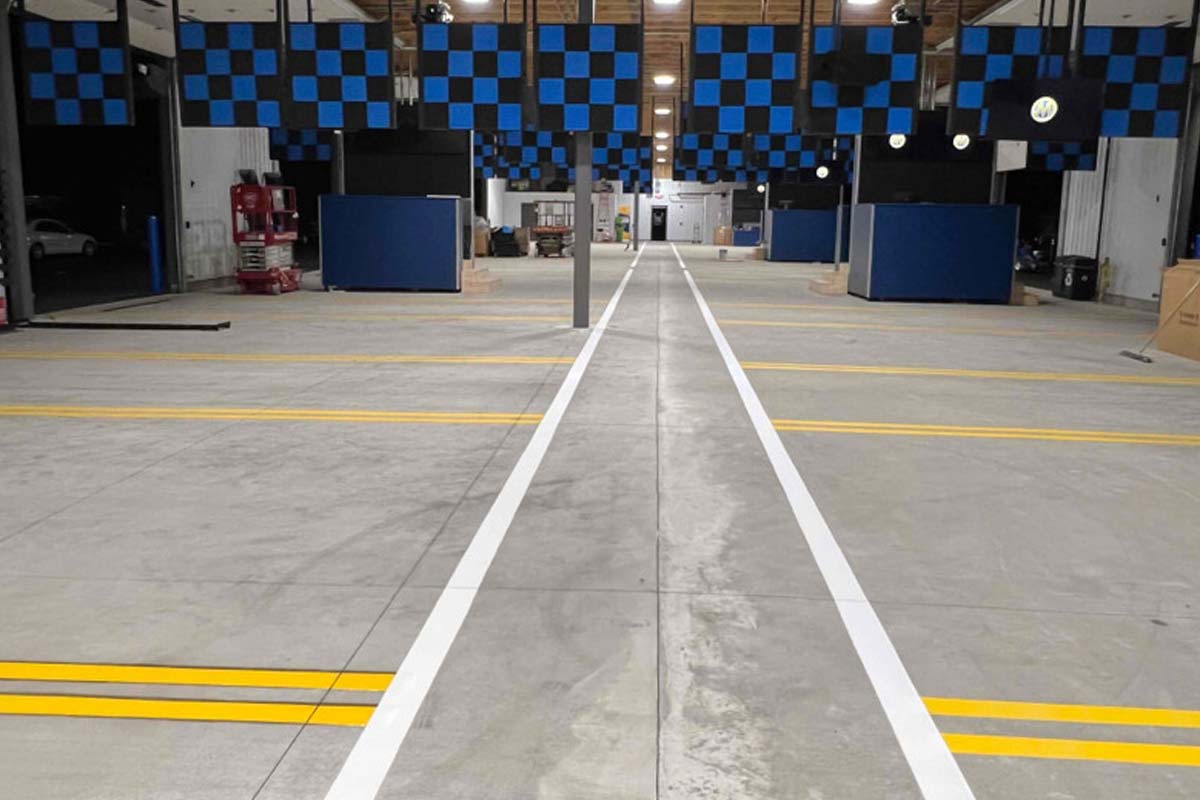
Warehouse Line Painting in Grand Rapids, MI
Warehouse line painting organizes a facility floor and supports OSHA aisle-marking compliance. We mark aisles, pedestrian walkways, forklift lanes, staging and loading zones, and safety areas on warehouse and distribution floors throughout the Grand Rapids area, using durable epoxy and traffic paint chosen for the traffic and the surface. Clear floor markings keep forklifts and people separated, speed up put-away and picking, and give an operation a visible safety baseline — and in a busy West Michigan distribution corridor, that organization pays off in fewer near-misses and less downtime.
OSHA Aisle Marking — What the Rule Actually Says
Where mechanical handling equipment such as forklifts is used, OSHA 29 CFR 1910.176(a) requires that “permanent aisles and passageways shall be appropriately marked” and that sufficient safe clearances be kept. That is the whole dimensional instruction — the rule mandates the marking but specifies no line width, no color, and no aisle dimension. It is performance-based, which means the facility sets the widths and colors that fit its equipment and racking. Most competitors never explain this; the practical takeaway is that you have latitude in how you mark, as long as permanent aisles are clearly and durably marked where powered equipment operates.
Safety Color Coding
Because OSHA leaves color open for aisles, most facilities follow a consistent voluntary scheme based on ANSI Z535.1 safety colors so the floor reads the same everywhere.
| Color | Common use |
|---|---|
| Yellow | Caution — aisleways, traffic lanes, work-cell borders |
| Red | Fire and emergency equipment, emergency stops |
| White | General storage, equipment, and fixture locations |
| Black-and-yellow or black-and-white | Areas needing extra caution |
We help you set a scheme and keep it consistent across the whole facility.
Epoxy vs Traffic Paint for Michigan Warehouse Floors
The right product depends on traffic and surface. Epoxy coatings bond hard to sealed concrete and resist forklift wear, chemicals, and scuffing, which makes them a strong choice for high-traffic industrial floors; durable water-based or solvent traffic paints go down faster and are easier to recoat, which suits floors that get re-striped as layouts change. We match product to your floor condition, traffic level, and how much downtime you can give a zone to cure, and we can phase the work so production keeps moving.
For a full list of our pavement marking services, visit our parking lot striping in Grand Rapids page.
Businesses We Serve




How it Works

GET A FREE ESTIMATE
Contact us today and we’ll have a quote to you in 24 hours

SCHEDULE A STRIPING
We’ll have your space restriped in less than 7 days, without affecting your business hours

GET A PARKING LOT THAT POPS
For a budget-friendly price, you’ll get a parking lot that looks like new
We proudly work with:


We proudly work with:

Frequently Asked Questions About Warehouse Line Painting in Grand Rapids, MI
Does OSHA require warehouse aisles to be marked?
Yes. OSHA 29 CFR 1910.176(a) states that “permanent aisles and passageways shall be appropriately marked” where mechanical handling equipment such as forklifts is used. It’s a federal requirement for warehouses and distribution centers. We mark aisles, walkways, and equipment lanes to keep your facility compliant and traffic organized.
How wide do OSHA warehouse aisle lines have to be?
OSHA does not specify a line width, color, or aisle dimension. The rule (1910.176(a)) is performance-based — it requires “sufficient safe clearances” and that permanent aisles be marked, but leaves the exact width to the facility. Common practice is 2-to-4-inch lines and aisles sized for your equipment, which we help plan around your forklifts and racking.
What do the different marking colors mean?
Facilities commonly follow the ANSI Z535.1 safety color code: yellow for caution and aisleways, red for fire and emergency equipment, and other colors for specific hazards or information. OSHA references color for physical hazards but doesn’t mandate a warehouse aisle color, so we help you set a consistent, ANSI-aligned scheme across the facility.
Should we use epoxy or traffic paint on our warehouse floor?
It depends on traffic and surface. Epoxy coatings bond hard to sealed concrete and resist forklift wear and chemicals, making them a strong choice for high-traffic industrial floors; durable traffic paints are faster to apply and recoat. We match the product to your floor condition, traffic, and downtime tolerance during the estimate.
Can you paint while our warehouse is operating?
Usually, yes — in sections and around your shifts. We coordinate to close and mark one area at a time so operations continue, and we allow proper cure time before forklift and foot traffic returns to a freshly coated zone. Scheduling around production is part of planning the job.
What else can you mark besides aisles?
Beyond aisles we lay out pedestrian walkways, forklift lanes, loading and staging zones, equipment footprints, racking and dock numbers, and safety zones around panels and eyewash stations. Clear floor marking supports OSHA aisle-marking compliance and a safer, better-organized facility. We plan the full floor scheme with you.