Warehouse Line Painting
In North Miami, FL
OSHA-Compliant Safety Markings
1-800-STRIPER® provides professional warehouse line painting in North Miami, FL — OSHA-compliant aisle lines, pedestrian walkways, and safety-zone markings per OSHA 1910.22 using durable epoxy and traffic paint for industrial facilities throughout Miami-Dade County.
1-800-STRIPER® of North Miami PROVIDes Warehouse Floor Markings Services NEAR YOU
Want your indoor space to operate more efficiently?
Warehouse and interior markings ensure clear traffic lanes, organized storage zones, and designated spaces designed to help your business operate safely and efficiently.
Benefits:
What We Mark
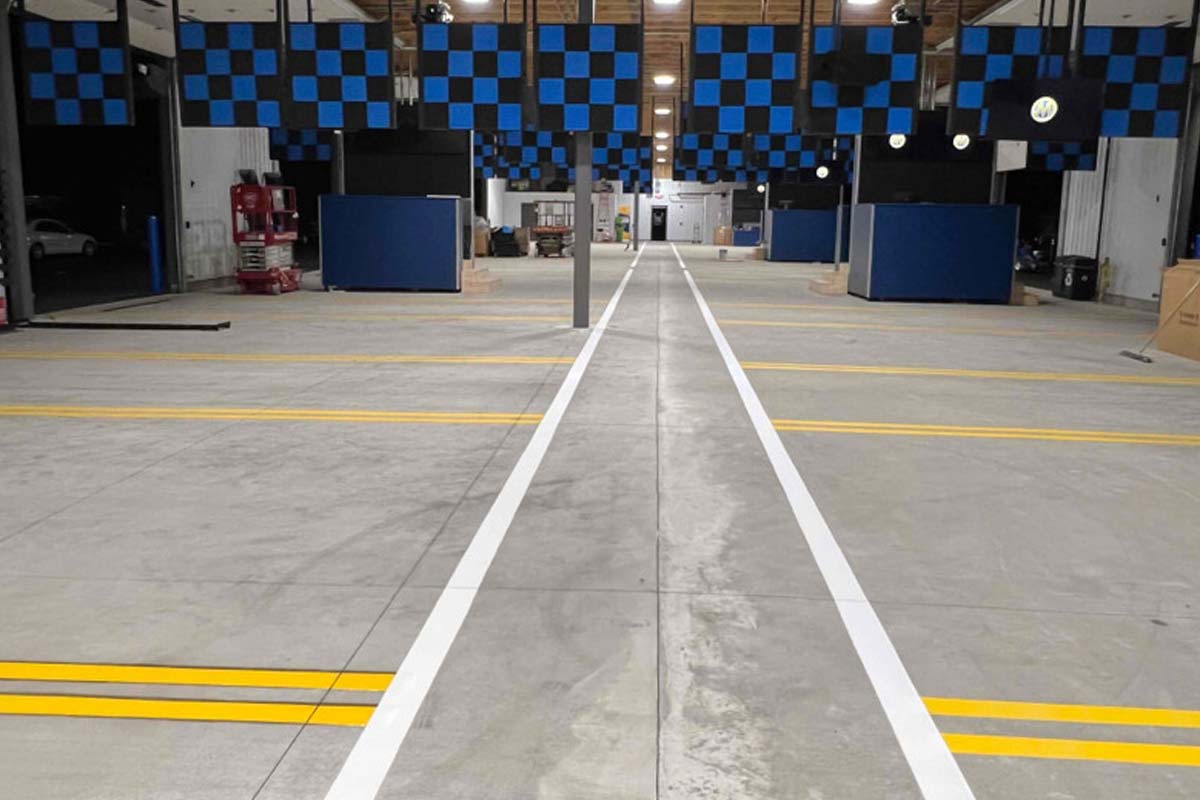
Warehouse striping organizes the floor so people and equipment move safely and predictably. On a typical facility we mark the lanes and zones that keep forklift traffic separated from foot traffic and keep product flowing through the building.
That includes forklift and traffic aisles that define drive paths through the floor, and pedestrian walkways that give workers a protected route across it. Aisle lines are run as solid stripes wide enough to read at forklift speed, with corners and intersections marked so drivers and walkers can anticipate cross-traffic. We mark loading and staging zones at the docks where freight is received, sorted, and staged, plus safety and hazard zones around equipment, electrical panels, and emergency exits. We also lay out equipment and rack locations, so storage footprints and machine positions stay consistent through every shift and every reorganization.
Clear floor markings are not just housekeeping. They are how a busy warehouse prevents the collisions and near-misses that happen when aisles and walkways blur together, and they give a new hire an instantly readable map of where to walk and where not to.
OSHA Aisle-Marking Requirements
OSHA does require warehouse aisles to be marked, even though it does not dictate exactly how. The two regulations that apply are written in terms of clearance and visibility, not specific colors.
Under OSHA 1910.22, walking-working surfaces must be kept clean, orderly, and clear, and the standard is commonly cited for keeping aisles unobstructed where mechanical handling equipment is used. OSHA 1910.176, which covers materials handling and storage, states that where mechanical handling equipment like forklifts is used, sufficient safe clearances must be allowed for aisles, and that permanent aisles and passageways must be appropriately marked.
Neither rule mandates a specific line color or width. Common industrial practice is solid lines in the 2-to-4-inch range, wide enough to read from a moving forklift. OSHA 1910.37 separately requires that exit routes stay unobstructed and adequately lit, which is another reason facilities stripe and maintain clear painted paths to emergency exits. For a facility manager, that flexibility is useful — you can match your floor markings to your own traffic patterns — but it also puts the burden on you to mark aisles clearly enough to satisfy an inspector. Faded or missing aisle lines are a common citation, and an easy one to fix.
Safety Color Coding
While OSHA leaves color choice open, most facilities follow a widely-used color scheme so markings mean the same thing from one building to the next. The table below shows how those colors are commonly applied on a warehouse floor.
| Color | Common Warehouse Use |
|---|---|
| Yellow | Aisles, traffic lanes, and work cells |
| White | Equipment, fixtures, and rack locations |
| Red | Fire and emergency equipment, or defective items held for review |
| Black & Yellow | Caution areas — physical or health hazards |
| Red & White | Keep-clear areas needed for safety or equipment access |
These pairings come from common industrial practice and the ANSI Z535.1 Safety Color Code, not from an OSHA mandate — the agency does not require these exact colors. The value of following them is consistency: when yellow always means traffic and red always means fire or hold, a new hire or a visiting driver reads your floor correctly on day one. We will match an existing color scheme if you already have one, or help you set up a logical one if you are starting fresh.
Durable Epoxy for Forklift Traffic
Warehouse floor markings take a beating that parking-lot paint never sees, so material choice matters. Epoxy and high-wear traffic coatings are built to bond tightly to concrete and survive the constant grind of forklift wheels and pallet-jack traffic.
Epoxy markings cure into a hard, abrasion-resistant film that holds up to point loading and turning traffic far better than standard latex paint. The right product for your floor depends on a few factors: how heavy the traffic is, the condition and porosity of the concrete, and how quickly you need the area back in service. A high-traffic main aisle may call for a durable epoxy, while a low-traffic storage zone can be marked more economically. For floors that need to reopen fast, fast-cure systems such as methyl methacrylate (MMA) coatings set in a fraction of the time of standard epoxy, and an anti-slip aggregate can be broadcast into either to improve traction in wet dock areas. Floor prep matters as much as the coating — a clean, properly profiled concrete surface is what lets any marking reach its full service life, since a coating can only bond as well as the surface under it. Call (954) 932-0437 to talk through the right approach for your facility.
For a full list of our pavement marking services, visit our parking lot striping in North Miami page.
Businesses We Serve




How it Works

GET A FREE ESTIMATE
Contact us today and we’ll have a quote to you in 24 hours

SCHEDULE A STRIPING
We’ll have your space restriped in less than 7 days, without affecting your business hours

GET A PARKING LOT THAT POPS
For a budget-friendly price, you’ll get a parking lot that looks like new
We proudly work with:


We proudly work with:

Frequently Asked Questions About Warehouse Line Painting in North Miami, FL
What does warehouse line painting include?
Warehouse line painting marks the floor of an industrial facility for safety and workflow: forklift and traffic aisles, pedestrian walkways, loading and staging zones, safety and hazard areas, and equipment or rack locations. The markings follow OSHA 1910.22, which requires aisles and passageways to be kept clear and appropriately marked. We use durable epoxy and traffic paint built to survive forklift traffic. The result is a facility where people and equipment move along clearly defined, compliant paths.
What are OSHA’s aisle-marking requirements?
OSHA 1910.22 requires that aisles and passageways be kept clear, in good repair, and with no obstructions, and that permanent aisles and passageways be “appropriately marked” where mechanical handling equipment like forklifts is used. OSHA 1910.176 reinforces that aisles used by forklifts must be marked. OSHA doesn’t dictate one specific color or width, but standard practice is solid lines roughly 2–4 inches wide. We paint your aisles to clearly delineate the routes OSHA requires you to mark and keep clear.
What do warehouse floor marking colors mean?
Color coding follows widely used industrial practice aligned with the ANSI Z535.1 safety color standard. Yellow typically marks aisles, traffic lanes, and work cells; white can mark equipment and fixtures; red flags fire and emergency equipment or defective items; and combinations like black-and-yellow or red-and-white denote caution or keep-clear areas. Consistent color coding lets workers read the floor at a glance. We’ll match an existing scheme or set up a clear, standards-aligned one for your facility.
How wide should warehouse aisle lines be?
There’s no single OSHA-mandated width, but common industry practice is solid lines 2 to 4 inches wide for aisles and walkways — wide enough to be clearly visible to forklift operators and pedestrians. The right width depends on the aisle’s traffic and the facility’s standards; main forklift thoroughfares often use wider or double lines, while smaller pedestrian paths use narrower ones. We help you choose widths that are visible and consistent throughout the warehouse.
What paint holds up to forklift traffic?
Durable epoxy and high-wear traffic paints are the standard for warehouse floors because they bond to concrete and withstand constant forklift, pallet-jack, and foot traffic far better than ordinary paint. Epoxy coatings resist abrasion and chemicals and keep their color under heavy use; high-build traffic paints offer a faster-curing option. The best choice depends on your traffic level, floor condition, and how quickly the area must return to service. We recommend the right system for your facility.
How much does warehouse line painting cost?
Warehouse line painting is quoted per project based on the total linear footage of aisles and markings, the paint or epoxy system specified, surface prep and any old-line removal, and the complexity of the layout. A clean restripe of an existing scheme costs less than laying out a new facility from scratch with full color coding. Call (954) 932-0437 for a free warehouse line painting estimate in North Miami.