
Thermoplastic Striping
In North Miami, FL
Long-Lasting Pavement Markings
1-800-STRIPER® provides professional thermoplastic striping in North Miami, FL — long-service-life pavement markings for stop bars, crosswalks, directional arrows, and fire lanes applied at roughly 400°F per AASHTO M249 and FDOT Section 711 specifications for high-traffic commercial lots across Miami-Dade County.
1-800-STRIPER® of North Miami PROVIDes Thermoplastics Services NEAR YOU
Want to reduce the maintenance requirements for your parking lot?
Thermoplastic pavement markings are a durable, weather and vehicle-resistant striping option for your parking lot or facility.
You can utilize them for stop bars, ADA stalls, no-parking zones, directional arrows, crosswalks, or your entire parking lot.
Benefits:
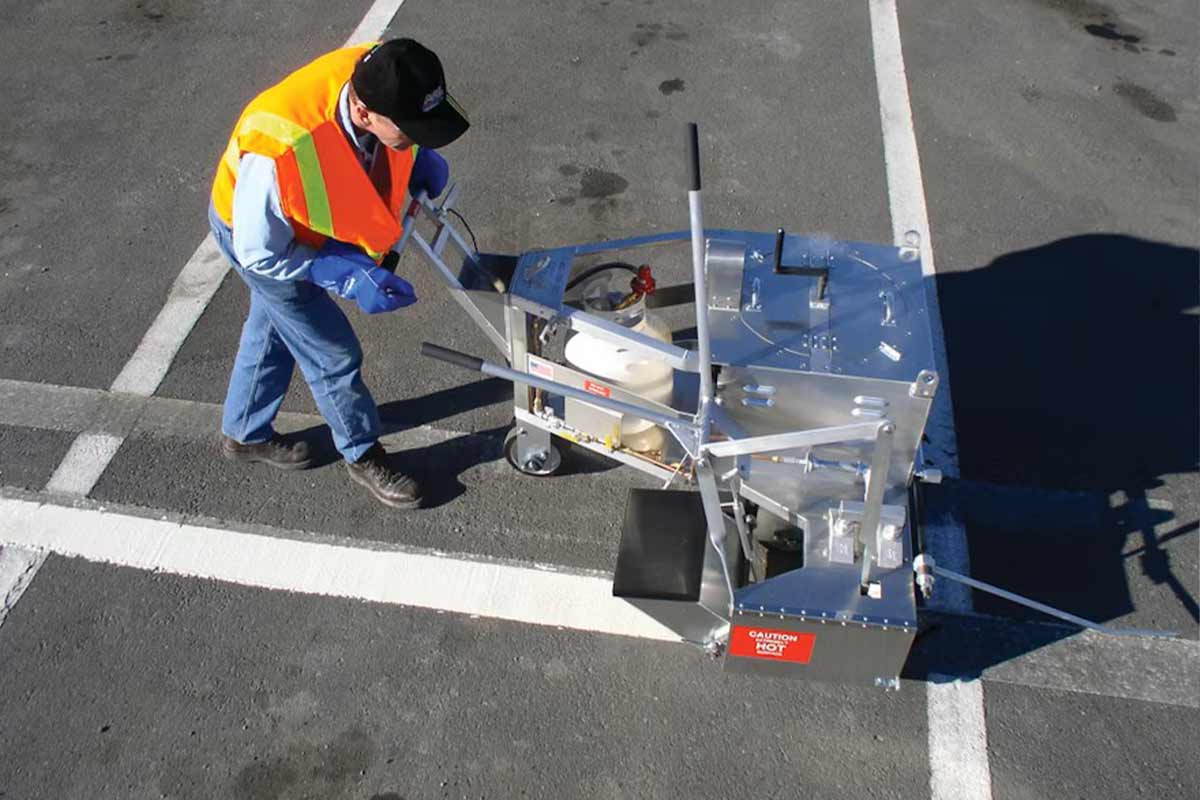
How Thermoplastic Striping Is Applied
Thermoplastic striping is applied hot — the material arrives as a powder or block, gets melted, and bonds directly into the asphalt as it cools. That thermal bond is what separates it from paint, which only sits on the surface. Here is the sequence our crew follows on a commercial lot:
- Clean and dry the pavement. Oil, dust, and moisture all interfere with adhesion, so the surface is swept or pressure-washed and allowed to dry before any material goes down.
- Heat the material to roughly 400°F. Thermoplastic is held in a heated kettle until it reaches a molten, pourable state. Under-heated material won’t flow or bond correctly, so temperature control matters.
- Apply by screed, extrusion, or preformed shapes. Long lines are laid with a screed or extrusion die; symbols, arrows, and legends are often set down as preformed thermoplastic shapes and heat-fused in place.
- Drop glass beads into the hot material. Beads are broadcast onto the surface while it is still molten so they embed partway, giving the marking its nighttime retroreflectivity under headlights.
- Let it cool and fuse. As the material drops back below its melting point it hardens and locks into the pavement texture, creating a thick, raised marking that is ready for traffic within minutes.
Because each step depends on the one before it, a clean surface and the right application temperature do more to determine the final result than almost anything else. Line width is set during application — standard stalls and lane lines are commonly 4 inches wide, while crosswalk and stop-bar lines run wider for visibility. The crew chalks the layout before the kettle is even hot, since once thermoplastic is down it cannot be repositioned.
Thermoplastic vs. Paint: Which Lasts Longer?
Thermoplastic outlasts traffic paint in nearly every category that matters on a busy lot, but paint still earns its place when budget or turnaround drives the decision. The difference comes down to thickness and how each one attaches to the pavement.
| Factor | Thermoplastic | Traffic Paint |
|---|---|---|
| Thickness | ~90–125 mils — a raised, durable film | ~10–15 mils — a thin surface coat |
| Bond to asphalt | Thermally fused into the pavement | Sits on top of the surface |
| Retroreflectivity | Glass beads embedded throughout the film | Beads on the surface only, wear off sooner |
| Lifespan | Several years under normal traffic | Often needs annual refresh in South Florida |
| Application speed | Slower; requires heating equipment | Fast; dries and reopens quickly |
| Upfront cost | Higher upfront | Lower upfront |
In South Florida, intense sun and frequent rain accelerate paint wear, so a lot striped with paint may fade or thin within a year, while thermoplastic markings hold their line and reflectivity far longer. For high-traffic entrances and drive lanes, that longer service life usually offsets the higher upfront investment. Call (954) 932-0437 if you would like help weighing the two for your property.
Where Thermoplastic Markings Work Best
Thermoplastic earns its cost in the spots that take the most abuse and need the most visibility. Because it is thick, reflective, and abrasion-resistant, it is the right call wherever a faded marking would create a safety or compliance problem.
Stop bars and crosswalks are prime candidates — they sit directly in the wheel path and need to stay sharp for pedestrian safety. Directional arrows and lane markings in drive aisles hold up under constant turning traffic. Fire lanes benefit from thermoplastic’s durability and visibility, keeping access markings legible for emergency crews and inspectors. Any high-traffic marking you would otherwise be repainting every year is a good place to switch and break the repeat cycle.
Accessible-parking symbols, access-aisle hatching, and painted curbs see heavy pedestrian and cart traffic, so thermoplastic keeps those legally required markings crisp longer than paint. The same goes for numbered stalls and directional legends like ONE WAY or DO NOT ENTER, where a worn symbol invites confusion at the very points where it costs the most.
On lower-traffic areas — overflow parking or employee stalls set back from the main flow — standard traffic paint is often the more economical choice. That is why many lots use a mix: thermoplastic where wear and visibility matter most, paint everywhere else.
Florida Specs: AASHTO M249 & FDOT Section 711
Florida pavement markings follow established material and application standards, and knowing them helps a property manager judge whether a striping vendor is doing the job right. Two references govern thermoplastic work in the state.
The national baseline is AASHTO M249, the standard specification for white and yellow reflective thermoplastic pavement striping material. It defines the composition, binder content, and glass-bead requirements that quality thermoplastic must meet. You can review the issuing body, the American Association of State Highway and Transportation Officials (AASHTO M249), for the underlying standard.
At the state level, FDOT Standard Specifications Section 711 governs thermoplastic markings in Florida. Section 711 covers material requirements, application thickness, glass-bead distribution, and surface preparation. While a private parking lot is not a state road, commercial lots near FDOT-maintained roads — entrances off arterials, frontage near highways — are often expected to reference these same standards for consistency and durability.
Both standards put weight on glass-bead content because retroreflectivity is what keeps a marking visible at night. The federal Manual on Uniform Traffic Control Devices, which sets the baseline for traffic-control devices nationwide, treats legible nighttime markings as a core requirement, and the bead distribution called out in Section 711 is how thermoplastic delivers it on a wet, headlight-lit Miami-Dade lot.
For a property manager, the practical takeaway is simple: thermoplastic applied below the specified thickness or with too few beads will look fine on day one but fail early. Asking a vendor which standards they work to is a fast way to separate a durable installation from a shortcut.
Get a Free Thermoplastic Striping Estimate
If you are deciding between thermoplastic and paint for a North Miami lot, we can walk the property and recommend the right material for each area. Call (954) 932-0437 to schedule a free estimate, and we will give you a clear scope with no obligation. We serve commercial and industrial properties across Miami-Dade County and work around your operating hours to keep disruption to a minimum.
For a full list of our pavement marking services, visit our parking lot striping in North Miami page.
Businesses We Serve




How it Works

GET A FREE ESTIMATE
Contact us today and we’ll have a quote to you in 24 hours

SCHEDULE AN INSTALLATION
We’ll have your installation scheduled restriped in less than 7 days, without affecting your business hours

GET A PARKING LOT THAT POPS
For a budget-friendly price, you’ll get a parking lot that looks like new
We proudly work with:


We proudly work with:


Frequently Asked Questions About Thermoplastic Striping in North Miami, FL
What is thermoplastic striping?
Thermoplastic striping is a long-life pavement marking applied as a heated material — typically around 400°F — that bonds to the asphalt and cures into a thick, durable line as it cools. It far outlasts standard paint and is the go-to for high-traffic markings like stop bars, crosswalks, directional arrows, and fire lanes. The material and application follow AASHTO M249, and in Florida, FDOT Section 711 sets the state specification. It’s the choice when you want markings that hold up for years.
How long does thermoplastic striping last?
Thermoplastic markings typically last several years — often three to seven or more depending on traffic volume, pavement condition, and exposure — substantially longer than standard traffic paint, which may need refreshing annually in South Florida. The thick, bonded material resists wear from tires and weather. That durability makes thermoplastic cost-effective for high-traffic markings even though the upfront application costs more than paint. The actual lifespan on your lot depends on how heavily those specific markings are driven over.
How is thermoplastic applied?
The material arrives as a solid and is heated to roughly 400°F until molten, then applied to clean, dry pavement through screeds, extrusion, or preformed shapes pressed onto the surface. Glass beads are added for retroreflectivity so the markings catch headlights at night. As it cools, the thermoplastic fuses to the asphalt and hardens into a raised, durable line. Surface prep matters — the pavement must be clean and dry for a proper bond. The process follows AASHTO M249 and FDOT Section 711.
Thermoplastic vs. paint — which is better?
It depends on the marking. Thermoplastic lasts far longer, resists wear, and is retroreflective, which makes it ideal for high-traffic, high-visibility markings like stop bars, crosswalks, arrows, and fire lanes. Standard traffic paint costs less up front and goes down fast, which suits routine stall striping and restripes. Many lots use both — paint for the bulk of the stalls and thermoplastic where durability and visibility matter most. We’ll recommend the right mix for your North Miami property.
What FDOT spec covers thermoplastic markings?
In Florida, FDOT Standard Specifications Section 711 governs thermoplastic pavement markings — covering material composition, application thickness, glass-bead distribution, and surface preparation. The national reference standard is AASHTO M249. Commercial properties near FDOT-maintained roads or matching FDOT specifications reference Section 711 for their markings. We apply thermoplastic to these recognized standards so your markings meet the spec and perform as intended.
How much does thermoplastic striping cost?
Thermoplastic striping costs more per marking up front than paint because of the material and the heated application, but it lasts years longer, which lowers the long-run cost on high-traffic markings. Pricing depends on the footage, the type of markings (stop bars, crosswalks, arrows, fire lanes), and surface prep. We’ll help you decide where thermoplastic pays off versus where paint makes more sense. Call (954) 932-0437 for a free thermoplastic striping estimate in North Miami.