
Wheel Stop Installation
In Orlando South, FL
Concrete and Rubber Parking Stops
1-800-STRIPER® provides professional wheel stop installation in Orlando South, FL — setting concrete or rubber wheel stops at stall ends, anchored to asphalt or concrete and positioned to keep accessible routes clear per the 2010 ADA Standards for Accessible Design for commercial parking lots.
1-800-STRIPER® of Orlando South PROVIDes Wheel Stop Installation Services NEAR YOU
Need to protect vehicles or walls from accidental damage?
Wheel stops (also called parking blocks) protect your property, enhance safety, and improve parking lot organization.
Benefits:
Wheel stops prevent vehicles from parking too far into a space or overextending into other spots, pedestrian walkways, and other areas, while also helping with vehicle alignment. They can prevent damage to buildings, curbs, or landscaping. Wheel stops also serve as clear visual cues for proper parking and are sometimes used on slopes to prevent cars from rolling.
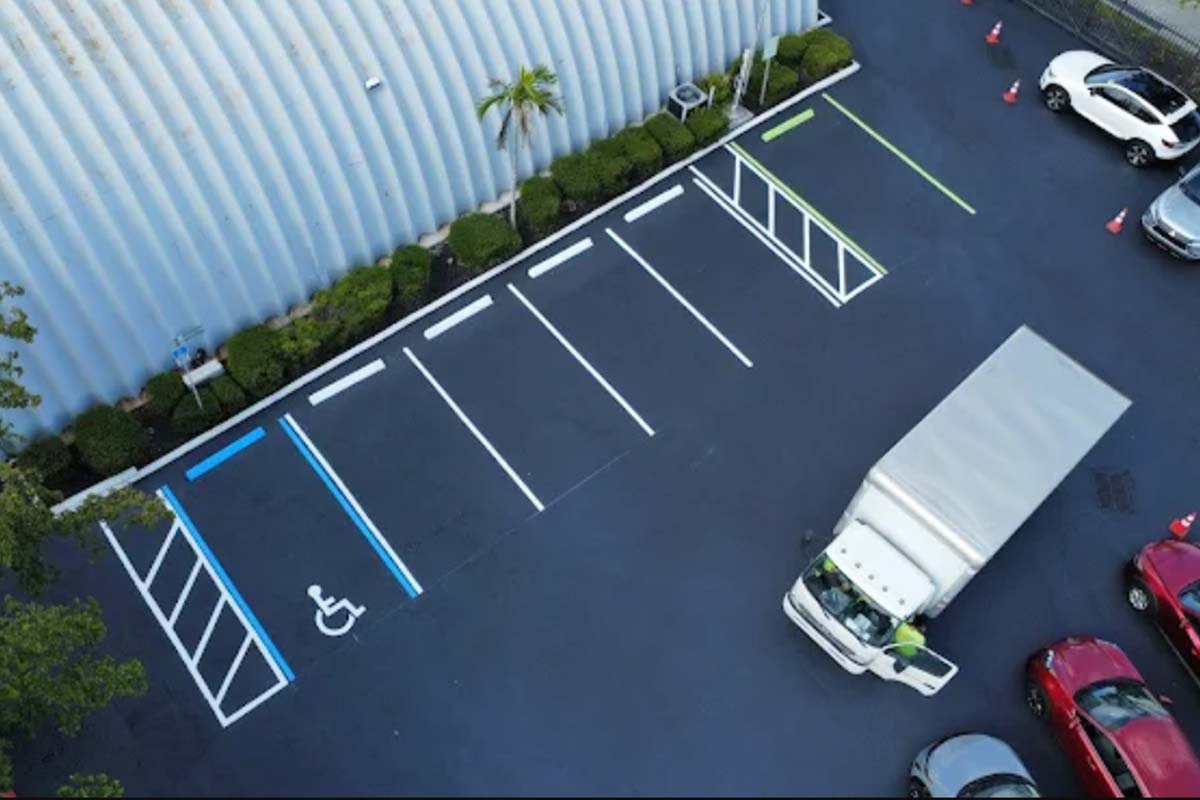
Wheel Stop Installation in Orlando South: What a Wheel Stop Does
A wheel stop is a low block fixed to the pavement at the head of a parking space, there to stop a rolling car before it reaches whatever sits behind the space: a sidewalk, a storefront wall, a landscaped bed, a light pole, a dumpster enclosure, or a pedestrian crossing. Where a painted line gives drivers only a visual cue, wheel stop installation adds a physical one.
Stops protect the property too. Bumpers and tires push into whatever they can reach, and over a few seasons that adds up to cracked curbs, bent railings, and chipped stucco. A row of stops keeps that damage in the stall instead of on the building. Commercial lots in Central Florida carry heavy daily traffic from customers, tenants, and delivery vehicles, so the stops see steady use.
Where Wheel Stops Go Relative to Sidewalks and Accessible Routes
Stops belong wherever the front or rear of a parked vehicle would otherwise reach a walking surface. A bumper overhangs its tires, which means a car pulled all the way up can hang over a sidewalk or curb and shrink the walkway in front of it.
That overhang is why the 2010 ADA Standards mention wheel stops at all. Section 502.7 says parking spaces and access aisles must be designed so cars and vans, when parked, cannot obstruct the required clear width of adjacent accessible routes, and its advisory calls wheel stops an effective way to prevent vehicle overhangs from reducing that width. The federal minimum clear width of a walking surface on an accessible route is 36 inches (§403.5.1); Florida requires an accessible route at least 44 inches wide under Florida Statute 553.5041.
Since the stop exists to protect that clear width, its position is set from the walkway outward. We measure from the edge of the route to find where a bumper will end up, then set the stop so the overhang stays off it. The right distance depends on the stall, the vehicles you see, and the curb, so a single figure from a brochure should not decide it.
Concrete vs Rubber Wheel Stops
Concrete and rubber are the two common choices, and each suits different properties. The table below is general; product dimensions and fastener details come from the maker of the stop you pick.
| Factor | Concrete wheel stops | Rubber wheel stops |
|---|---|---|
| Weight | Heavy, which helps them stay put | Lighter, easier to carry and place |
| Impact | Rigid; can chip or crack at the edges over time | Gives slightly, which is gentler on bumpers |
| Visibility | Usually painted to stand out | Often molded in a bright color |
| Replacement | A broken stop is replaced as a whole piece | Individual pieces swap out readily |
| Best fit | Large commercial lots, long-term placement | Smaller lots, spots that may be moved later |
Neither material wins everywhere. If you are unsure which suits your lot, ask for a recommendation during the estimate and we will look at the surface, the traffic, and how you use the stalls.
Anchoring Wheel Stops into Asphalt or Concrete
A wheel stop only works if it stays where it is put, and anchoring is what keeps it there. The method depends on what is under the stop.
On asphalt, stops are typically pinned down with long fasteners driven through holes in the body and into the pavement. On concrete they are generally secured with anchors set into drilled holes in the slab. Fastener type, count, and depth come from the product and the surface, and the product maker’s instructions govern.
Surface condition matters. A fastener cannot hold in crumbling asphalt, so potholes and broken edges need pothole repair before a stop goes on them. If your paving or sealcoating contractor is scheduled for the lot, installing afterward lets the stops match the final stall lines.
Wheel Stops, Stall Lines, and Pedestrian Safety
Wheel stops work with the striping layout, not apart from it: stall lines tell drivers where to park and stops tell them where to stop. Setting both together keeps them consistent from the first day.
Placement is also a safety matter, because a stop can trip someone. Keep stops out of the paths people use to walk between cars, and out of access aisles and accessible routes. A painted stop or a bright color stands out against asphalt, especially at dusk and in the glare of a Central Florida afternoon.
Some areas stay clear of stops entirely; drive-through lanes, fire lanes, and loading areas typically do. Where a stop and a required route could conflict, the route takes priority and the stop is repositioned or left out.
Installing Wheel Stops from Site Walk to Sign-Off
- Walk the property. We look at the stalls, the walkways, the curbs, and anything a vehicle could reach.
- Choose the material. Concrete or rubber is selected for the lot and how it is used.
- Mark the positions. Each stop is located from the walkway and stall lines, not eyeballed.
- Anchor the stops. Fasteners suited to the surface hold each stop to the asphalt or concrete.
- Check the result. Clear widths and stall alignment are confirmed before the work is signed off.
Planning the Stop Count Around Your Stall Layout
How many stops a lot needs follows from its stall layout, the material chosen, the surface they are anchored into, and any repairs needed first. Wheel stop installation often pairs with our restriping and ADA striping services, and one visit can cover both.
For a full list of our pavement marking services, visit our parking lot striping in Orlando South page.















How it Works

GET A FREE ESTIMATE
Contact us today and we’ll have a quote to you in 24 hours

SCHEDULE AN INSTALLATION
We’ll have your installation scheduled in less than 7 days, without affecting your business hours

GET A PARKING LOT THAT POPS
For a budget-friendly price, you’ll get a parking lot that looks like new
We proudly work with:


We proudly work with:


Frequently Asked Questions About Wheel Stop Installation in Orlando South, FL
Do wheel stops have to be installed in accessible parking spaces?
Not by name. Section 502.7 of the 2010 ADA Standards requires that parked vehicles be unable to obstruct the clear width of adjacent accessible routes, and its advisory calls wheel stops an effective way to prevent overhangs from reducing that width. A stop is one way to meet the requirement. Your layout, curb, and walkway decide whether it is the right tool on your site.
How far from the curb should a wheel stop be placed?
No single distance fits every lot. The right spot depends on stall length, how far typical bumpers overhang their tires, and what sits behind the space, whether a sidewalk, a wall, or a planting bed. The aim is to halt the vehicle before its overhang reaches a walking surface or an accessible route. We measure on the property and set stops from the walkway outward.
Are concrete or rubber wheel stops better for a commercial lot?
That depends on the lot. Concrete stops are heavy and tend to stay put, which suits long-term placement on larger commercial properties. Rubber stops are lighter, give a little on impact, and are easier to relocate if the layout changes. Either can be fastened to asphalt or concrete. Ask for a recommendation during the estimate and we will weigh them against your traffic and stalls.
How are wheel stops fastened to asphalt?
Generally with long fasteners driven through holes in the stop and down into the pavement, though the exact type and depth follow the product and its maker’s instructions. The asphalt has to be solid for them to hold, so crumbling edges and potholes get repaired first. On concrete, stops are normally secured with anchors set into drilled holes.
Can wheel stops be moved or replaced later?
Yes. Stops can be removed, repositioned, or swapped for a different style when a lot is restriped or the layout changes. Fasteners leave small holes in the surface, so settle the repositioning plan before you commit to a layout. Replacing a cracked concrete stop or a damaged rubber one is routine work and can be combined with other lot projects.