
Sports Court Striping
In Orlando South, FL
Multi-Sport Court Line Marking
1-800-STRIPER® provides professional sports court striping in Orlando South, FL — tennis, basketball, and pickleball court lines, fresh layouts, and pickleball lines added to existing courts for HOA communities, schools, parks, and clubs across Central Florida.
1-800-STRIPER® of Orlando South PROVIDes Sports Court Striping Services NEAR YOU
Want to get people to come out to play?
Brighten up your faded sport courts or turn your playground into a safe, colorful, and engaging space that entices people to come out and play.
Sport Court Specialties:
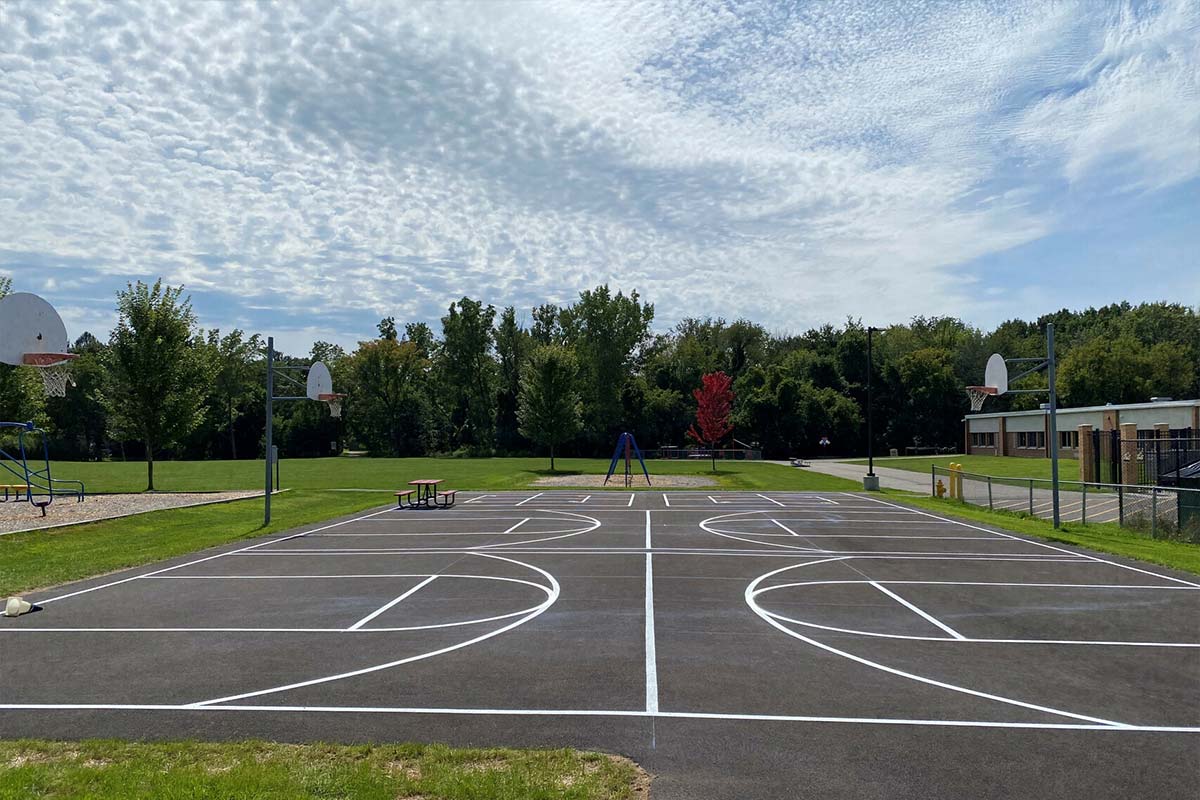
What Sports Court Striping Covers in Orlando South, FL
Sports court striping is the painting of boundary and play lines on a hard court that is already in sound condition. In Orlando South the work usually lands on tennis courts, basketball courts, and multi-use pads owned by HOAs, apartment communities, schools, city parks, and private clubs.
The job starts with the court you have. A faded tennis court gets its lines renewed; a blank slab gets a new layout; a tennis court that sees more pickleball than tennis gets a second set of lines over the first. Resurfacing sits outside the job, because 1-800-STRIPER does not resurface courts. A court with cracks, birdbaths, or a worn color coat needs repair from a surfacing contractor first, and the lines go down once that work has cured.
Most sports courts here are asphalt or concrete, the same surfaces found across commercial properties in Central Florida. When a paving or sealcoating contractor is working on the court, schedule the lines after the coating has fully cured so the paint bonds to a finished surface.
Adding Pickleball Lines to an Existing Tennis or Basketball Court
Yes, pickleball lines can be added to most existing tennis and basketball courts, and property managers ask for it more often than anything else on a court. A pickleball court is much smaller than a tennis court, so one tennis court can often carry more than one, depending on the slab and the room around it.
Sequence matters more than paint here. A typical conversion runs like this:
- Check the slab. Look for standing water, cracks, and loose coating. Anything that needs pothole repair or crack repair gets handled before a line is painted.
- Decide the use. Pick between a dual-use court that keeps its original lines and a full conversion that retires them.
- Mark the layout. Pickleball boundaries, kitchen lines, and centerlines are measured out from fixed points such as the net posts and fence, then confirmed before any paint is applied.
- Choose a contrasting color. The new set needs to read clearly against the old one, which is covered in the next section.
- Paint and cure. Lines are laid with the court closed, then left to dry before play resumes.
Pickleball dimensions come from the USA Pickleball Official Rulebook, the governing document for the sport. Courts are marked to the rulebook as it reads at the time of the job rather than from a stored template.
Dual-Use Courts, Color, and Line Weight
When every line on a court shares one color and width, players lose track of which boundaries belong to their game. A dual-use court stays readable only if the two line sets look different from each other.
Contrast solves it. The primary sport keeps the stronger color and the added set gets a clearly separate one. On a court that keeps tennis as its main use, pickleball is the secondary set; where pickleball takes over, the roles swap.
| Existing court | Common request | Decision to make first |
|---|---|---|
| Tennis court | Add pickleball lines, keep tennis | Which game is the primary one, and how many pickleball courts fit the slab |
| Tennis court | Convert fully to pickleball | Whether the old tennis lines are retired or stay as a faint second layer |
| Basketball court | Add pickleball lines | How the half court, key, and three-point lines coexist with the new set |
| Blank slab | New layout from scratch | Single sport or multi-use, plus where the fence and net posts sit |
Settle the primary-use question with your HOA board or athletic director before the quote, since it changes the number of lines and the colors involved.
HOA, School, and Park Courts Across Central Florida
Orlando South covers a mix of owners, and each has its own reason to call. HOA and community associations in Orange, Lake, Osceola, and Polk counties tend to ask about pickleball once residents petition the board. Schools want lines refreshed before the season starts. Parks departments want a court that reads cleanly for public play.
Because HOAs often work from a board vote and a budget cycle, a written scope helps: which courts, which lines, which colors, and whether any repair has to come first. A site walk produces that scope, and a free estimate follows from it. Get the court count and line plan in writing so the board approves the same job the crew will perform.
Scheduling Court Striping Around Florida Heat, UV, and Afternoon Storms
Central Florida has a summer rainy season with frequent afternoon thunderstorms, strong year-round UV, and long stretches of heat. All three shape when court striping can happen.
Paint needs a dry surface to bond. A court wet from morning irrigation overspray or last night’s storm has to dry out first, and one hot enough to blister paint is a poor candidate for mid-afternoon work. Morning starts tend to work best in the wetter months, and the dry season, roughly late fall through spring, gives the widest and most predictable window. Plan on a weather day or two in summer, since storms can push a start date.
UV does its damage later. Strong sun fades color coats and lines over the years, and the lines often wear out before the court surface does. That is why restriping the lines and resurfacing the court are separate decisions on separate timelines. Lines on a court with heavy daytime play need attention sooner than lines on a shaded private court.
Scope turns on those same site conditions. The number of courts is the obvious variable but rarely the largest one; total line length, how many line sets each court carries, the surface condition, the number of colors, and any repair needed before painting weigh more.
A single court that only needs its existing lines refreshed is a small job. A tennis court that becomes two pickleball courts with a dual-use layout is a bigger one, because the new lines have to be measured and the old ones kept legible. Access matters too, including gate width, parking near the court, and whether play can stop for the duration of the work.
A free estimate is available at (321) 234-3110; tell us which sports each court has to support.
For a full list of our pavement marking services, visit our parking lot striping in Orlando South page.














How it Works

GET A FREE ESTIMATE
Contact us today and we’ll have a quote to you in 24 hours

SCHEDULE AN INSTALLATION
We’ll have your play space restriped in less than 7 days, without affecting your playtime

GET A PARKING LOT THAT POPS
For a budget-friendly price, you’ll get a parking lot that looks like new
We proudly work with:


We proudly work with:


Frequently Asked Questions About Sports Court Striping in Orlando South, FL
Can you add pickleball lines to an existing tennis court in Orlando South?
Yes. Most tennis courts can carry pickleball lines next to their own, and one tennis court can often hold more than one pickleball court. Decide first whether the court stays dual-use or converts fully, since that sets the colors and line weights. A site walk confirms how many courts fit the slab and whether the surface is sound enough to mark.
Does sports court striping include resurfacing the court?
No. Striping covers the boundary and play lines only, and 1-800-STRIPER does not resurface courts. A court with cracks, standing water, or a worn color coat should be repaired by a surfacing contractor first. The lines go on after that work has cured, so the paint bonds to a finished surface and the repair is not covered over.
What is the best time of year to stripe a sports court in Central Florida?
The dry season, roughly late fall through spring, offers the most predictable window. Summer works too, but afternoon thunderstorms are frequent, so start in the morning and allow for a weather day. Paint needs a dry surface, and very hot pavement is a poor candidate, which means the forecast sets the timing more than the calendar does.
Should our HOA add pickleball lines or build a dedicated pickleball court?
Adding lines to an existing court is the faster, lower-impact route, and it suits a community where tennis demand has dropped. A dedicated court makes sense when residents want pickleball to have its own space and fence. Boards usually settle the primary-use question first, then ask for a written scope listing the number of courts, line colors, and any repairs required.
Where do I find the official pickleball court dimensions?
Look in the USA Pickleball Official Rulebook, the governing source for pickleball court layout and equipment. The rules get revised over time, so courts are marked to the rulebook as it reads on the day of the job. If your facility belongs to a league with its own requirements, mention it when you call for a free estimate at (321) 234-3110.