Temporary Parking Lot Striping
In NW Detroit, MI
Event and Construction Markings
1-800-STRIPER provides professional temporary parking lot striping in NW Detroit, MI — short-duration event markings, construction-phase layouts, and overflow parking laid out on grass, gravel, pavement, or any surface, with removable materials matched to the surface and the length of the job.
1-800-STRIPER® of NW Detroit PROVIDes Temporary Parking Lot Striping Services NEAR YOU
Need Temporary Stripes?
Use temporary stripes to direct traffic and create parking areas at your special event or to keep construction sites safe without a long-term commitment. We paint on grass, gravel, pavement, or any other surface where temporary striping is needed.
Striping solutions for:
What Temporary Parking Lot Striping Covers in NW Detroit, MI
Temporary parking lot striping is marking that is meant to come back up. It exists for situations where a property needs an organized parking layout for a defined period and then needs the surface returned to what it was, or re-marked differently for the next phase.
The three situations that generate almost all of it here: an event that brings more vehicles than the permanent lot holds, a construction or renovation project that takes part of a lot out of service and needs the rest reorganized around it, and a seasonal or overflow area that only operates for part of the year.
What it is not is a cheap substitute for permanent striping. Temporary markings are specified for removability and speed of installation, which is exactly the wrong specification for a lot that will be marked the same way for the next five years.
Surfaces We Can Mark — Grass, Gravel, Pavement, or Any Surface
This is where temporary striping differs most from ordinary parking lot work, and it is the question we get asked first.
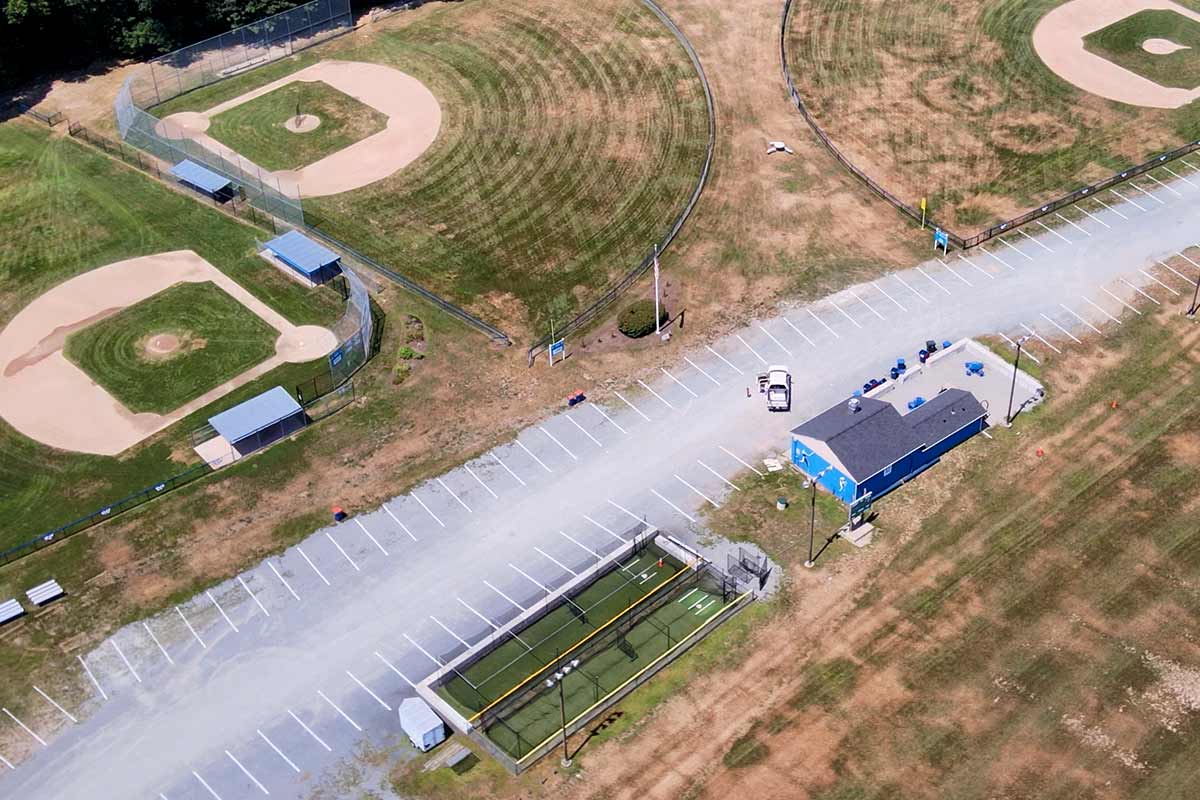
Grass. Overflow and event parking regularly runs onto turf. Grass takes marking that sits on the blade rather than soaking into a substrate, and the practical constraints are the length of the grass, how recently it was cut, and how long the marking has to survive being driven over and rained on.
Gravel. Gravel and compacted aggregate will not hold a painted line the way pavement does, because the surface moves. Marking a gravel area is usually a matter of defining edges, aisles and rows with physical markers and boundary treatment rather than trying to paint a stall grid onto loose stone.
Pavement. Asphalt and concrete take temporary marking readily, and the decision is about removability — a marking that lifts cleanly at the end of the job without leaving a ghost line or damaging the surface underneath.
Any other surface. Compacted dirt, seasonal lots, hardstanding and mixed surfaces all come up, and each is a conversation about what the surface will hold, how long the marking has to last, and what has to happen when the job ends. We would rather tell you a surface will not hold a marking than take the job and have it fail in the first week.
Event and Overflow Parking Layouts
Event parking is a throughput problem before it is a marking problem. The layout has to get a lot of vehicles in quickly, park them densely enough to fit, and let them leave without the exit backing up into the aisles.
The elements that make it work: clearly defined rows so vehicles self-align without being individually directed, aisles wide enough for two-way movement where vehicles are still arriving while others leave, entry and exit routes that do not cross, marked pedestrian routes from the parking area to the venue, and accessible parking positioned close to the entrance on firm ground with a usable route.
That last point is the one most often skipped on grass and gravel event parking, and it should not be. Someone who needs an accessible space needs it on a surface they can actually cross, near the entrance, whatever the parking area is made of.
Construction and Phased-Work Striping
Construction parking is a sequencing problem. A project takes a section of the lot, the rest has to absorb the displaced demand, and then the boundary moves and it all changes again.
Temporary striping is how a property stays usable through that. Each phase gets a layout: what is fenced, where the remaining parking is, where site traffic and deliveries run, how pedestrians get from the parking to the building without crossing a work zone, and where the phase boundary sits. When the phase changes, the markings change with it.
The practical benefit for a property manager is that tenants and visitors get a lot that looks deliberate rather than improvised, through a period when improvisation is the default. The practical benefit for the site is that construction traffic and public traffic are kept apart.
How Temporary Striping Works
- Understand the duration and the end state. How long the markings need to last, and what the surface has to look like when they come up, determines what goes down.
- Assess the surface. Grass, gravel, pavement or something else — and what that surface will realistically hold for the required period.
- Design the layout. Rows, aisles, entry and exit, pedestrian routes, accessible parking, and any phase boundaries.
- Install. Markings and any physical delineation, worked around the event or project schedule.
- Adjust between phases where the job is phased. Construction layouts usually change more than once.
- Remove and restore. Markings come up at the end, and the surface is left in the state agreed at the start.
An Event Weekend and a Nine-Month Site Are Not the Same Job
Duration is the variable that reorganizes everything else. A weekend on grass needs materials that go down fast and come up clean, and one layout. A construction site running most of a year on asphalt needs materials that survive weather and traffic, several layouts as the phase boundary moves, and often physical delineation alongside the marking.
Area and surface type matter, and so does whether removal and restoration are in scope at the end. Tell us the duration first and the rest of the estimate falls out of it. 1-800-STRIPER of NW Detroit, (947) 295-8012.
For a full list of our pavement marking services, visit our parking lot striping in NW Detroit page.
Businesses We Serve




How it Works

GET A FREE ESTIMATE
Contact us today and we’ll have a quote to you in 24 hours

SCHEDULE A STRIPING
We’ll have your space restriped in less than 7 days, without affecting your business hours

GET A PARKING LOT THAT POPS
For a budget-friendly price, you’ll get a parking lot that looks like new
We proudly work with:


We proudly work with:

Frequently Asked Questions About Temporary Parking Lot Striping in NW Detroit, MI
Can you stripe temporary parking on grass or gravel?
Yes, and both come up constantly for event and overflow parking. Grass takes marking that sits on the surface, with grass length and cutting schedule as the practical constraints. Gravel moves too much to hold a painted stall grid, so it is normally handled by defining edges, aisles and rows with physical delineation instead. We will tell you before the job if a surface will not hold what you want.
How long does temporary parking lot striping last?
It is specified to the job rather than to a fixed life. An event marking needs to survive a weekend of traffic and whatever weather arrives; a construction-phase layout may need to hold for months and then be changed. Telling us the duration up front is what determines the material, because a marking specified for a weekend will not last a season.
Will temporary markings damage my pavement?
They should not, and removability is part of the specification rather than an afterthought. The material is chosen so it lifts at the end of the job without leaving a ghost line or harming the surface underneath. On a surface with an existing coating or an unusual finish, that is worth checking before installation rather than after removal.
Do you provide accessible parking for temporary and event lots?
Yes, and it should be planned rather than added at the end. Accessible parking for an event needs to be on firm ground close to the entrance with a usable route to it — which is a real constraint when the parking area is grass or gravel, and the reason accessible spaces are placed first in an event layout rather than last.
Can temporary striping be changed as a construction project moves?
Yes, and phased projects normally need it. Each phase gets its own layout as the fenced area moves, covering where the remaining parking sits, how site traffic and deliveries run, and how pedestrians reach the building without crossing a work zone. Planning the phases together is cheaper than treating each one as a separate job.
Is temporary striping cheaper than permanent striping?
Not in a way that makes it a substitute. Temporary marking is specified for removability and fast installation rather than for service life, so on a lot that will keep the same layout for years, permanent striping is both cheaper over time and better. Temporary striping is the right answer when the layout genuinely is temporary. Call for a free estimate and we will tell you which one your situation calls for.