Serving Seattle, Bellevue, Kirkland, Redmond, Sammamish, Woodinville & the greater Eastside.
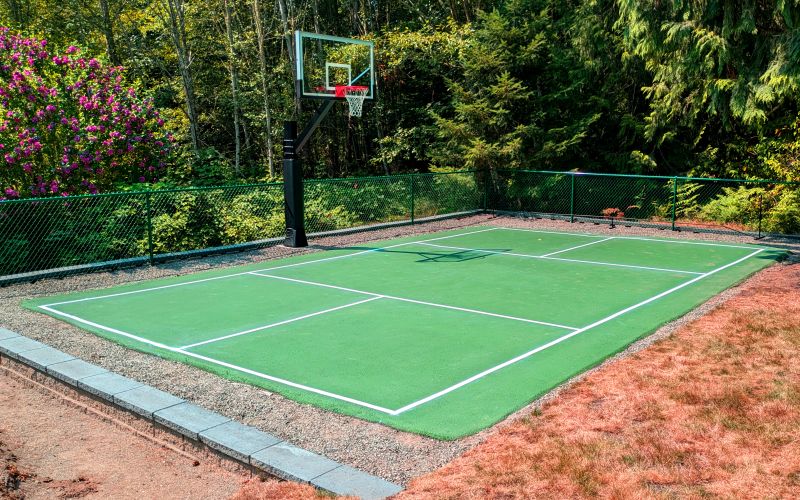
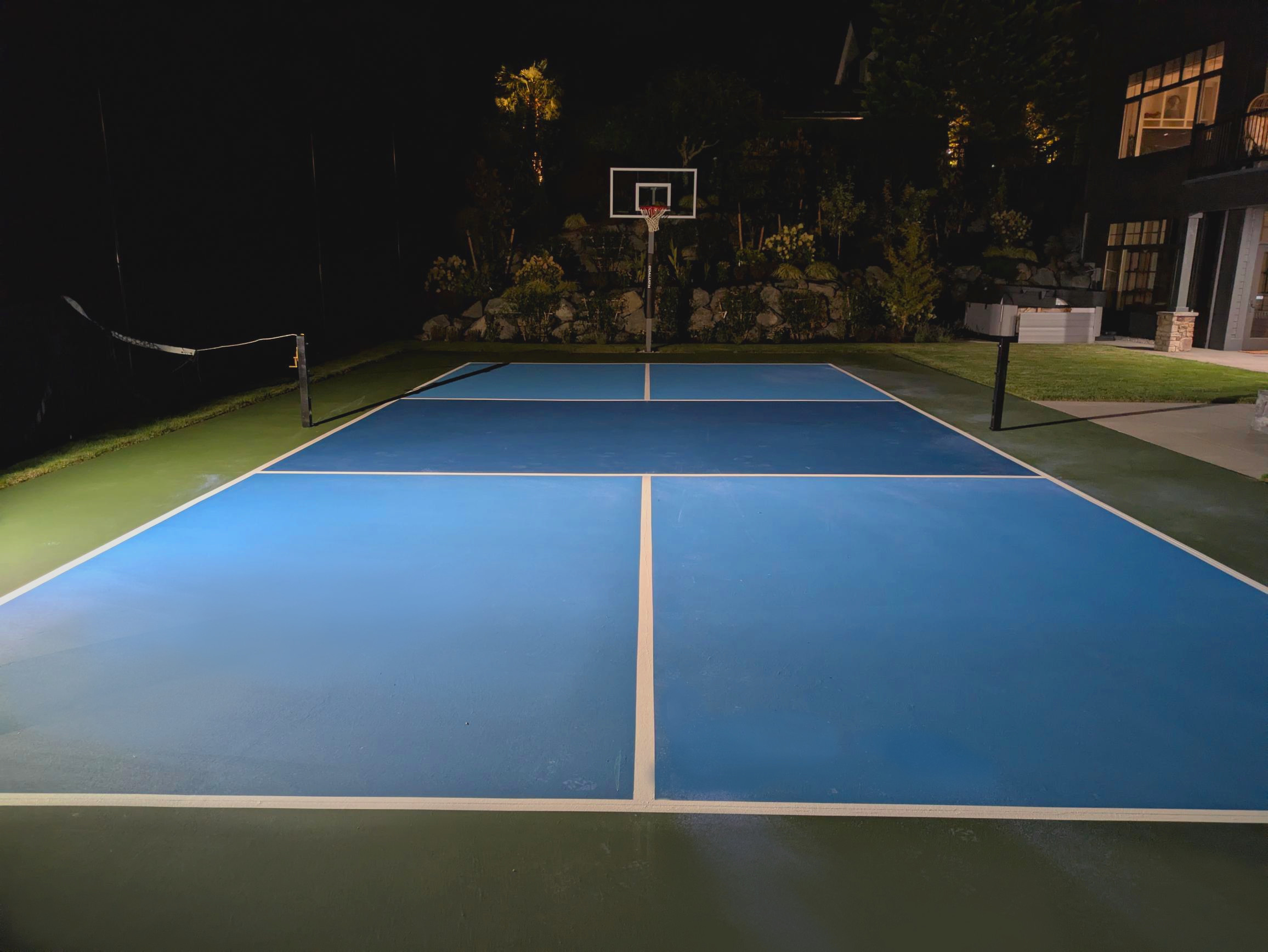
If you’re thinking about building or resurfacing a backyard pickleball court on concrete in Western Washington, the weather here matters a lot. At 1-800-STRIPER of Bellevue, most of the pickleball courts we paint are concrete slabs in residential backyards across the Seattle area, and we see the same weather-related problems over and over again.
Need help with a concrete pickleball court?
Contact 1-800-STRIPER of Bellevue for professional pickleball court painting and resurfacing in Seattle and the Eastside.
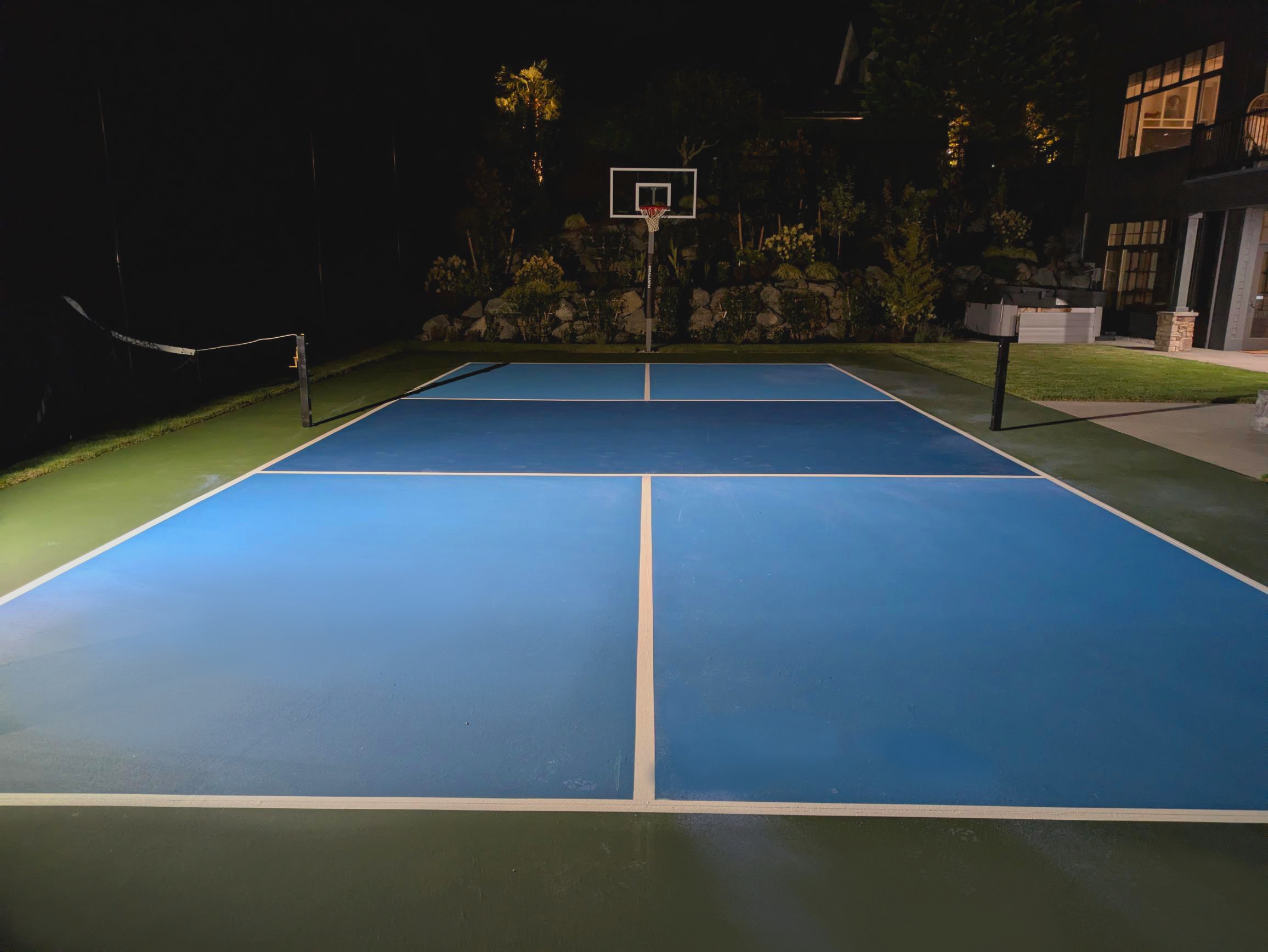
Concrete vs. Asphalt Pickleball Courts in the Pacific Northwest
Both concrete and asphalt can make great pickleball courts, but Western Washington’s rainy, moss-prone climate affects them differently. Asphalt is more flexible and can develop soft spots, while concrete is harder and more stable but reacts differently to moisture, freeze–thaw cycles, and organic growth.
Because so many backyard pickleball courts in Seattle, Bellevue, and surrounding cities are built on concrete pads, it’s important to understand how our local climate affects concrete pickleball court longevity.
1. Moisture Intrusion: The Silent Concrete Court Killer
Concrete doesn’t develop “soft spots” the way asphalt does, but it absolutely absorbs and holds water. In Western Washington, where surfaces stay damp for long stretches, that moisture works its way into the slab and starts causing problems under the coating.
How Moisture Affects Concrete Pickleball Courts
- Blistering and delamination: Trapped moisture below the acrylic coating can create bubbles or blisters over time.
- Spalling and surface pop-outs: When absorbed water freezes, it can push small chunks of the surface off.
- Upward moisture pressure: If the slab was poured without proper drainage or a vapor barrier, moisture can migrate upward year-round.
Backyard courts in areas like Sammamish, Woodinville, and Issaquah often sit on
wetter soils, which makes moisture management even more important.
2. How Concrete Cracks in the Seattle Area
Concrete will crack. That’s normal. The question is how much it moves and how those cracks impact pickleball play. Our wet winters and occasional freezes in Western Washington speed this process up.
Common Types of Concrete Cracks on Pickleball Courts
- Shrinkage cracks: Appear as the concrete cures. In our cooler, damp climate, curing can be slower, so these may show up months after the pour.
- Joint cracks: Expansion joints and control joints are designed to take movement, but when water gets in and freezes, those joints can open up.
- Structural cracks: Caused by shifting or saturated soil beneath the slab, more common on sloped or poorly drained sites.
Even hairline cracks can affect pickleball ball bounce and player safety, and they become convenient pathways for more water to enter the surface.
3. Moss, Algae, and Organic Debris: A PNW Specialty
If you have a shaded backyard pickleball court in the greater Seattle area, you already know:
moss loves concrete.
Why Moss Grows Faster on Concrete
- More porous surface: Concrete has more tiny pores to hold moisture compared to asphalt.
- Shaded environments: Tall evergreens and surrounding homes block sun, keeping surfaces damp.
- Organic buildup: Pine needles, leaves, and dirt hold moisture against the surface and feed moss growth.
Left unchecked, moss and algae can:
- Make the court slippery and unsafe.
- Stain lighter court colors.
- Grow under the coating and contribute to bubbling and premature coating failure.
Regular sweeping or blowing, plus occasional professional pressure washing, is essential for backyard courts in Bellevue, Kirkland, Redmond, and Mercer Island.
4. Freeze–Thaw Cycles Hit Concrete Courts Harder Than You Think
Western Washington doesn’t see extreme cold like the Midwest, but we do get enough overnight freezes for freeze, thaw damage to matter.
Because concrete absorbs water more deeply than asphalt, that water expands from within the slab when it freezes. Over time, that can lead to:
- Surface scaling: Thin layers of the top surface flake off.
- Pop-outs: Small, crater-like spots across the court.
- Widening cracks: Minor cracks become bigger and more noticeable each winter.
- Coating damage: As the substrate moves, coatings can lose adhesion or develop fine fractures.
The north and east sides of most concrete courts usually stay colder and wetter, so they tend to show damage first.
5. Coating and Line Adhesion on Concrete in a Rainy Climate
One of the biggest differences we see between concrete and asphalt pickleball courts in Western Washington is how coatings behave on the surface.
Challenges With Concrete Pickleball Court Coatings
- Moisture vapor: Water moving upward through the slab can interfere with adhesion during curing.
- Alkalinity: Concrete’s chemistry can affect certain coating systems if prep isn’t done correctly.
- Shorter dry windows: Dew, cloud cover, and cooler temps limit how many hours per day we can safely apply coatings.
In practical terms, that means concrete courts in Seattle and the Eastside require more surface prep and more careful scheduling than most national guides suggest.
6. Concrete Can Last 20–30 Years in Western Washington (With the Right Care)
The upside: when a concrete pickleball court is poured well and maintained properly, it can last decades, even in the Pacific Northwest. The key is simple but not always intuitive:
control the water and the organic debris.
Best Practices for Backyard Concrete Pickleball Courts
- Ensure water drains away from the slab, not toward it.
- Seal or repair cracks before each winter season.
- Blow or sweep off leaves, needles, and dirt regularly.
- Schedule pressure washing 1–2 times per year with appropriate pressure and cleaners.
- Plan resurfacing and repainting during the driest part of the year for maximum adhesion and longevity.
Small, consistent maintenance decisions can dramatically extend the life of a concrete pickleball court in Western Washington’s climate.
Concrete vs. Asphalt: Quick Comparison for Western Washington Pickleball Courts
| Issue | Asphalt Pickleball Court | Concrete Pickleball Court |
|---|---|---|
| Moisture impact | Soft spots, depressions, and rutting | Blisters, spalls, and upward moisture pressure |
| Cracking behavior | Random cracking over time | More predictable cracking along joints and stress points |
| Moss and algae growth | Moderate | High, especially in shaded backyards |
| Freeze–thaw sensitivity | Moderate | High, due to deeper moisture absorption |
| Typical lifespan | 10–15 years with good care | 20–30 years with proper maintenance |
| Surface prep needs | Medium | High, especially in wet climates |
Service Area: Where We Paint Pickleball Courts in Western Washington
1-800-STRIPER of Bellevue provides concrete and asphalt pickleball court painting,
line striping, and sport court services throughout Western Washington, including:
Frequently Asked Questions About Concrete Pickleball Courts in Western Washington
How long does a concrete pickleball court last in the Seattle area?
With proper drainage, regular cleaning, and timely crack repair, a concrete pickleball court in Western Washington can often last 20–30 years before needing major structural work. Surface coatings and lines will need to be refreshed more frequently.
Is concrete better than asphalt for a backyard pickleball court?
For many homeowners in the Seattle area, concrete is a great long-term choice because it’s stable and durable. However, it requires proper prep, good drainage, and regular maintenance to handle our wet climate.
How often should I pressure wash my concrete pickleball court?
Most backyard pickleball courts in Western Washington benefit from 1–2 professional cleanings per year, especially if the court is shaded or surrounded by trees. This helps control moss, algae, and debris that can damage the coating and create slippery conditions.
Can you paint lines and coatings on an existing concrete slab?
Yes. In many cases, an existing concrete pad can be turned into a high-quality pickleball court with proper cleaning, crack repair, surface prep, and professional coatings. The key is evaluating the concrete condition and moisture situation first.
Need Help With a Concrete Pickleball Court in Western Washington?
If you’re planning a new backyard pickleball court or need to refresh an existing concrete slab in Seattle, Bellevue, Kirkland, Redmond, or the surrounding area, we can help.
1-800-STRIPER of Bellevue specializes in:
- Concrete pickleball court painting and line striping
- Sport court layouts for tennis, basketball, and multi-use courts
- Court cleaning and maintenance recommendations for Western Washington’s climate
Reach out today to talk about your project, get a quote, or schedule an on-site visit for your backyard pickleball court.