Outdoor Tennis Courts in Western Washington: The Ultimate Guide
Serving Seattle, Bellevue, Kirkland, Redmond, Sammamish, Woodinville, Issaquah, Mercer Island & nearby communities.
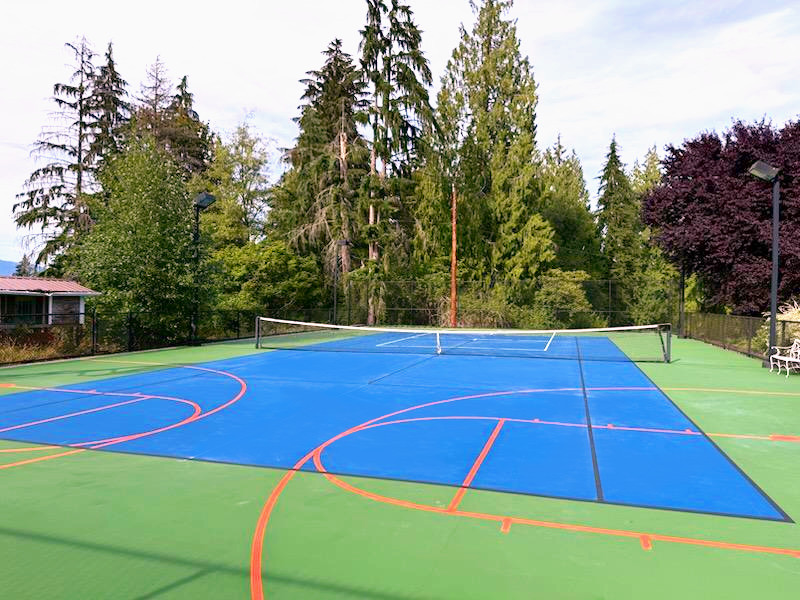
Outdoor tennis courts in Western Washington look like courts anywhere else—until you live with them for a few seasons.
Around Seattle and the Eastside, it’s not extreme heat that breaks courts down, it’s constant moisture, tree cover, moss, and slow freeze, thaw damage.
Whether you manage a private backyard court, an HOA court, or a shared court for a school or club, this guide explains how our local climate affects tennis court surfaces, lines, drainage, and playability and how to keep them in great shape.
Need help with a tennis court?
1-800-STRIPER of Bellevue provides professional tennis court painting, line striping, and sport court services throughout Seattle and the Eastside.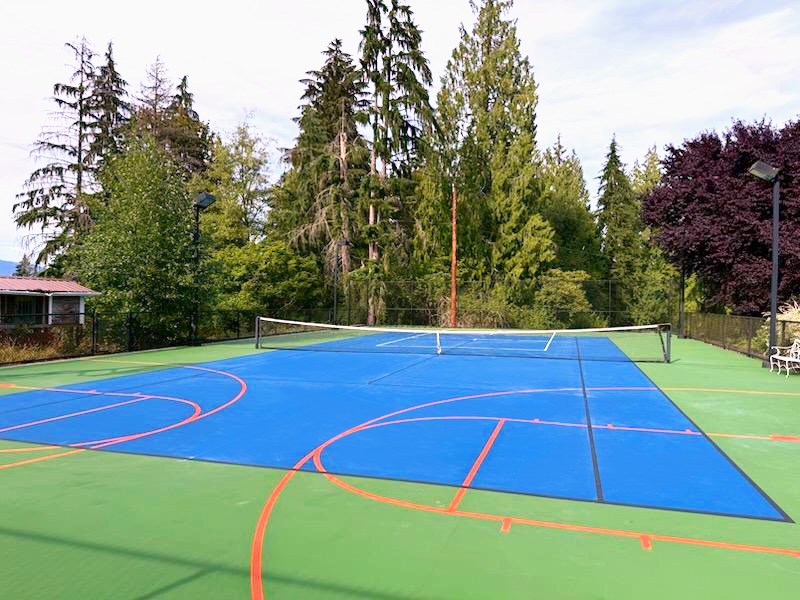
1. Why Tennis Courts in Western Washington Age Differently
Tennis courts in Western Washington deal with a specific combination of conditions that you don’t see in hotter, drier regions:
- Long wet seasons: Courts stay damp for days, not hours.
- Dense tree cover: Needle drop, leaves, shade, and sap all feed moss and algae.
- Mild but real winters: Enough freeze, thaw to slowly crack and scale surfaces.
- Soft, wet soils: Hidden drainage problems that show up years later in the surface.
Public systems like Seattle Parks and Recreation’s 100+ outdoor tennis courts and
the City of Bellevue’s outdoor tennis courts deal with this reality every year—
and private courts face the same pressures, just with less staff to maintain them.
2. Concrete vs. Asphalt Tennis Courts in the Pacific Northwest
Most outdoor tennis courts around Seattle are built on either concrete or asphalt with an acrylic coating system on top.
Concrete Tennis Courts
Pros:
- Very stable surface and consistent ball bounce.
- Long structural lifespan (often 20–30+ years with good care).
- Ideal for high-level play when built and coated correctly.
Cons in our climate:
- Absorbs moisture, which can lead to blistering and pop-outs under coatings.
- Moss and algae take hold quickly in shaded, damp locations.
- Predictable cracking along joints still affects coating and linework.
Asphalt Tennis Courts
Pros:
- Slightly “softer” feel underfoot.
- More forgiving when the ground underneath moves.
- Typically lower upfront installation cost.
Cons in our climate:
- Moisture softens the asphalt binder over time.
- Develops depressions and “birdbaths” where water sits.
- Surface raveling and cracking progress faster in wet conditions.
For many private and HOA courts in Bellevue, Kirkland, Redmond, and Sammamish, concrete is the better long-term choice,
as long as drainage is handled well and owners commit to regular maintenance.
3. Moisture: The Main Enemy of Tennis Court Surfaces
On a surface as large as a tennis court, even minor drainage issues become obvious. The Pacific Northwest’s wet seasons magnify those issues.
How Moisture Affects Concrete Tennis Courts
When a concrete tennis court in Bellevue, Redmond, or Sammamish stays damp:
- Moisture moves up through the slab and can lift or blister acrylic coatings.
- Freeze–thaw cycles cause surface scaling and pop-outs, especially near joints and edges.
- Water in hairline cracks widens them over time, creating visible faults.
How Moisture Affects Asphalt Tennis Courts
On asphalt courts in places like Kirkland, Renton, or North Seattle:
- Long-term moisture softens the asphalt binder.
- Heavy play near baselines compresses softened areas into depressions and puddles.
- Standing water destroys coatings faster and leads to chalky, patchy surfaces.
Cities like Redmond Parks & Recreation openly note that outdoor sport courts are open for
drop-in use but need ongoing care and monitoring for these exact reasons.
4. Moss, Algae, and Organic Debris: Reality for PNW Tennis Courts
Tennis footwork depends on confident lateral movement. In Western Washington, that makes slippery growth a serious issue.
Many courts are:
- Tucked behind homes or clubhouses.
- Lined with cedars, firs, and maples.
- Partially shaded most of the day.
Perfect conditions for:
- Moss along baselines, corners, and fence lines.
- Algae films in low areas and shaded sides.
- Needles, leaves, and dirt that trap moisture against the surface.
Moss and algae:
- Create slick, dangerous patches—especially near baselines where players push off.
- Stain court colors and linework.
- Trap moisture and shorten coating life.
- Make courts look abandoned even when they’re structurally sound.
Public facilities like USTA Pacific Northwest partner venues and local parks such as Perrigo Park in Redmond or Robinswood Tennis Center in Bellevue all have to deal with this same moss-and-debris cycle.
5. Freeze–Thaw Damage on Tennis Courts
Seattle’s winters are mild, but our courts are usually wet when it freezes. That’s enough to cause steady damage over time.
On Concrete Tennis Courts
- Water inside the concrete expands as it freezes → micro-cracking and scaling.
- Joints and edges show spalling first.
- Coatings develop fine fracturing over these areas.
On Asphalt Tennis Courts
- Cracks widen each winter, especially at centerlines and baselines.
- Birdbaths deepen incrementally.
- Surface texture shifts from smooth to rough as aggregate loosens.
You might not notice issues after one winter, but after a few seasons, it shows up in ball bounce and player footing.
6. Color, UV, and How Tennis Courts Look Over Time
UV exposure in Western Washington is different from high-sun states like Arizona or California. Courts fade more slowly,
but they stain more quickly from organic materials and moisture.
What to Expect from Colors in the PNW
- Dark green blends with the landscape but shows moss streaks early.
- Blue courts generally hold color well and are popular on both public and private courts.
- Light colors highlight dirt, mildew, and algae stains.
- White lines slowly turn gray or tan from fine dirt and moisture buildup.
Guides like this overview of Seattle tennis courts show how often courts here are surrounded by trees and shade, which directly affects how colors age visually.
7. Drainage & Grading: The Hidden “Success or Failure” Factor
Most owners focus on color and lines, but drainage design is what decides whether a tennis court is still
playable 10–15 years later.
Common Drainage Issues in Seattle & the Eastside
- Courts built nearly flat or with minimal slope.
- Landscaping added later that traps water at the edges.
- Grass or soil right up to the edge of the playing surface.
- Downspouts or roof drainage directed toward the court.
- Subsurface water or springs on sloped lots (common in Issaquah and Sammamish).
If water regularly sits on the court after rain, no coating system will last as long as it should.
8. How Climate Affects Tennis Play: Bounce, Traction, and Lines
For tennis players, a court doesn’t just need to look good—it needs to play right.
In Western Washington, climate impacts:
- Ball bounce: Uneven bounce over cracks, depressions, and scaled areas; slower ball speed on damp or rough surfaces.
- Traction: Slippery footing after morning dew or light rain; moss and algae patches near baselines and corners.
- Lines: Faded or dirty lines make it harder to make accurate calls; peeling lines can create small edges that catch shoes.
When a court is properly cleaned, repaired, and re-striped, players feel the difference immediately—even if the slab underneath hasn’t changed.
9. Recommended Maintenance Schedule for PNW Tennis Courts
A straightforward maintenance routine keeps outdoor tennis courts safer and more attractive in Western Washington.
Monthly
- Blow or sweep the entire surface to remove needles, leaves, and dirt.
- Walk the court and note any areas that stay damp or slick longer than others.
Every 3–6 Months
- Inspect for new or widening cracks.
- Check for puddling after normal rain.
- Look for early moss or algae growth along fences, corners, and shaded areas.
1–2 Times Per Year
- Schedule professional cleaning/pressure washing with appropriate PSI for acrylic surfaces.
- Spot-treat moss and algae before they spread.
- Gently clean lines to preserve visibility and contrast.
Every 4–8 Years
- Recoat and repaint the court surface and lines, depending on usage and exposure.
- Address cracks and low areas as part of a resurfacing plan.
Every 15–25+ Years
- Plan for major repairs or more intensive resurfacing, depending on structure and subgrade conditions.
Courts in tree-heavy neighborhoods like Somerset, Newport, Bridle Trails, parts of Sammamish and Woodinville, and many North Seattle
neighborhoods will typically need more frequent cleaning than wide-open sites.
10. When Is It Time to Resurface or Repaint a Tennis Court?
You don’t always need a full rebuild. In many cases, cleaning, repairs, and a new coating system can add years of life
to an existing court. Signs it’s time to call a professional include:
- A surface that looks dull, chalky, or patchy.
- Faded, flaking, or hard-to-read lines from the baseline.
- Players noticing slippery footing, especially after light rain or dew.
- Puddles that stick around long after storms.
- Moss and algae that return quickly after cleaning.
- Visible blisters, bubbles, or peeling in the coating.
- Cracks that are expanding or branching across the surface.
Organizations listed with USTA Pacific Northwest and local parks
departments often follow similar cues when deciding when to resurface their own courts.
11. Where This Matters Most: Seattle & Eastside Tennis Court Locations
Everything in this guide is especially relevant if your court is located in:
- Seattle: Laurelhurst, Magnolia, View Ridge, Bryant, Queen Anne, Madrona, and other tree-heavy neighborhoods.
- Bellevue: Somerset, Newport, Bridle Trails, West Bellevue, Clyde Hill, and nearby areas.
- Kirkland: Houghton, Market, Juanita.
- Redmond: Education Hill, Union Hill, Redmond Ridge, and other neighborhoods near parks like Grass Lawn and Hartman.
- Sammamish & Issaquah: Wooded and sloped properties.
- Mercer Island, Woodinville, Renton, and surrounding communities.
If you’re not sure how your court compares to public options, you can browse local public courts via resources like tennis courts in Bellevue or tennis courts in Redmond.
Frequently Asked Questions About Outdoor Tennis Courts in Western Washington
How long does an outdoor tennis court last in the Seattle area?
With proper drainage, regular cleaning, and periodic resurfacing, a concrete tennis court in Western Washington can often last 20–30+ years structurally. Asphalt courts typically have a shorter lifespan due to moisture-related wear. Coatings and lines will need to be refreshed more frequently.
Is concrete better than asphalt for tennis courts here?
For most private and HOA tennis courts in the Seattle area, concrete is the better long-term choice. It offers a consistent bounce and longer lifespan, but it must be paired with good drainage and ongoing maintenance to handle our wet climate.
How often should I clean my outdoor tennis court?
Light cleaning (sweeping or blowing) monthly and more thorough professional cleaning 1–2 times per year is recommended in Western Washington. Courts under heavy tree cover or in very shady locations may need more frequent cleaning to
control moss and algae.
Can you paint lines and resurface an existing slab?
Yes. Many existing concrete and asphalt pads at homes, HOAs, schools, and churches can be turned into high-quality tennis courts with proper cleaning, crack repair, surface prep, and professional coating and line striping. The condition of the slab will determine how
much prep work is needed.
Need Help With a Tennis Court in Western Washington?
If you have an outdoor tennis court in Seattle, Bellevue, Kirkland, Redmond, Sammamish, Woodinville, Issaquah, Mercer Island, or the surrounding area
and you want it to look better, play better, and last longer, we’d be glad to help.
1-800-STRIPER of Bellevue specializes in:
- Tennis court painting and professional line striping.
- Sport court layouts and multi-use courts.
- Maintenance recommendations tailored to Western Washington’s climate.
Reach out today to talk about your tennis court project, get a quote, or schedule an on-site visit.