Warehouse Line Painting
In Reston, VA
OSHA-Compliant Safety Markings
1-800-STRIPER provides professional warehouse line painting in Reston, VA — OSHA-compliant aisle lines, pedestrian walkways, forklift lanes, and safety zone markings that keep permanent aisles clearly marked, using durable epoxy and traffic paint for industrial facilities across the Dulles logistics corridor.
1-800-STRIPER® of Reston PROVIDes Warehouse Floor Markings Services NEAR YOU
Want your indoor space to operate more efficiently?
Warehouse and interior markings ensure clear traffic lanes, organized storage zones, and designated spaces designed to help your business operate safely and efficiently.
Benefits:
Warehouse Line Painting in Reston, VA
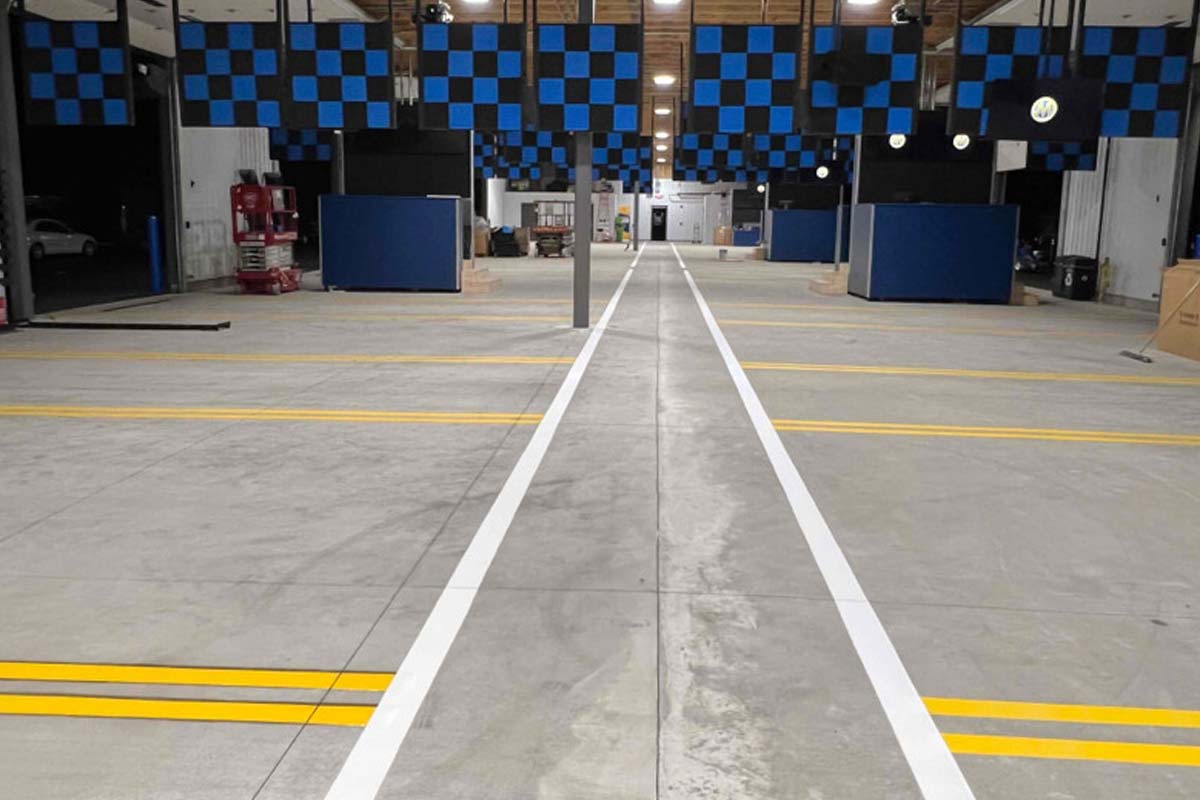
Interior floor marking is a safety system that happens to be made of paint. Aisle lines, pedestrian walkways, forklift lanes, and hazard zones tell a driver on a lift and a picker on foot where each of them belongs, in a building where being in the wrong place is expensive. We mark distribution centers, manufacturing floors, and back-of-house retail space across Sterling, Herndon, and the Dulles logistics corridor. The surprising part, for most facility managers, is how little of this OSHA actually spells out — the duty is federal and real, but the numbers everyone quotes are not.
What OSHA Requires for Aisle Markings
The requirement lives in one nine-word sentence: “Permanent aisles and passageways shall be appropriately marked.” That is OSHA 29 CFR 1910.176(a), the materials-handling standard, and it is the whole of the federal marking duty. Two words carry it. Permanent attaches the duty to aisles that are a fixed part of the floor plan, not a lane taped down for an afternoon. Appropriately hands the judgment to you and your safety officer — and then declines to define it further, asking only for “sufficient safe clearances.”
Here is what the standard does and does not pin down:
| Question | What OSHA 1910.176(a) says |
|---|---|
| Must permanent aisles be marked? | Yes — “appropriately marked.” |
| What color must the lines be? | No color is specified. |
| How wide must the lines be? | No width is specified. |
| How wide must the aisle itself be? | No number — “sufficient safe clearances.” |
Safety Color Conventions (ANSI Z535.1)
Because OSHA mandates no color, the scheme comes from convention rather than law — and the convention worth following is the ANSI Z535.1 safety color code. Most facilities mark aisles and traffic lanes yellow, equipment and workstations white, fire and emergency equipment red, and informational or safety areas blue or green. Marking your aisles white instead of yellow violates nothing, but a consistent, conventional scheme lets your people read the floor at a glance instead of relearning it. We help you apply one scheme across the building so the markings communicate the same thing everywhere.
Line Widths and Layout Planning
There is no OSHA-mandated line width, so width is an engineering choice, not a compliance number. Common industry practice runs 2 to 4 inches, with wider or doubled lines on main forklift routes where the separation between people and equipment matters most. We recommend a width based on your actual traffic, rack layout, and sightlines from a lift seat, then plan the aisles and walkways around how the building really moves — not around a figure copied from someone else’s floor.
Painting Around Operations
Most facilities do not have to shut down to get marked. We section off one area at a time and use fast-drying paint so work continues around us, scheduling the disruptive parts for nights, weekends, or slow periods to keep your Dulles-corridor operation running. Concrete is cleaned and, where needed, degreased first, because on a sealed slab surface preparation decides whether the paint lasts more than the product itself does.
Complete Marking Systems
Aisle lines are the core, but a safe floor is a whole system. Alongside the aisles we paint pedestrian walkways, forklift lanes, dock and staging zones, hazard striping, and floor labels for racks and equipment. Clear separation between people on foot and equipment in motion is the entire point, so we map your traffic flow with you first and then paint a coordinated system rather than a set of disconnected lines.
For a full list of our pavement marking services, visit our parking lot striping in Reston page.
Businesses We Serve




How it Works

GET A FREE ESTIMATE
Contact us today and we’ll have a quote to you in 24 hours

SCHEDULE A STRIPING
We’ll have your space restriped in less than 7 days, without affecting your business hours

GET A PARKING LOT THAT POPS
For a budget-friendly price, you’ll get a parking lot that looks like new
We proudly work with:


We proudly work with:

Frequently Asked Questions About Warehouse Line Painting in Reston, VA
What does OSHA require for warehouse aisle markings?
OSHA 29 CFR 1910.176(a) requires that permanent aisles and passageways in facilities using mechanical handling equipment be “appropriately marked” and kept clear. Notably, OSHA sets no specific line color or width — the standard is performance-based, calling for “sufficient safe clearances.” We mark aisles, walkways, and forklift lanes in durable paint so the layout is unmistakable and the facility passes inspection.
What colors should warehouse floor markings be?
OSHA does not mandate specific colors, but most facilities follow the ANSI Z535.1 safety color code: yellow for aisles and traffic lanes, white for equipment and workstations, red for fire and emergency equipment, and blue or green for informational and safety areas. We help you apply a consistent color scheme so the markings communicate at a glance.
How wide should warehouse aisle lines be?
There is no OSHA-mandated line width — the rule only says permanent aisles must be appropriately marked. Common industry practice is 2- to 4-inch lines, with wider or double lines for main forklift routes. We recommend a width based on your traffic and rack layout, since the goal is clear separation between forklifts and people.
Can you paint markings without shutting the warehouse down?
Usually, yes. We section off one area at a time and use fast-drying paint so operations continue around the work. Floors are cleaned and, where needed, degreased so the paint bonds to sealed concrete. We schedule around shifts — nights, weekends, or slow periods — to keep your Dulles-corridor facility running.
What warehouse markings do you paint besides aisles?
Along with aisle lines we paint pedestrian walkways, forklift lanes, dock and staging zones, hazard striping, and floor labels for racks or equipment. Clear pedestrian and equipment separation is the core of a safe facility. We map the traffic flow with you first, then paint a complete system rather than isolated lines.