
Wheel Stop Installation
In Naples, FL
Concrete and Rubber Parking Stops
1-800-STRIPER provides professional wheel stop installation in Naples, FL — concrete, recycled-rubber, and composite wheel stops at stall heads protecting walkways and ADA routes throughout Collier County.
1-800-STRIPER® of Naples PROVIDes Wheel Stops Services NEAR YOU
Need to protect vehicles or walls from accidental damage?
Wheel stops (also called parking blocks) protect your property, enhance safety, and improve parking lot organization.
Benefits:
Wheel stops prevent vehicles from parking too far into a space or overextending into other spots, pedestrian walkways, and other areas, while also helping with vehicle alignment. They can prevent damage to buildings, curbs, or landscaping. Wheel stops also serve as clear visual cues for proper parking and are sometimes used on slopes to prevent cars from rolling.
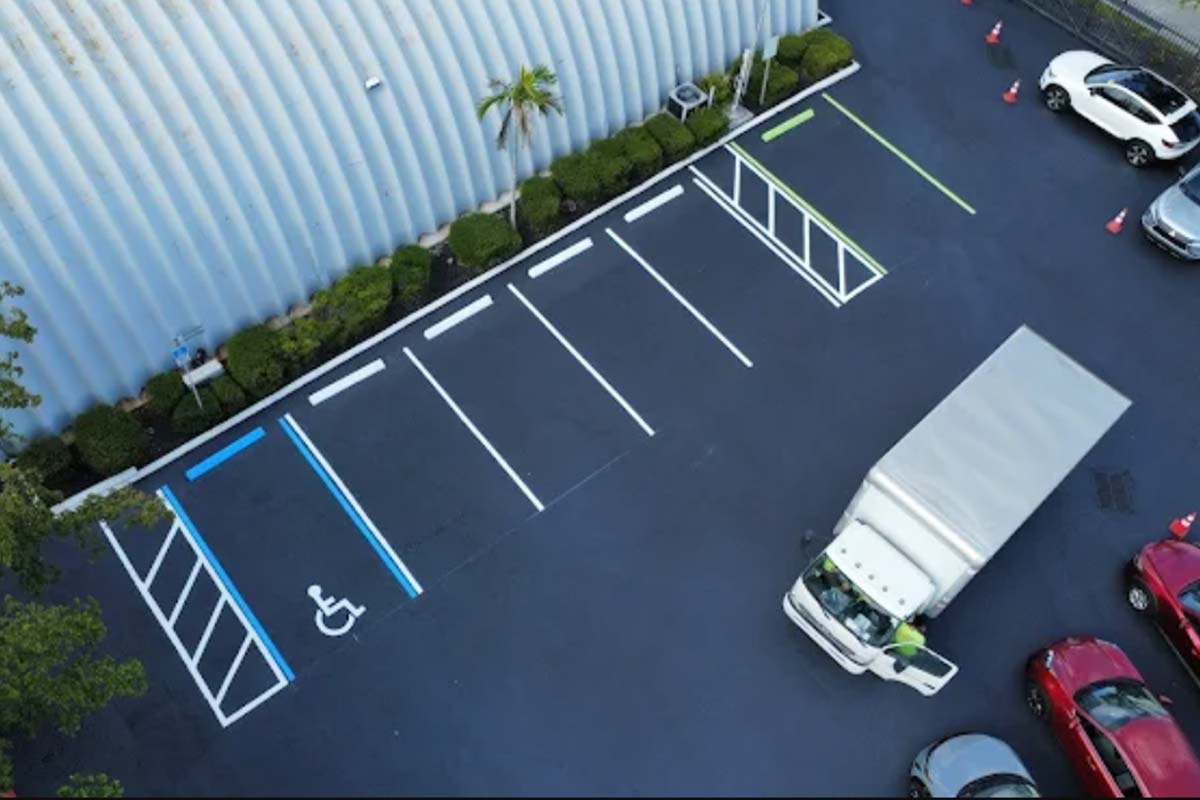
What Wheel Stops Do
Wheel stops mark the end of a parking stall and keep vehicles from rolling onto sidewalks, storefronts, landscaping, or the next stall. On accessible routes they protect the clear path a wheelchair needs; at storefronts they add a layer of protection against bumper damage to the building; and along walkways they keep the pedestrian path open. They’re a small, inexpensive piece of infrastructure that prevents expensive damage and liability.
Materials: Concrete, Rubber, and Composite
Concrete wheel stops are the traditional choice — heavy, rigid, and long-lasting, though they can crack and spall over years of impact. Recycled-rubber and plastic-composite stops are lighter, won’t crack or spall, resist Florida moisture and UV, and are easier to replace. In coastal Collier County, where salt air and intense sun age concrete faster, many properties prefer rubber or composite for their durability and color retention. We help you match the material to the lot: concrete where mass matters, rubber or composite where a lighter, fade-resistant stop fits better.
Where Wheel Stops Belong
Placement is half the job. Wheel stops go at the head of stalls that front sidewalks, storefronts, landscaping, or other stalls, and at accessible spaces where vehicle overhang would block the route. They’re set back far enough to stop the tire while leaving the stall fully usable — too far forward and they shorten the stall; too far back and they don’t protect anything. We lay them out so they do their job without becoming a trip hazard.
Anchoring Method
A wheel stop is only as good as its anchor. We pin concrete stops with steel rebar driven through pre-cast holes into asphalt, or anchor-bolt them on concrete substrate; rubber and composite stops use spikes or bolts suited to the surface. The substrate matters — asphalt and concrete take different anchors — and correct embedment is what keeps a stop from shifting or popping out under repeated bumper contact.
ADA Accessible-Route Protection
Where wheel stops border an accessible space or route, they help keep vehicles from overhanging the clear path the 2010 ADA Standards require — generally a 36-inch minimum clear width along an accessible route. Placed correctly, they protect that path; placed wrong, they can intrude on it. We position them so the accessible route stays unobstructed and compliant.
Replacement and Service Area
Cracked, loose, or sun-bleached wheel stops get replaced and re-anchored, with color matched to the rest of the lot. We can swap individual stops without redoing the whole run. We install and replace wheel stops across Collier County — Naples, Marco Island, Bonita Springs, and the surrounding area — often as part of a restripe.
For a full list of our pavement marking services, visit our parking lot striping in Naples page.
Businesses We Serve




How it Works

GET A FREE ESTIMATE
Contact us today and we’ll have a quote to you in 24 hours

SCHEDULE AN INSTALLATION
We’ll have your installation scheduled restriped in less than 7 days, without affecting your business hours

GET A PARKING LOT THAT POPS
For a budget-friendly price, you’ll get a parking lot that looks like new
We proudly work with:


We proudly work with:


Frequently Asked Questions About Wheel Stop Installation in Naples, FL
What is the purpose of wheel stops?
They stop a vehicle at the right point in a stall — protecting sidewalks, storefronts, landscaping, and accessible routes from cars that would otherwise roll too far. They also keep vehicles from overhanging into walkways or the next space.
How are wheel stops installed and anchored?
They’re set at the stall head and anchored to the surface — steel rebar pins driven into asphalt, or anchor bolts on concrete. Rubber and composite stops use spikes or bolts. Proper anchoring is what keeps them from shifting under repeated bumper contact.
Concrete vs. rubber wheel stops — which is better?
Concrete is heavier and rigid but can crack; rubber and composite are lighter, won’t crack or spall, and shrug off Florida moisture and UV. Neither is universally better — it depends on the lot. We match the material to your surface and how the stops will be used.
Do wheel stops protect ADA accessible routes?
They can help. Placed correctly at the head of an accessible stall, they keep vehicles from overhanging into the clear path the ADA Standards require. Placement matters — set wrong, a wheel stop can become a trip hazard, so we position them carefully.
Can you replace only the broken wheel stops?
Yes. We can swap out cracked or loose stops individually and re-anchor them, matching color to the rest of the lot, rather than replacing the whole run.
Do rubber wheel stops fade in the Florida sun?
Quality recycled-rubber and composite stops are UV-stabilized and hold their color far longer than cheap alternatives. They’re a good fit for Collier County lots where sun exposure is constant. We use stops built to last outdoors here.