Thermoplastic Striping
In Fort Lauderdale, FL
Long-Lasting Pavement Markings
1-800-STRIPER® provides professional thermoplastic striping in Fort Lauderdale, FL — long-service-life pavement markings for stop bars, crosswalks, directional arrows, and fire lanes applied at roughly 400°F per AASHTO M249 and FDOT Section 711 specifications for high-traffic commercial lots across Broward County.
1-800-STRIPER® of Fort Lauderdale PROVIDes Thermoplastics Services NEAR YOU
Want to reduce the maintenance requirements for your parking lot?
Thermoplastic pavement markings are a durable, weather and vehicle-resistant striping option for your parking lot or facility.
You can utilize them for stop bars, ADA stalls, no-parking zones, directional arrows, crosswalks, or your entire parking lot.
Benefits:
How Thermoplastic Striping Is Applied
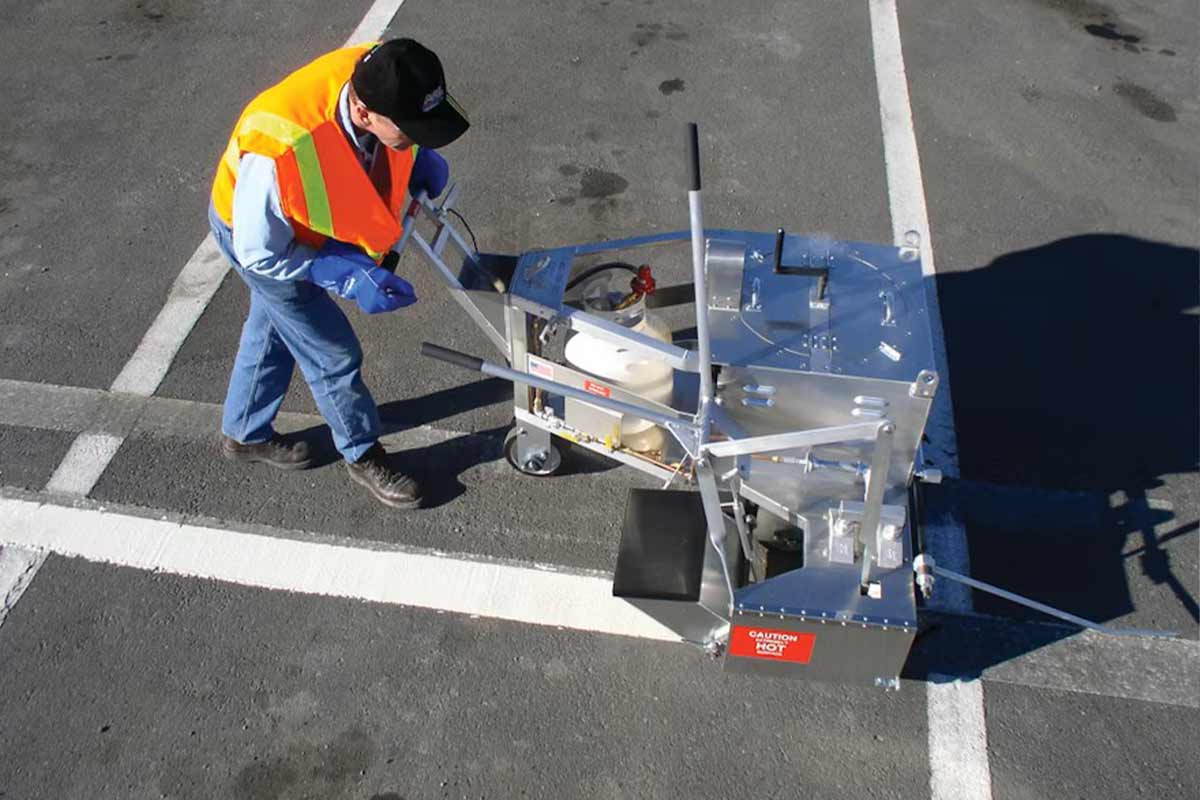
Thermoplastic striping is installed in five timed steps, with each stage built so the material melts, flows, and then hardens into a permanent bond with your pavement. Paint dries on top of a surface; thermoplastic fuses into it, which is the whole reason it lasts. Our crews run the same process on every Fort Lauderdale lot, from a retail plaza off Federal Highway to a warehouse loading area in Davie. South Florida heat and humidity make timing and surface prep especially important, so we don’t rush any stage.
- Clean and dry the pavement. We sweep off dirt, sand, and loose debris, then confirm the surface is completely dry. Thermoplastic will not grip a wet or dusty lot, and that matters here where afternoon storms leave puddles well into the evening.
- Heat the material to roughly 400°F. The thermoplastic arrives as a solid and is melted in a kettle until it turns molten and pourable. Holding a steady temperature keeps the mix even from the first line to the last.
- Apply the molten material. The liquid is laid down at the marked line width through a screed or spray applicator. It goes on thick, far thicker than a coat of paint, which is a big part of why it survives heavy traffic.
- Drop glass beads on top. While each line is still hot, we broadcast tiny glass beads across it. The beads embed into the surface and bounce headlights back toward drivers, giving the markings the night retroreflectivity that keeps lots readable after dark.
- Let it cool and bond. The line cools and hardens within minutes into a thick, durable marking that’s ready for traffic quickly. Once set, it shrugs off the scuffing and tire wear that erase ordinary paint.
The result is a marking that’s part of the pavement rather than a layer on top of it. That’s what lets thermoplastic stand up to Broward County traffic far longer than paint.
Thermoplastic vs. Paint: Which Lasts Longer?
Thermoplastic lasts much longer than standard paint because it’s thicker, bonds into the pavement, and carries reflective beads inside the material itself. Paint still earns its place on lower-traffic or budget-driven jobs, but the two wear very differently once they’re down. The table below lays out where each one fits.
| Factor | Thermoplastic | Standard paint |
|---|---|---|
| Durability | Long-lasting; resists tire wear and scuffing | Wears and fades faster under traffic |
| Best use | High-traffic lots, entrances, and drive lanes | Low-traffic areas and cost-sensitive jobs |
| Thickness | Thick, raised marking bonded into the surface | Thin film that sits on top |
| Night visibility | Glass beads give built-in retroreflectivity | Limited unless beads are added separately |
| Application | Heated to molten, then bonded as it cools | Sprayed or rolled, then air-dried |
The South Florida sun is hard on markings, and that’s where the gap really shows. Constant UV and heat fade thin paint quickly, while thicker thermoplastic holds its color and shape much longer.
For a busy commercial property, thermoplastic usually pays off at the entrances and main drive aisles that see the heaviest wheel traffic. For a quiet lot or a quick refresh, paint can be the smarter, simpler choice. If you’re weighing the two, call (954) 932-0437 for a free estimate and we’ll walk the lot with you.
Where Thermoplastic Markings Work Best
Thermoplastic performs best in the spots that take the most abuse and demand the clearest visibility. The thick application and bonded finish make it ideal anywhere tires roll constantly or drivers need firm guidance. Across Broward County properties, we see it used most in these areas:
- Entrances and exits, where vehicles slow, turn, and brake all day
- Stop bars at intersections and lot exit points
- Crosswalks carrying foot traffic between buildings and parking
- Directional arrows guiding one-way lanes and drive aisles
- Fire lanes that must stay sharp and legible for safety compliance
- High-traffic commercial lots like shopping centers, medical plazas, and distribution sites
The common thread is wear. A painted arrow in a busy entrance can fade within a single season, while a thermoplastic arrow keeps its crisp edge far longer. That staying power also means fewer lane closures for re-striping, which keeps a Fort Lauderdale property open and moving. For the lighter-use corners of a lot — back rows, overflow areas, and the like — we’ll often recommend paint and reserve thermoplastic for the zones that genuinely earn it.
Florida Specs: AASHTO M249 & FDOT Section 711
Florida commercial striping leans on two main standards, and quality thermoplastic markings are expected to meet both. The first is AASHTO M249, the national material specification for hot-applied thermoplastic published by the American Association of State Highway and Transportation Officials. It defines what the material is made of and how it has to perform once it’s installed, from binder content to durability.
The second is the FDOT Standard Specifications Section 711, Florida’s own rulebook for pavement markings. Section 711 spells out application thickness, which for thermoplastic commonly runs between 0.10 and 0.15 inch. That thickness is a big reason the markings last so long and hold reflective beads so well. Thicker lines also handle the heat and frequent rain that wear thinner markings down quickly.
Fort Lauderdale commercial properties reference these specs because they set a clear, measurable bar instead of leaving quality to guesswork. When a lot is striped to AASHTO M249 material standards and FDOT Section 711 thickness, owners and property managers can point to a recognized benchmark for how the job was done. We stripe to these standards so your lines meet what Florida expects from a commercial lot. Call (954) 932-0437 for a free estimate on your property.
For a full list of our pavement marking services, visit our parking lot striping in Fort Lauderdale page.
Businesses We Serve




How it Works

GET A FREE ESTIMATE
Contact us today and we’ll have a quote to you in 24 hours

SCHEDULE AN INSTALLATION
We’ll have your installation scheduled restriped in less than 7 days, without affecting your business hours

GET A PARKING LOT THAT POPS
For a budget-friendly price, you’ll get a parking lot that looks like new
We proudly work with:


We proudly work with:

Frequently Asked Questions About Thermoplastic Striping in Fort Lauderdale, FL
What is thermoplastic striping?
Thermoplastic striping uses a pre-mixed plastic marking material heated to roughly 400°F and applied molten to the pavement. As it cools, it bonds to the surface and hardens into a thick, durable marking. Glass beads are dropped in for nighttime retroreflectivity, keeping lines visible after dark. Thermoplastic striping in Fort Lauderdale works best on high-traffic commercial lots, holding up far longer than standard paint at entrances, stop bars, crosswalks, and fire lanes.
How long do thermoplastic pavement markings last?
Thermoplastic pavement markings last much longer than standard paint, especially under heavy traffic. Because the material is applied thick and bonds directly to the pavement, it resists wear from constant tire contact at busy entrances, stop bars, and drive aisles. Exact lifespan depends on traffic volume, pavement condition, and weather exposure across South Florida. For high-traffic commercial lots in Fort Lauderdale, Hollywood, and Plantation, thermoplastic striping is a smart long-term choice over repainting every season.
How is thermoplastic striping applied?
Thermoplastic striping is applied by heating the pre-mixed plastic material to roughly 400°F until it becomes molten, then laying it onto clean, prepared pavement. The hot material bonds to the surface and cools into a thick, hard-wearing marking, while glass beads are added for nighttime retroreflectivity. Proper surface prep matters, so the pavement must be clean and dry before application. Our thermoplastic striping in Fort Lauderdale follows this process for crosswalks, arrows, stop bars, and fire lanes.
Thermoplastic vs. paint — which is better for my parking lot?
It depends on your lot’s traffic. Thermoplastic is the better choice for high-traffic commercial lots because it is thicker, more durable, and lasts far longer than paint at entrances, stop bars, and crosswalks. Standard paint is fine for low-traffic or cost-sensitive jobs where markings see less wear. If your Fort Lauderdale property handles steady daily traffic, thermoplastic striping usually pays off over time. Call (954) 932-0437 for a free estimate and we will recommend the right option.
Does thermoplastic striping meet Florida DOT specifications?
Yes. Thermoplastic striping is governed by AASHTO M249, the hot-applied thermoplastic material specification, and in Florida by FDOT Standard Specifications Section 711. Under those standards, marking thickness is commonly 0.10 to 0.15 inch. Following these specifications helps ensure markings are durable and properly retroreflective for nighttime visibility. Our thermoplastic striping in Fort Lauderdale is applied with these material and thickness standards in mind, which matters for commercial lots, fire lanes, and crosswalks across Broward County.
How much does thermoplastic striping cost?
Thermoplastic striping cost depends on several factors, including the size of your lot, how many linear feet of striping you need, the layout’s complexity, surface prep, and which markings require thermoplastic versus paint. Because every Fort Lauderdale property is different, there is no flat rate. The best way to get an accurate number is a site evaluation. Call (954) 932-0437 for a free estimate, and we will assess your lot and recommend the right thermoplastic striping plan.