Fire Lane Striping
In Fort Lauderdale, FL
Code-Compliant Fire Lane Markings
1-800-STRIPER® provides professional fire lane striping in Fort Lauderdale, FL — marking compliant fire lanes, curbs, and no-parking zones per NFPA 1 and the Florida Fire Prevention Code for commercial properties throughout Broward County.
1-800-STRIPER® of Fort Lauderdale PROVIDes Fire Lane Striping Services NEAR YOU
Is your parking lot ready for first responders?
Our team is well-versed in local fire regulations and will parter with you to design a fire lane striping plan that creates unobstructed emergency access to protect your customers and property.
Core Services:
What Fire Lane Striping Includes
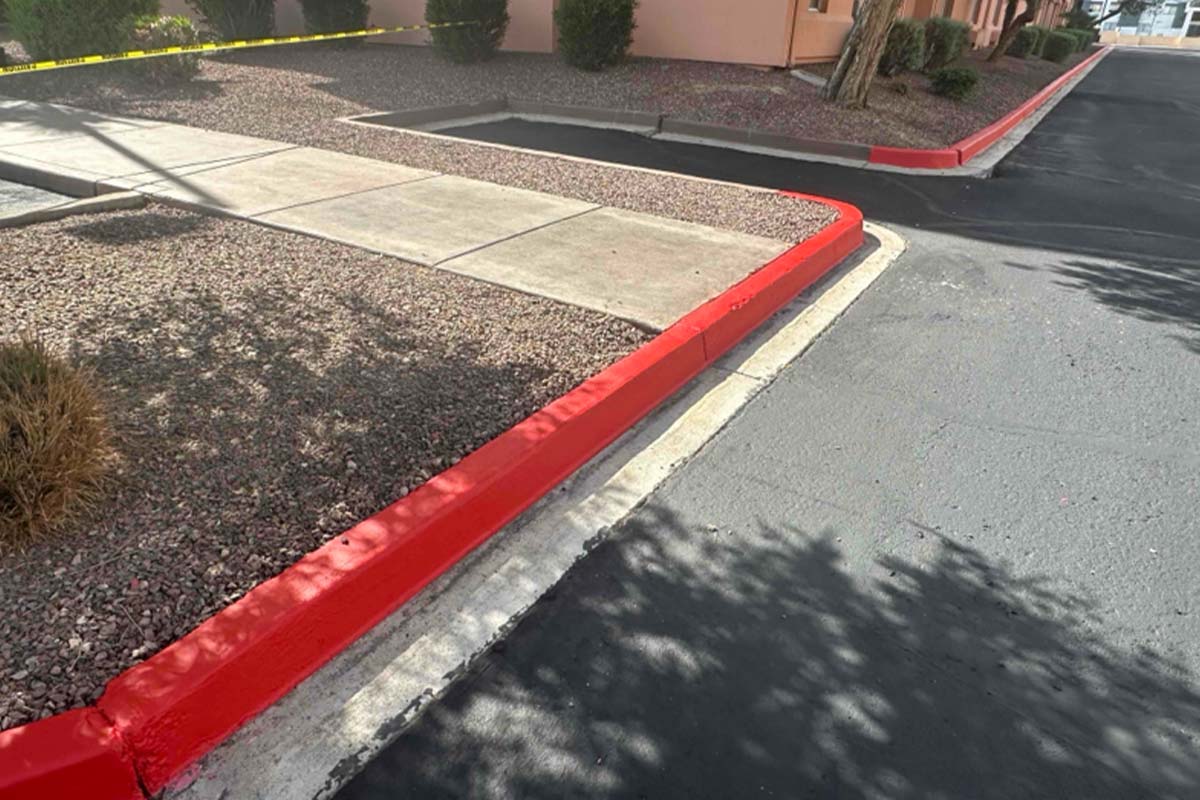
Fire lane striping combines three elements: painted curbs, stenciled “NO PARKING FIRE LANE” lettering repeated along the lane, and the signage that backs it up. Together they tell every driver where they can’t stop and give the fire department a clear, unobstructed path to the building. Leave out any one piece and the lane is easier to ignore — and easier for a code officer to flag.
The curb gets painted along its full length so the restriction reads as continuous, not just a spot here and there. Stenciled lettering goes down at intervals along that curb so the message stays visible whether a driver approaches from the north end or the south. Signs at the head of the lane and along its run reinforce the painted markings, so the restriction holds even where a curb is interrupted by a driveway or ramp. The exact color, wording, and spacing are set by the local authority having jurisdiction, so the spec can shift from one Broward city to the next.
A common setup across South Florida is a red curb with white lettering, since red reads as “stop / no parking” at a glance and white holds the most contrast against it. We treat that as common practice rather than a universal rule, because the binding answer always comes from your local fire code official. Before we stripe, we confirm the color and wording your jurisdiction expects so the lane is enforceable, not just decorative.
NFPA 1 & Florida Fire Prevention Code Requirements
Fire lanes exist to protect a measurable amount of access, and the baseline comes from the NFPA 1 Fire Code. NFPA 1 requires a fire-apparatus access road to keep at least 20 feet of unobstructed width so a fire engine or ladder truck can pass and set up. It also requires at least 13 feet 6 inches of vertical clearance, which keeps low canopies, signage, and overhangs from blocking a tall apparatus.
What NFPA 1 deliberately leaves open is the marking method. The code sets the width and clearance a lane has to preserve, then delegates how that lane is marked — curb color, signage, pavement lettering — to the local authority having jurisdiction. That’s why two compliant lanes in different cities can look slightly different while protecting the same 20-foot path. Unobstructed means exactly that: parked cars, dumpsters, displayed merchandise, and landscaping all count against the lane if they eat into the required width or clearance, which is the practical reason the markings have to be unmistakable.
Florida adopts NFPA 1 through the Florida Fire Prevention Code, currently the 8th Edition (2023), under Chapter 633 of the Florida Statutes. So in Fort Lauderdale, the state-adopted code carries NFPA 1’s access requirements, and your local fire official applies them to your specific lot. We stripe to keep that unobstructed width and clearance intact, then mark the lane the way your jurisdiction requires.
Fort Lauderdale Fire-Rescue as Your Authority Having Jurisdiction
Inside Fort Lauderdale city limits, Fort Lauderdale Fire-Rescue is the authority having jurisdiction (AHJ) for fire lane marking. That means their fire marshal’s office has the final say on curb color, lettering, sign spacing, and where a lane has to run on your property. The marking direction in the Fort Lauderdale Code of Ordinances Chapter 13 — Fire Prevention and Protection and the fire official’s instructions are what your lot is held to, so that’s the spec we follow.
Step outside the city line and the AHJ changes. Hollywood, Hallandale Beach, Dania Beach, Davie, and Plantation each have their own fire marshal, and the details — exact wording on the stencil, sign placement, even the shade of curb paint — can differ from one town to the next. A lane striped to Fort Lauderdale’s spec isn’t automatically correct in Davie.
That’s why we confirm the local requirement before a brush touches the curb. If your property straddles a boundary or sits in an unincorporated pocket of Broward County, we confirm which office holds jurisdiction before we start. For a site in a neighboring Broward town, we check with that jurisdiction’s fire marshal first, so the lane is built to the inspection that actually applies to your address.
Keeping Markings Legible in the Florida Sun
South Florida is hard on fire lane paint, and faded markings are a compliance problem, not just a cosmetic one. The same intense UV that makes Broward summers brutal breaks down pigment in curb paint, while frequent heavy rain and standing water wear coatings faster than a drier climate would. A red curb that looked sharp last year can wash out to a dull pink that drivers stop respecting.
A lane only does its job while the markings are legible. Once the curb color fades and the “NO PARKING FIRE LANE” lettering goes soft, drivers start treating it as open space, and a fire official can cite the lane as non-compliant during an inspection. Faded markings quietly undo the access the code is meant to guarantee.
Periodic repainting keeps the lane both compliant and obvious. When 1-800-STRIPER® refreshes a lane, we clean the curb first so new paint bonds instead of peeling off old, failing coating, then re-lay the lettering in the same positions so the lane stays consistent with what drivers and inspectors already expect. How often a lane needs attention depends on sun exposure, traffic, and drainage, so we can look at your property and recommend a sensible interval. Call (954) 932-0437 for a free estimate on striping or refreshing your fire lanes.
How We Stripe a Fire Lane
- Confirm the AHJ spec. We check with your local fire marshal — Fort Lauderdale Fire-Rescue inside city limits — for the required curb color, lettering, and sign placement before any paint goes down.
- Clean the curb and pavement. We sweep and clean the curb line so fresh paint bonds to a sound surface instead of peeling off old, failing coating.
- Paint the curb full-length. We paint the curb along its entire run in the AHJ-specified color so the no-parking restriction reads as continuous.
- Stencil the lettering. We lay down “NO PARKING FIRE LANE” lettering at the intervals your jurisdiction requires, keeping the message visible from both approaches.
- Set and verify the signs. We install or confirm the fire lane signs at the head and along the lane, keeping the required 20-foot unobstructed width clear.
For a full list of our pavement marking services, visit our parking lot striping in Fort Lauderdale page.
Businesses We Serve




How it Works

GET A FREE ESTIMATE
Contact us today and we’ll have a quote to you in 24 hours

SCHEDULE AN INSTALLATION
We’ll have your installation scheduled in less than 7 days, without affecting your business hours

GET A PARKING LOT THAT POPS
For a budget-friendly price, you’ll get a parking lot that looks like new
We proudly work with:


We proudly work with:


Frequently Asked Questions About Fire Lane Striping in Fort Lauderdale, FL
What color should fire lanes be striped in Florida?
In Florida, the exact color and marking for fire lanes are set by the local Authority Having Jurisdiction (AHJ) — usually your city or county fire marshal — not by a single statewide color rule. A common practice is red curbs with white “NO PARKING FIRE LANE” lettering, but the precise spec depends on your AHJ. For fire lane striping in Fort Lauderdale, we confirm the local fire marshal’s requirements first, then stripe to match. South Florida sun fades curb paint, so periodic repainting keeps markings legible.
What does “No Parking Fire Lane” striping include?
“No Parking Fire Lane” striping typically includes painting the curb and stenciling “NO PARKING FIRE LANE” lettering at set intervals along the lane. The exact color, wording, and spacing are delegated to your local Authority Having Jurisdiction under the fire code, so specs vary by city. A common approach is a red curb with white lettering. Our fire lane striping in Fort Lauderdale follows whatever your local fire marshal requires, and we repaint as needed since South Florida sun fades curb paint over time.
How wide does a fire lane have to be?
Under NFPA 1, the Fire Code adopted statewide in Florida, fire-apparatus access roads must have a minimum unobstructed width of 20 feet and a vertical clearance of at least 13 feet 6 inches. These dimensions keep the lane clear for fire trucks and emergency equipment. Florida adopts NFPA 1 through the Florida Fire Prevention Code, and your local fire marshal enforces it. When we plan fire lane striping in Fort Lauderdale, we mark the lane so the required 20-foot clear width stays obvious to drivers.
Who enforces fire lane markings in Fort Lauderdale?
Fire lane markings in Fort Lauderdale are enforced by the local fire department and fire marshal — within city limits, that’s Fort Lauderdale Fire-Rescue. Florida adopts the Florida Fire Prevention Code (8th Edition, 2023), which is based on NFPA 1 with state amendments under Florida Statute 633, and the local Authority Having Jurisdiction applies it to your property. For fire lane striping in Fort Lauderdale and nearby Broward towns like Hollywood, Davie, and Plantation, we follow the specifications set by each community’s fire marshal.
How often should fire lane markings be repainted?
Fire lane markings should be repainted whenever the curb paint or lettering fades enough to lose legibility, since faded markings can fall out of compliance. South Florida’s intense sun and frequent rain wear down curb paint faster than in many climates, so lots in Fort Lauderdale, Hollywood, and Hallandale Beach often need more frequent refreshing. There’s no single statewide interval — your local fire marshal can flag markings that have faded too far. Regular fire lane striping keeps your lanes clearly marked and compliant.
Do you mark fire lanes to the local fire marshal’s specifications?
Yes. We mark every fire lane to the specifications set by your local fire marshal, who serves as the Authority Having Jurisdiction under the Florida Fire Prevention Code. Because the exact curb color, lettering, and spacing are decided locally rather than by one statewide rule, we confirm the requirements for your city before we start. Whether your property is in Fort Lauderdale, Dania Beach, or Davie, our fire lane striping matches the local AHJ’s spec and stays legible against the strong South Florida sun.