
Parking Lot Pressure Washing
In Boca Raton, FL
Parking Lot Power Washing Services
1-800-STRIPER provides professional parking lot pressure washing in Boca Raton, FL — hot-water and cold-water surface cleaning at 3,000-4,000 PSI per EPA NPDES stormwater BMPs and Florida DEP MS4 wastewater containment requirements for commercial lots across the surrounding South Florida region.
1-800-STRIPER® of Boca Raton PROVIDes Parking Lot Power Washing Services NEAR YOU
Need to blast away years of grime?
If your parking lot or parking garage looks dull and dirty, our professional crew can wash away grime, oil, stains, and slippery buildup to restore the appearance of your property.
Benefits:
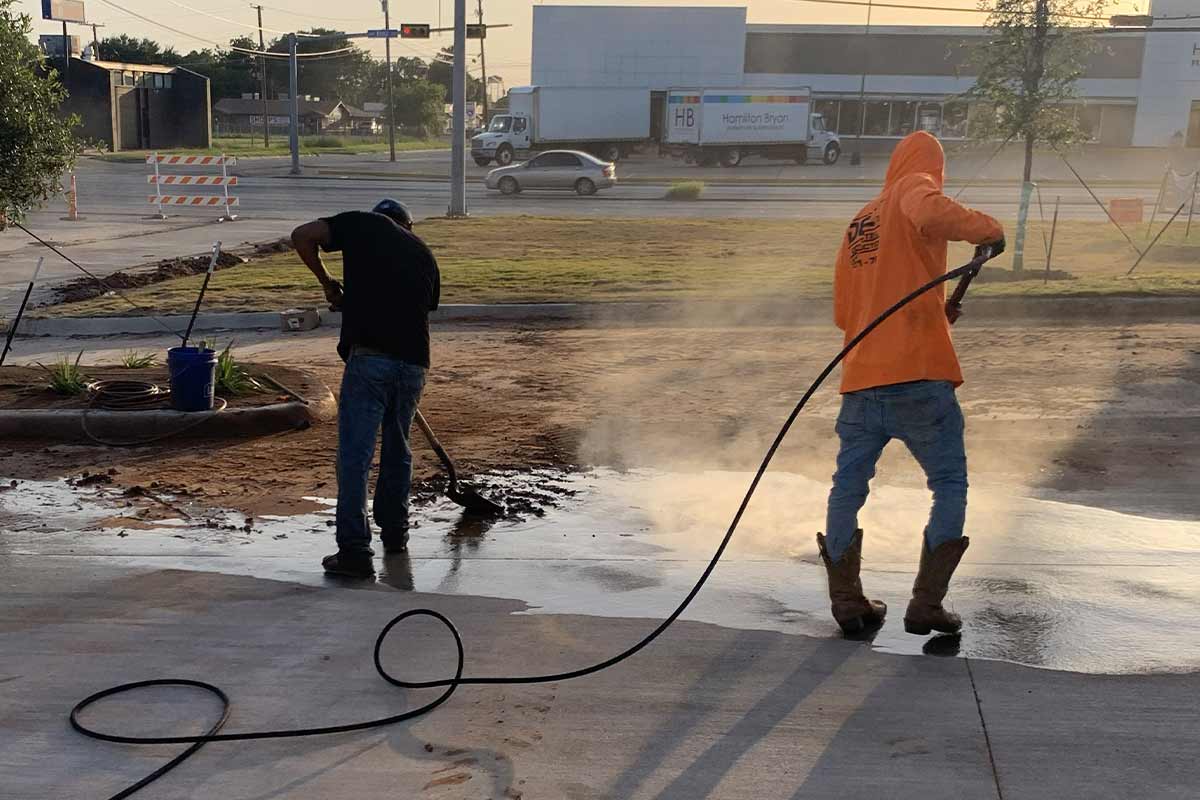
Parking Lot Pressure Washing Services in Boca Raton, FL
Pressure washing keeps Boca Raton commercial lots clean of algae, mildew, lichen, oil, grease, and accumulated organic growth. It also prepares the surface for restriping where bond integrity matters. We pressure wash retail centers along Federal Highway and Glades Road, multi-tenant office complexes, parking garages, drive-through lanes, dumpster pads, and HOA-governed community parking lots across South Florida. Most projects are scheduled annually or semi-annually depending on shading, drainage, and surface type.
EPA NPDES stormwater BMPs and FL DEP MS4 compliance
Pressure-washing wastewater carries oil, grease, surfactants, and sediment: pollutants regulated under EPA NPDES stormwater rules and the Florida DEP Municipal Separate Storm Sewer System (MS4) permit framework. Best Management Practices (BMPs) for commercial parking lot washing include containment berms or drain plugs to prevent runoff entering storm drains, vacuum recovery of wastewater, and biodegradable phosphate-free detergents. PBC Environmental Resources Management requires that wash water not enter the storm drainage system without treatment. We follow these BMPs on every project, required by code and required by good practice.
Hot-water vs. cold-water pressure washing — which to use when
Hot-water pressure washing (160 to 200°F water temperature) is more effective for oil and grease removal because heat emulsifies petroleum-based contaminants. It’s the right tool for parking garages, drive-through lanes, dumpster pads, and gas-pump islands where petroleum contamination is the dominant issue. Cold-water high-pressure washing (3,000 to 4,000 PSI) with a surface-cleaner attachment is the standard for open-lot sweeping; it removes algae, mildew, dust, and organic debris without thermal damage to asphalt sealant. The surface cleaner’s spinning bar head delivers even pressure distribution at roughly 4 GPM, preventing the etching marks that single-tip wand washing can produce.
Florida humidity, algae, and the 3-6 month organic growth cycle
South Florida’s average year-round relative humidity above 75% and warm temperatures create ideal conditions for organic surface contamination. Algae, mildew, and lichen colonize porous concrete surfaces within 3 to 6 months. Asphalt growth typically appears in 6 to 12 months and accelerates dramatically during the June through October rainy season when humidity, rainfall, and temperature combine. Northern-shaded sections of a lot, low-spot puddles, tree-canopy areas, and drainage paths grow faster than open sun-exposed pavement. Annual or semi-annual pressure washing keeps surfaces clean and extends the life of pavement markings.
Surface prep before restriping — why pressure wash first
Surface contamination — algae, mildew, oil, dust, loose sealcoat — prevents traffic paint and thermoplastic from bonding to the substrate. A clean surface is the difference between markings that hold for the expected 12 to 18 months and markings that delaminate or fade in weeks. We pressure wash, allow the surface to dry, then stripe, bundling both services onto a single mobilization for cost efficiency. For properties that haven’t been pressure-washed recently, we include surface cleaning as needed in restriping scopes so the new paint actually bonds.
At a Glance
| Surface | Hot water (160-200°F) | Cold water (3,000-4,000 PSI) | Use case |
|---|---|---|---|
| Concrete | Best for oil / grease | Standard for general cleaning | Garages, drive-throughs |
| Asphalt | Risk to sealant | Standard with surface cleaner | Open lots |
| Paver | Standard | Standard with low-pressure tip | Pedestrian areas |
| Dumpster pad | Best for petroleum / organic | Less effective | Behind retail / restaurant |
| Drive-through | Best | Adequate | Quick-service properties |
For a full list of our pavement marking services, visit our see all Boca Raton services page.
Businesses We Serve




How it Works

GET A FREE ESTIMATE
Contact us today and we’ll have a quote to you in 24 hours

SCHEDULE AN INSTALLATION
We’ll have your installation scheduled in less than 7 days, without affecting your business hours

GET A PARKING LOT THAT POPS
For a budget-friendly price, you’ll get a parking lot that looks like new
We proudly work with:


We proudly work with:
Frequently Asked Questions About Parking Lot Pressure Washing in Boca Raton, FL
Is pressure washing a parking lot safe for storm drains?
Pressure-washing wastewater carries oil, grease, surfactants, and sediment — pollutants regulated under EPA NPDES stormwater rules and Florida DEP’s Municipal Separate Storm Sewer System (MS4) permit framework. Best Management Practices (BMPs) include containment berms or drain plugs to block runoff, vacuum recovery of wastewater, and biodegradable phosphate-free detergents. PBC Environmental Resources Management requires that wash water not enter the storm drainage system without treatment. We follow these BMPs on every project.
Hot-water vs. cold-water pressure washing — which one do I need?
Hot-water pressure washing (160-200°F water temperature) is more effective for oil and grease removal because heat emulsifies petroleum-based contaminants. It’s the right tool for parking garages, drive-through lanes, and dumpster pads. Cold-water high-pressure washing (3,000-4,000 PSI) with a surface-cleaner attachment is the standard for open lot sweeping — it avoids thermal damage to asphalt sealant. The surface cleaner’s spinning bar head delivers even pressure at roughly 4 GPM.
How fast does algae and mildew grow on Boca Raton lots?
South Florida’s average year-round relative humidity above 75% and warm temperatures create ideal growth conditions. Algae, mildew, and lichen colonize porous concrete surfaces within 3-6 months. Asphalt growth typically appears in 6-12 months and accelerates during the June-October rainy season. Northern-shaded sections of a lot, low-spot puddles, and tree-canopy areas grow faster. Annual or semi-annual pressure washing keeps surfaces clean and extends the life of pavement markings.
Why pressure wash before restriping?
Surface contamination — algae, mildew, oil, dust, loose sealcoat — prevents traffic paint and thermoplastic from bonding to the substrate. A clean surface is the difference between markings that hold for the expected 12-18 months and markings that delaminate or fade in weeks. We pressure wash, allow the surface to dry, then stripe — bundling both services onto one mobilization. Surface cleaning is included as needed in restriping scopes for properties that haven’t been washed recently.
What surface cleaner equipment do you use?
We use surface cleaner attachments paired with cold-water pressure washers operating at 3,000-4,000 PSI and roughly 4 GPM flow rate. The spinning-bar head delivers even pressure across a wide path, sweeping the lot efficiently without leaving the etching marks single-tip wand washing can produce. Hot-water units are deployed for petroleum-contaminated zones. Containment kits — berms, drain plugs, vacuum recovery — accompany every project per EPA NPDES BMP requirements.