How Long Does Sealcoating Take to Dry? What Property Owners Should Expect
One of the most common questions we hear about sealcoating is simple:
How long does sealcoating take to dry?
The short answer is usually 24 to 48 hours. The more accurate answer is: it depends on weather, surface conditions, and how the lot will be used afterward.
In areas like Seattle and the greater Puget Sound region, drying and cure time can behave a little differently than in hotter, drier climates. This article explains what actually happens after sealcoating is applied, what affects drying time, and when it’s safe to reopen a parking lot.
Dry Time vs. Cure Time: An Important Distinction
Sealcoating doesn’t just go from “wet” to “done.”
There are two phases people often mix up:
- Dry to the touch: When the surface no longer feels wet
- Ready for traffic: When vehicles can safely drive and park on it
A parking lot may feel dry within several hours, but that doesn’t mean it’s ready for vehicles. Reopening too early is one of the most common reasons sealcoating fails prematurely.
Typical Sealcoating Dry Times
Under ideal conditions:
- Light foot traffic: 6–12 hours
- Vehicle traffic: 24–48 hours
- Full cure: Several days
These timeframes assume moderate temperatures, low humidity, and good airflow. Real-world conditions often vary.
What Affects How Long Sealcoating Takes to Dry?
1. Temperature
Sealcoating dries best when daytime temperatures are consistently above 50–55°F. Cooler temperatures slow evaporation and can significantly extend drying time.
In Western Washington, cooler mornings and shaded lots often mean the surface stays damp longer than expected.
2. Humidity and Moisture
High humidity slows the evaporation process that sealcoating relies on to set properly.
In the Seattle area, even when it’s not raining, overnight moisture and morning dew can delay drying, especially in areas with limited sun exposure.
3. Shade and Airflow
Parking lots surrounded by buildings, trees, or retaining walls tend to dry more slowly.
Areas with poor airflow or constant shade often remain soft longer, which is why reopening plans sometimes need to be adjusted site-by-site.
4. Surface Condition and Preparation
Well-prepared surfaces dry more consistently.
Lots with oil saturation, heavy patching, or uneven textures may absorb or hold material differently, affecting dry time.
5. Application Thickness
Applying sealcoat too thick is a common mistake.
While it may look good initially, thicker applications trap moisture and take longer to cure, increasing the risk of tracking, tire marks, and premature wear.
Why Rushing Reopening Can Cause Problems
Allowing traffic onto sealcoating too early can lead to:
- Tire tracking and scuff marks
- Surface peeling or delamination
- Reduced lifespan of the sealcoat
- Premature fading or uneven wear
These issues often don’t show up immediately, but they shorten the effective life of the coating.
How Striping Timing Fits In
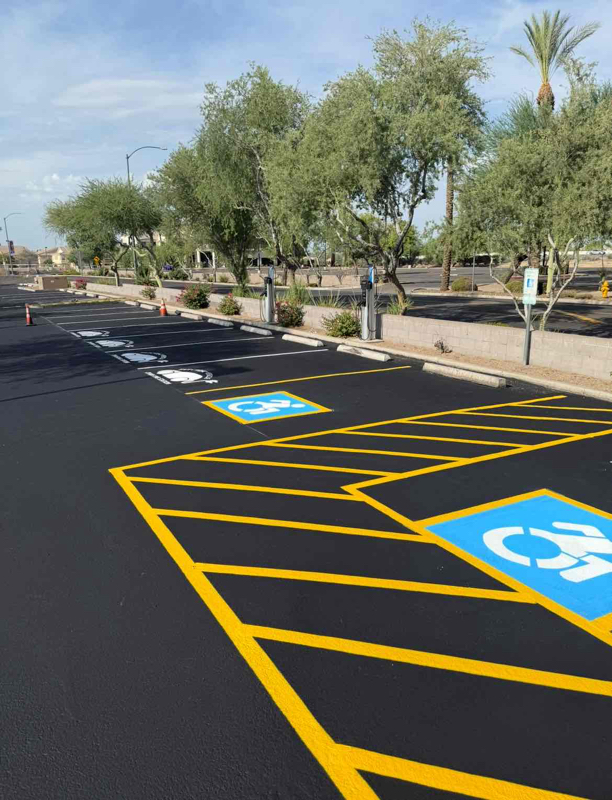
Parking lot striping is typically applied after the sealcoat has dried sufficiently to support equipment and foot traffic.
In cooler or more humid conditions, striping may be delayed slightly to ensure the surface is stable. Rushing this step can compromise both the striping and the sealcoat underneath.
How Weather in the Pacific Northwest Changes Expectations
Compared to drier regions, sealcoating in Western Washington often requires more patience.
Common factors include:
- Cooler average temperatures
- Higher ambient humidity
- Morning dew even during dry weeks
- Shorter weather windows in spring and fall
Because of this, experienced contractors plan sealcoating projects carefully around forecasted conditions rather than relying on calendar dates alone.
When Is It Safe to Drive on Fresh Sealcoating?
As a general rule:
- Wait at least 24 hours before allowing vehicles
- Wait longer if conditions are cool, damp, or shaded
- Avoid sharp turns, heavy loads, or parking for extended periods during the first 48 hours
If in doubt, waiting an extra day is almost always safer than reopening too early.
Final Thoughts
Sealcoating dry time isn’t just a technical detail, it directly affects how long the pavement protection lasts.
In climates like Seattle and the Puget Sound region, temperature, moisture, and airflow play a bigger role than many people expect.
Understanding the difference between “dry” and “ready” helps prevent avoidable problems and leads to better long-term results.