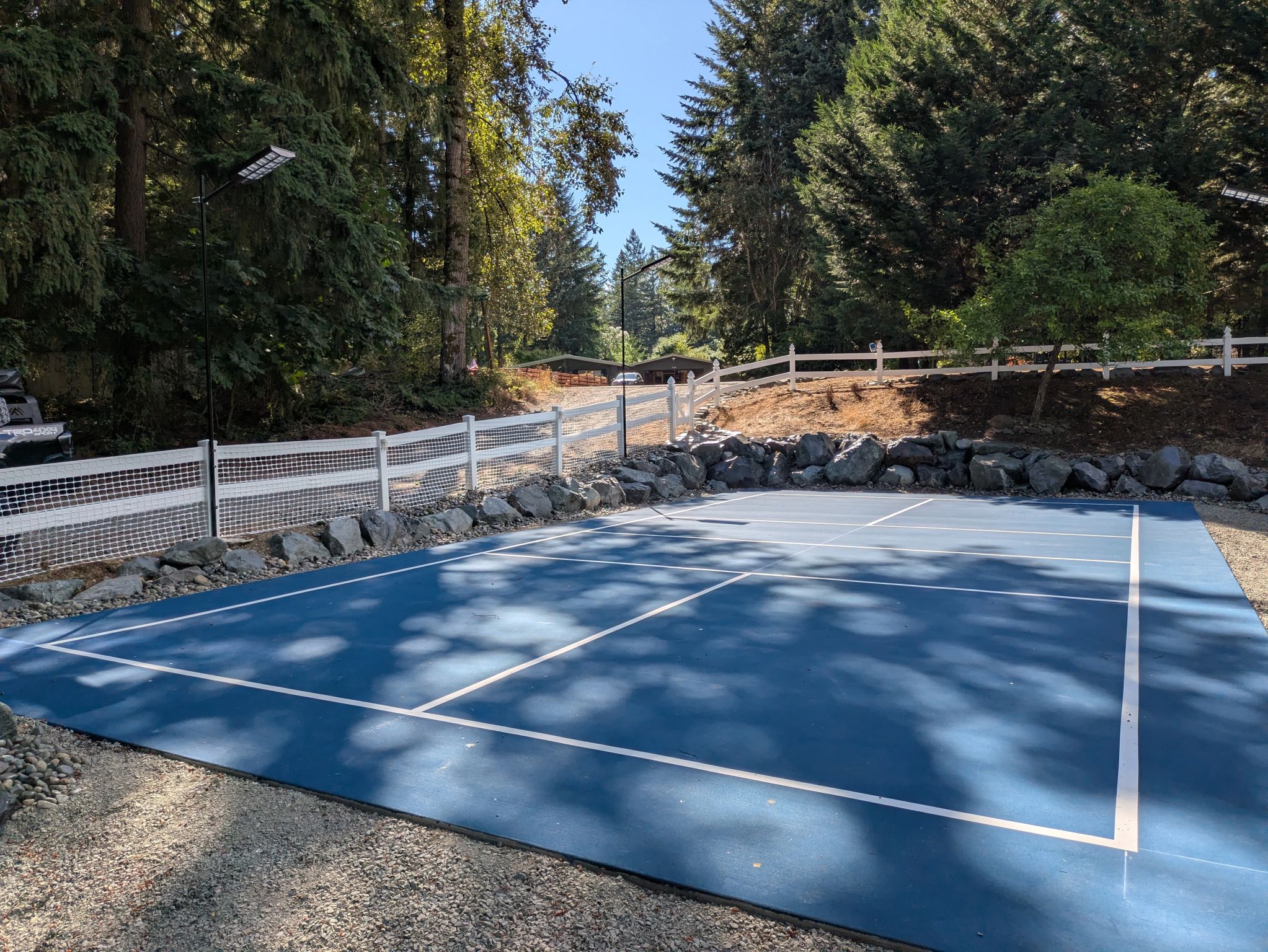
Why You Should Never Put Solvent-Based Striping Paint Over Water-Based Sport Court Surfaces
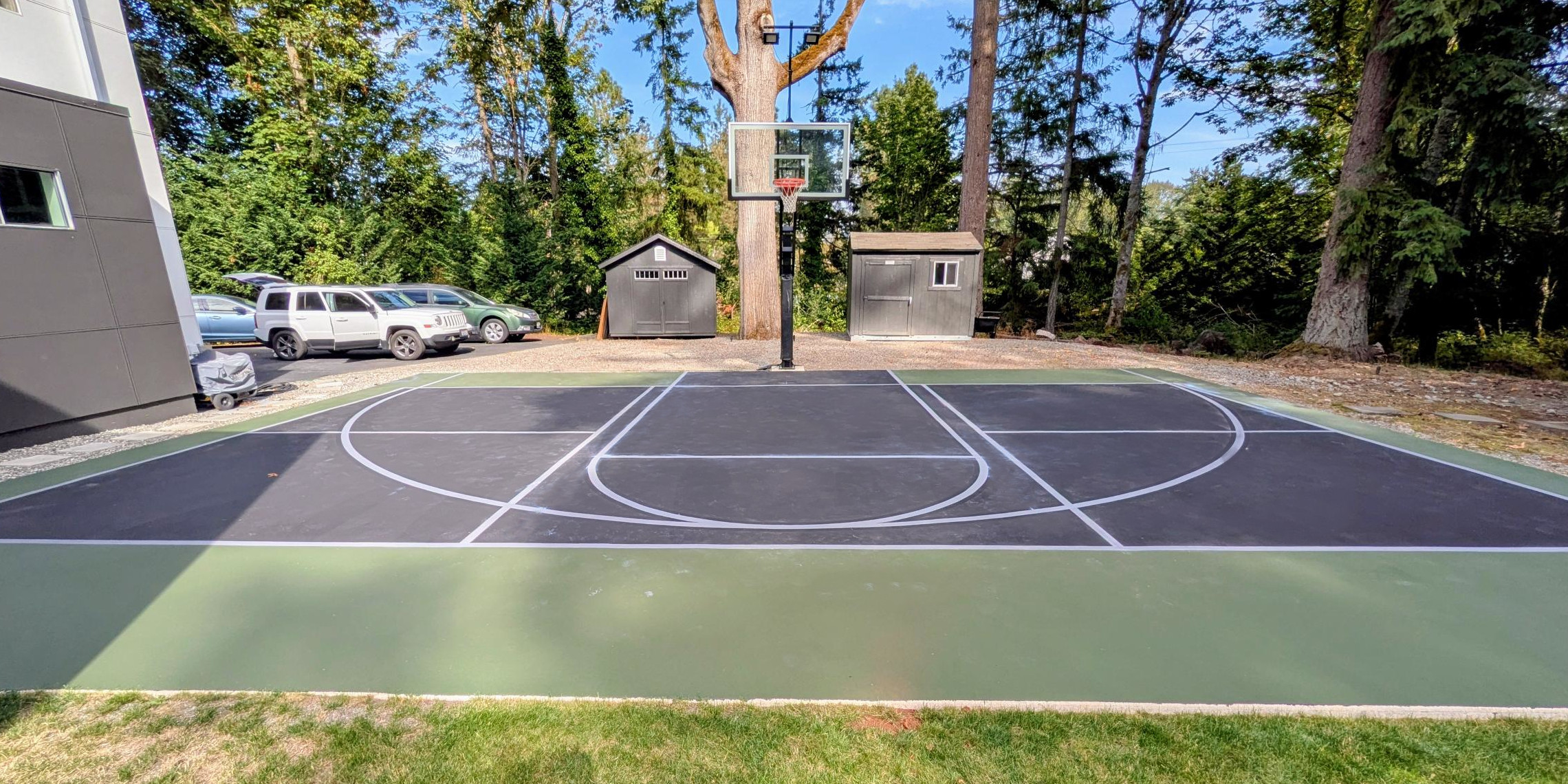
One of the most common, and expensive, mistakes we see on outdoor sport courts is mixing incompatible paint systems.
Specifically: applying solvent-based traffic marking paint over a court that was originally coated with a water-based acrylic sport court system.
It might look fine at first. In some cases, it even looks great for a few weeks. But over time, especially through a Pacific Northwest summer, that decision almost always comes back to cause problems.
This is something we see on pickleball courts, basketball courts, and tennis courts throughout the greater Seattle area.
How Most Outdoor Sport Courts Are Actually Built
Most outdoor sport courts in Western Washington are coated with water-based acrylic systems.
These coatings are designed to:
- Flex with temperature changes
- Move slightly with the concrete or asphalt beneath them
- Handle moisture and vapor movement common in our climate
They aren’t rigid by accident. That flexibility is what helps courts survive wet winters, mild freeze-thaw cycles, and long stretches of shade.
Striping for these courts is meant to be done with compatible water-based line paints that move and age the same way as the surface below.
How Solvent-Based Traffic Paint Behaves Differently
Solvent-based traffic marking paint is built for a completely different environment.
It’s typically designed for:
- Parking lots
- Roadways
- Rigid asphalt surfaces that are restriped regularly
Solvent-based paint:
- Cures harder
- Has far less elasticity
- Does not flex at the same rate as acrylic sport coatings
On pavement, that’s usually fine. On a sport court surface, it’s a problem.
Why Failures Usually Show Up in the Summer
This issue tends to appear once temperatures rise.
In warmer weather:
- Water-based acrylic surfaces soften slightly
- Concrete and asphalt expand
- The entire coating system moves microscopically
The solvent-based stripe on top does not move the same way.
Over time, that mismatch creates stress at the interface between the two materials. The result is usually:
- Cracking through the stripe
- Splitting along edges
- Peeling or flaking
- Ghosting once the stripe fails
This is why a court can look fine shortly after striping, then deteriorate rapidly a season later.
Why This Is Especially Risky in the Seattle Area
Western Washington adds a few extra challenges:
- Moisture that lingers under slabs
- Shaded courts that dry unevenly
- Seasonal temperature swings
- Older concrete with limited vapor barriers
Water-based acrylic systems are designed with those conditions in mind.
Solvent-based traffic paint is not.
Mixing the two almost always shortens the life of the court surface and increases long-term maintenance costs.
Why This Mistake Still Happens
Most of the time, it’s not intentional.
We see this happen when:
- A parking lot striping crew is asked to stripe a court
- The existing coating system isn’t identified
- Speed or cost is prioritized over compatibility
Solvent-based paint dries fast and can look “stronger” at first, which makes it tempting if someone isn’t familiar with sport court systems.
Unfortunately, the damage usually doesn’t show up until later, when fixes become much more expensive.
When Repainting Lines Is Safe and When It Isn’t
Repainting sport court lines can absolutely be the right move if:
- The existing surface is in good condition
- Compatible water-based line paint is used
- The court has not already been compromised
It becomes risky when:
- Different paint systems are mixed
- The surface history is unknown
- Cracking or delamination is already present
In some cases, walking away from a repaint is the responsible call.
Final Thoughts
Sport court coatings are systems, not just paint.
Once incompatible materials are layered together, the surface often fails in ways that are difficult, and costly, to undo.
Understanding what’s already on a court before striping or resurfacing is one of the simplest ways to protect both the surface and the owner’s investment.
Shortcuts here tend to get expensive fast.
Looking for a sport court contractor?
Request an estimate here and we’ll get back to you as soon as possible!