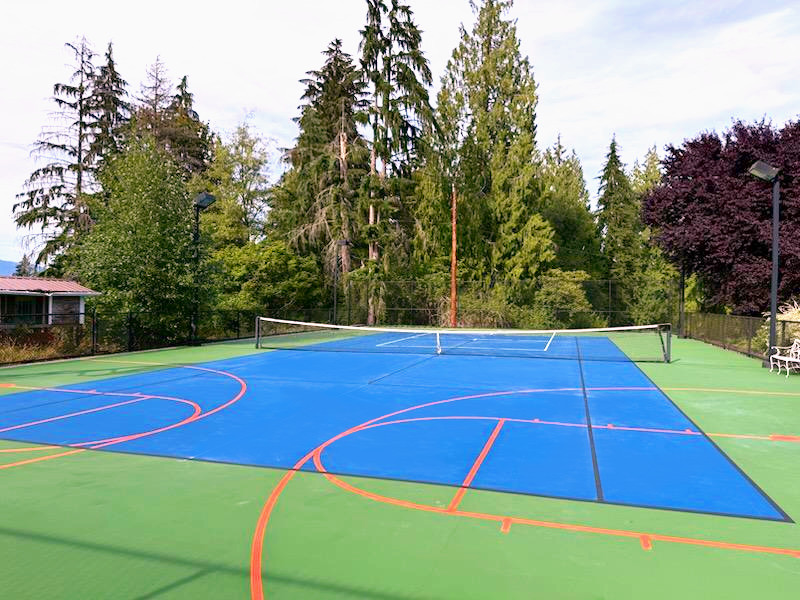
Sport Court Resurfacing in Greater Seattle: Tennis, Pickleball, and Basketball Courts Explained
Searching for sport court resurfacing near you usually means one thing: the surface you’re playing on isn’t holding up the way it used to.
In the Seattle and greater Western Washington area, tennis courts, pickleball courts, and basketball courts all face the same underlying challenges, moisture, surface wear, and aging pavement, even though the games themselves are very different.
Sport court resurfacing is the process of restoring playability, safety, and appearance without full reconstruction. When done correctly, it extends the life of an existing court and dramatically improves how it plays.
What Is Sport Court Resurfacing?
Sport court resurfacing involves repairing, coating, and re-striping an existing court surface to address wear, cracking, fading, and performance issues.
Resurfacing typically includes:
- Cleaning and surface preparation
- Crack repair and patching
- Application of acrylic or sport court coatings
- Color coating and texture adjustments
- New line striping for the specific sport
Unlike new construction, resurfacing works with the existing asphalt or concrete base. That makes evaluation and prep especially important.
Why Sport Court Resurfacing Matters in Greater Seattle
Moisture and Weather Exposure
Seattle-area courts see frequent moisture, long drying times, and seasonal temperature swings. Over time, water intrusion and freeze-thaw cycles contribute to cracking, surface wear, and coating failure.
Resurfacing addresses these issues by sealing the surface and restoring consistent play characteristics.
Surface Aging and Playability
As coatings wear down, courts can become slick, uneven, or visually inconsistent. This affects ball response, footing, and overall safety.
Resurfacing isn’t just cosmetic, it directly impacts how the court plays.
Tennis Court Resurfacing
Tennis court resurfacing focuses heavily on consistency and surface speed.
Common issues we see on tennis courts include:
- Surface cracking along baseline and service areas
- Worn coatings causing inconsistent ball bounce
- Faded or inaccurate line markings
In Western Washington, most outdoor tennis courts are asphalt-based with acrylic coating systems. Proper crack repair and coating thickness are critical to long-term performance.
Resurfacing is often timed around league seasons and weather windows, particularly for schools, clubs, and park facilities.
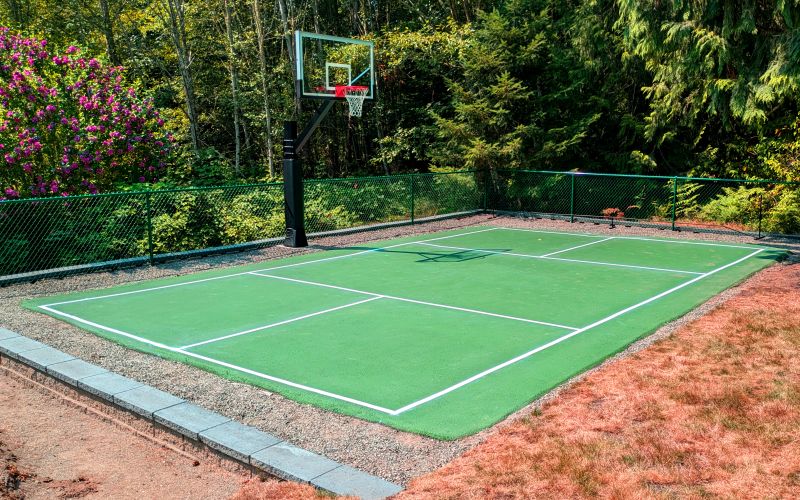
Pickleball Court Resurfacing
Pickleball courts are smaller than tennis courts but often see extremely concentrated use.
Because of the sport’s popularity in the Puget Sound region, many pickleball courts experience accelerated wear in:
- Kitchen (non-volley) zones
- Baseline areas
- High-traffic transition zones
Pickleball court resurfacing focuses on maintaining proper texture, visibility, and line accuracy. Since pickleball lines are narrower and more precise, clean layouts matter.
Many facilities also resurface tennis courts to support shared tennis and pickleball layouts.
Basketball Court Resurfacing
Basketball courts prioritize traction, durability, and clear visual contrast.
Outdoor basketball courts in the Seattle area often suffer from:
- Surface slickness due to worn coatings
- Fading colors and lines
- Cracking along expansion joints
Resurfacing restores grip and visual clarity while extending the usable life of the court.
Basketball court resurfacing can be done on asphalt or concrete surfaces, depending on site conditions.
Sport Court Surfacing vs Resurfacing
The terms “sport court surfacing” and “sport court resurfacing” are often used interchangeably.
In general:
- Surfacing refers to the coating system applied to the court
- Resurfacing refers to the full process of repair, coating, and re-striping
Most existing courts in Western Washington require resurfacing rather than full reconstruction.
Local Considerations in the Seattle Area
Scheduling Around Weather
Moisture and temperature matter. Successful sport court resurfacing requires dry conditions and appropriate cure times.
This often means scheduling work during spring, summer, or early fall when weather windows are more reliable.
Public and Community Facilities
Many courts in the region are owned or managed by school districts and municipalities. Organizations such as Seattle Parks and Recreation oversee numerous outdoor courts with tight scheduling constraints.
Resurfacing projects often need to be coordinated around seasons, leagues, and community access.
When Sport Court Resurfacing Makes Sense
Resurfacing is typically the right option when:
- The base asphalt or concrete is structurally sound
- Cracking is moderate and repairable
- The surface has become slick or uneven
- Lines are faded or inaccurate
If base failure is severe, full reconstruction may be required, but many courts can be restored effectively through resurfacing.
Final Thoughts
Sport court resurfacing is one of the most cost-effective ways to restore tennis courts, pickleball courts, and basketball courts in Western Washington.
The key is understanding how local weather, surface conditions, and usage patterns affect performance over time.
When resurfacing is planned carefully and executed correctly, courts don’t just look better, they play better and last longer.