
Thermoplastic Striping
In Naples, FL
Long-Lasting Pavement Markings
1-800-STRIPER provides professional thermoplastic striping in Naples, FL — long-life markings for stop bars, crosswalks, and arrows applied per AASHTO M249 for high-traffic lots across Collier County.
1-800-STRIPER® of Naples PROVIDes Thermoplastics Services NEAR YOU
Want to reduce the maintenance requirements for your parking lot?
Thermoplastic pavement markings are a durable, weather and vehicle-resistant striping option for your parking lot or facility.
You can utilize them for stop bars, ADA stalls, no-parking zones, directional arrows, crosswalks, or your entire parking lot.
Benefits:
What Thermoplastic Is and Where It Belongs
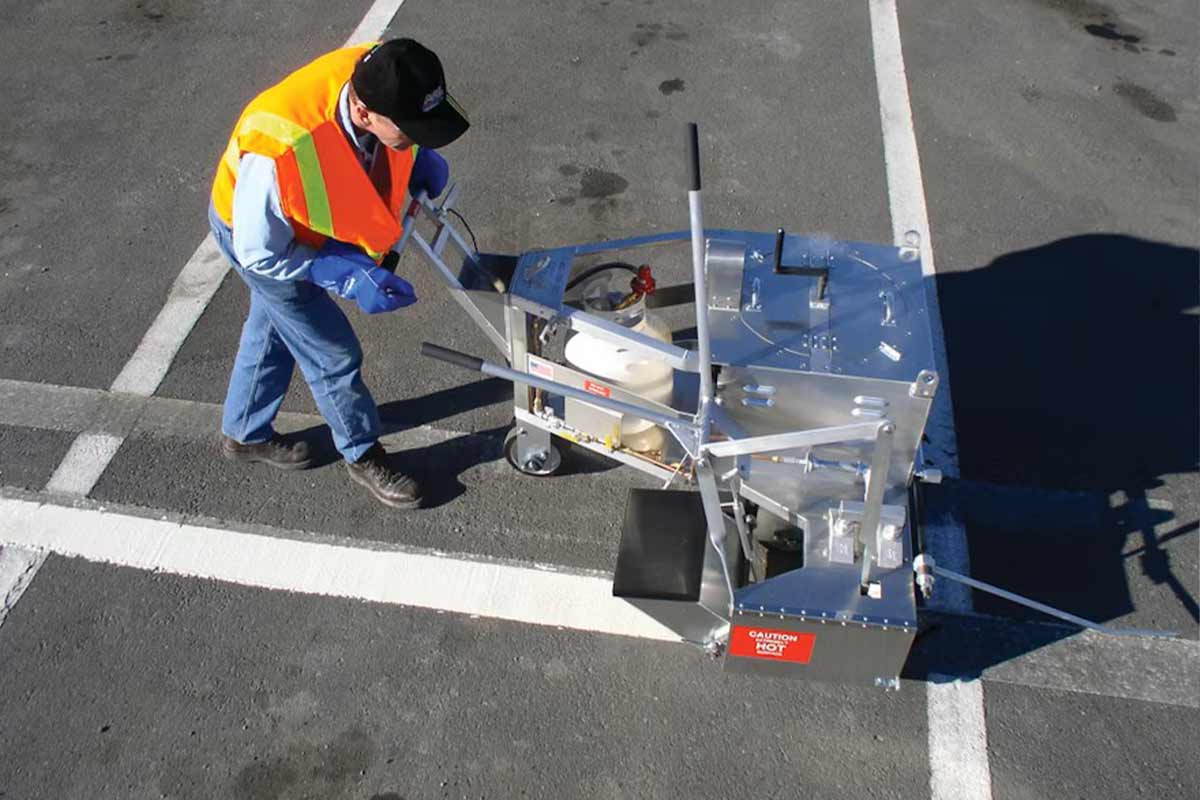
Thermoplastic is a marking material heated to roughly 400°F and applied molten, where it bonds to the pavement and hardens into a thick, durable line. It outlasts standard traffic paint several times over, which makes it the right choice for high-traffic spots: stop bars, crosswalks, directional arrows, and fire lanes that take constant tire wear. Embedded glass beads make the lines retroreflective at night and in Florida’s heavy rain.
AASHTO M249 and FDOT Section 711
Thermoplastic markings follow AASHTO M249, the national spec for the material’s composition and performance, including the glass-bead content that drives retroreflectivity. In Florida, FDOT Standard Specifications Section 711 sets the state’s thermoplastic requirements for thickness (commonly 0.10–0.15 inches for new work) and application conditions. We apply to those specs so the markings perform and last — and so they match what’s expected near FDOT-maintained roads.
Service Life and Service Area
Because thermoplastic is thick and fuses to the pavement, it holds up to Florida heat and heavy traffic far longer than paint — fewer re-marks over the life of the lot. The trade-off is a higher up-front cost and the need for a sound, clean surface to bond to, so it’s best targeted at high-wear markings rather than an entire lot. We apply thermoplastic for commercial and industrial properties across Collier County where durability is worth the investment.
For a full list of our pavement marking services, visit our parking lot striping in Naples page.
Businesses We Serve




How it Works

GET A FREE ESTIMATE
Contact us today and we’ll have a quote to you in 24 hours

SCHEDULE AN INSTALLATION
We’ll have your installation scheduled restriped in less than 7 days, without affecting your business hours

GET A PARKING LOT THAT POPS
For a budget-friendly price, you’ll get a parking lot that looks like new
We proudly work with:


We proudly work with:

Frequently Asked Questions About Thermoplastic Striping in Naples, FL
What is thermoplastic line striping?
It’s pavement marking made from a material heated to about 400°F and applied molten, where it bonds to the surface and hardens into a thick, reflective line. It’s used where durability matters most — crosswalks, stop bars, arrows, and fire lanes.
How long does thermoplastic striping last?
Far longer than standard traffic paint — typically several times the service life, depending on traffic volume and surface condition. On high-traffic Florida lots that’s the main reason owners choose it: fewer re-marks over time.
Thermoplastic vs. regular paint — which is better?
It depends on the use. Thermoplastic lasts longer and is more reflective, ideal for high-wear markings, but costs more up front and needs the right surface. Standard fast-dry paint is more economical for full-lot striping. Many lots use both — thermoplastic where wear is heaviest, paint elsewhere.
What are the disadvantages of thermoplastic?
It costs more than paint up front, needs a clean, sound surface and the right conditions to bond, and isn’t ideal for every marking. It’s best targeted at high-traffic, high-wear areas rather than an entire lot, which is how we typically recommend using it.
Can thermoplastic be applied to any surface?
It bonds best to asphalt and properly prepared concrete. Surface condition and temperature matter — a clean, sound surface is required for it to adhere and last. We assess the pavement first and tell you whether thermoplastic is the right fit.
How long before traffic can drive on thermoplastic?
It cools and sets quickly — usually ready for traffic within minutes to under an hour once it’s cooled, much faster than the cure time paint needs. We give you the exact window for your job and conditions.