Thermoplastic Striping
In Boca Raton, FL
Thermoplastic Pavement Markings
1-800-STRIPER provides professional thermoplastic striping in Boca Raton, FL — long-service-life pavement markings for stop bars, crosswalks, directional arrows, and fire lanes applied at 350-400°F per FDOT Standard Specification 711 and AASHTO M249 for high-traffic commercial lots across the surrounding South Florida region.
1-800-STRIPER® of Boca Raton PROVIDes Thermoplastics Services NEAR YOU
Want to reduce the maintenance requirements for your parking lot?
Thermoplastic pavement markings are a durable, weather and vehicle-resistant striping option for your parking lot or facility.
You can utilize them for stop bars, ADA stalls, no-parking zones, directional arrows, crosswalks, or your entire parking lot.
Benefits:
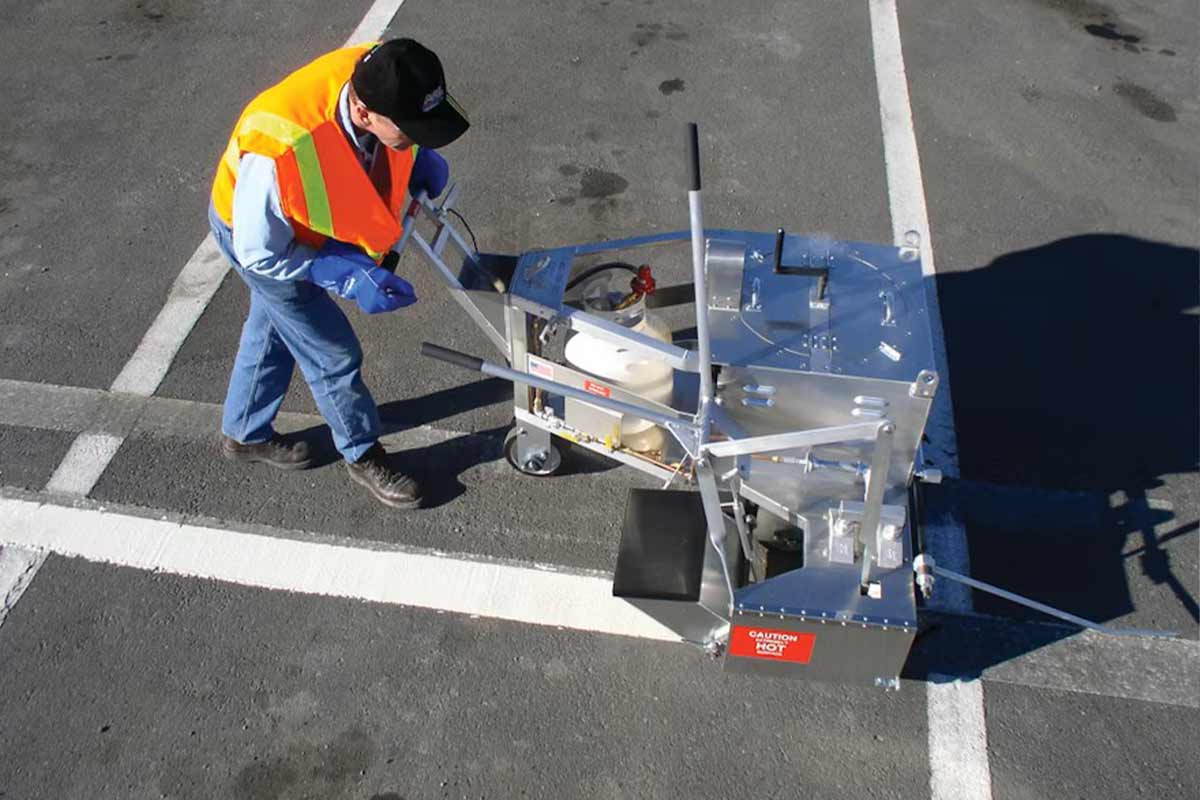
Thermoplastic Striping Services in Boca Raton, FL
Thermoplastic markings are the right call for high-traffic commercial entrances, drive-throughs, stop bars, crosswalks, and fire lanes: locations where waterborne acrylic traffic paint would fade or wear within months. We apply hot-applied thermoplastic per AASHTO M249 to commercial properties across Boca Raton, Boynton Beach, Delray Beach, Pompano Beach, Coral Springs, and surrounding cities. Free estimates compare paint vs. thermoplastic ROI for the specific traffic and exposure conditions of your lot.
AASHTO M249 specifications — what makes thermoplastic durable
AASHTO M249 is the national specification for hot-applied thermoplastic pavement markings. The standard sets minimum performance requirements: minimum thickness, minimum 30% glass-bead content by weight distributed throughout the full thickness of the material, retroreflectivity floor, skid resistance, and durability under wear. Thermoplastic gets heated to 350 to 400°F and applied molten so it cures to a solid bond with the asphalt or concrete substrate. Florida pavement-marking specifications under FDOT Standard Specification Section 711 reference M249 for thermoplastic applications on state and locally adopted projects.
Florida heat, UV, and coastal salt — why thermo outperforms paint in Boca
Boca Raton’s climate is harder on conventional traffic paint than most US markets. Köppen Aw classification, 230+ sunny days per year, UV index readings of 10 or higher June through August, summer asphalt surface temperatures of 130°F+, and Atlantic salt-air exposure all accelerate paint degradation. Thermoplastic’s full-depth glass-bead distribution maintains retroreflectivity as the surface wears: beads stay embedded throughout the depth of the material rather than disappearing in the first weeks of traffic like surface-applied beads on paint. The result is materially longer service life in high-traffic locations.
Thermoplastic vs. paint — when each makes sense for your lot
For low-to-moderate-traffic stall lines that get repainted on a 12-18 month cycle, waterborne acrylic per FDOT Section 711 remains cost-effective. Acrylic paint dries in 30 to 45 minutes and reopens the lot quickly. Thermoplastic per AASHTO M249 is the right choice for high-traffic commercial entrances, drive-throughs, stop bars, crosswalks, and fire lanes — anywhere paint would fade or wear within months. Thermoplastic costs more per linear foot upfront, but the longer service life makes the lifecycle cost lower in those high-traffic locations.
At a Glance
| Property | Waterborne acrylic paint | Hot-applied thermoplastic |
|---|---|---|
| Application temp | Ambient | 350-400°F |
| FL service life (high-traffic) | Months | Years |
| Glass beads | Surface-applied, lost early | Full-depth distribution, retained |
| Min glass bead % | (none specified by FDOT) | 30% by weight |
| Cost per linear ft | Lower | Higher |
| Cure time | 30-45 min | Cools to solid bond on contact |
| Spec | FDOT Section 711 / TT-P-1952F | AASHTO M249 |
| Best for | Stall lines, low-traffic | Stop bars, crosswalks, fire lanes |
For a full list of our pavement marking services, visit our full Boca Raton pavement marking services page.
Businesses We Serve




How it Works

GET A FREE ESTIMATE
Contact us today and we’ll have a quote to you in 24 hours

SCHEDULE AN INSTALLATION
We’ll have your installation scheduled restriped in less than 7 days, without affecting your business hours

GET A PARKING LOT THAT POPS
For a budget-friendly price, you’ll get a parking lot that looks like new
We proudly work with:


We proudly work with:

Frequently Asked Questions About Thermoplastic Striping in Boca Raton, FL
What is thermoplastic striping and how is it different from paint?
Thermoplastic is a hot-applied pavement marking material — heated to 350-400°F and applied molten so it cures to a solid bond with the asphalt or concrete substrate. Per AASHTO M249, the national thermoplastic standard, the material must contain a minimum 30% glass beads by weight distributed throughout the full thickness — not just surface-applied like beaded paint. The result is dramatically longer service life and retroreflectivity that persists as the surface wears.
When does thermoplastic make sense versus paint in Boca Raton?
Thermoplastic is the right call for high-traffic commercial entrances, drive-throughs, stop bars, crosswalks, and fire lanes — locations where paint would fade or wear within months. FDOT Standard Specification 711 governs FL pavement marking materials and recognizes both. In Boca Raton’s coastal climate (UV index 10+, salt-air exposure, summer surface temps 130°F+), thermoplastic’s full-depth glass-bead retroreflectivity outperforms acrylic paint significantly. For low-traffic stall lines and arrows, paint remains cost-effective.
How long does thermoplastic last in South Florida?
Service life depends on traffic volume, surface preparation, and substrate condition. Properly applied thermoplastic on a clean, primed asphalt substrate can hold visibility and retroreflectivity considerably longer than waterborne paint in the same location. Heavy commercial entrances see the biggest durability gain because thermoplastic resists abrasion from braking and turning vehicles. Annual visual inspection is still recommended — fire lanes and ADA stalls deserve the same compliance check whichever material was used.
Can you remove existing thermoplastic for a relayout?
Yes. Thermoplastic removal is more involved than paint removal — typical methods include grinding, water-jetting, or controlled torch removal followed by surface restoration. We assess existing thermoplastic during the site walk and quote removal as part of a layout-change project. For minor adjustments, overlay striping with new thermoplastic is sometimes possible. For full relayouts, full removal and re-application is the cleaner long-term result.