
Parking Lot Restriping
In South Phoenix, AZ
Restripe Existing Lines and Markings
1-800-STRIPER® provides professional parking lot restriping in South Phoenix, AZ — refreshing faded lines, ADA stalls, fire lanes, and directional arrows with fast-dry traffic paint for commercial properties across Maricopa and Pinal counties.
1-800-STRIPER of South Phoenix PROVIDes Restriping Services NEAR YOU
Need to brighten up your faded parking lot?
Keep your parking lot safe and attractive by restriping annually to freshen up lines and symbols that have faded from the sun, weather, and traffic. Nothing beats a fresh coat of paint!
Benefits:
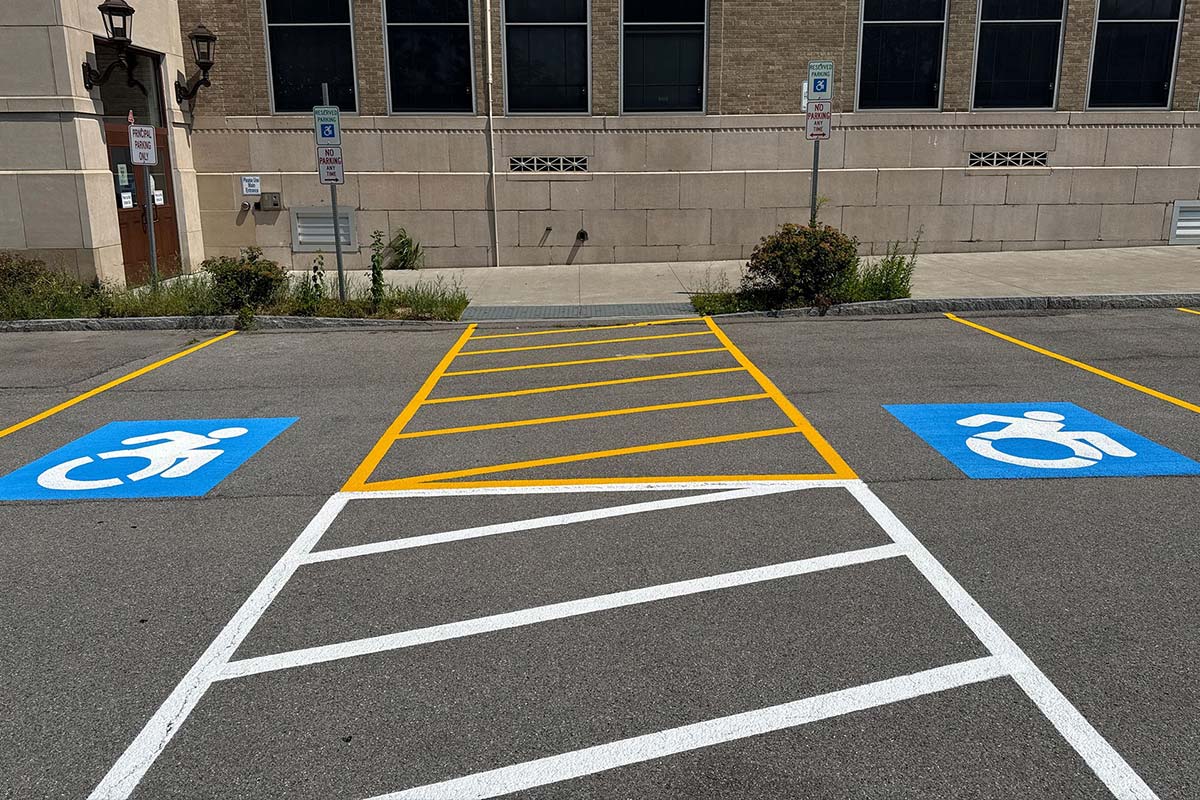
Parking Lot Restriping Services in South Phoenix
Parking lot restriping covers the full range of pavement markings on your existing layout — no new striping plan required. We refresh stall lines, ADA-accessible spaces and van-accessible stalls, access aisles, ISA symbols, fire lane boundaries, crosswalks, directional arrows, loading zones, and curb markings. Stenciling for reserved spaces, numbered stalls, no-parking zones, and tow-away warnings is included when the layout calls for it.
South Phoenix commercial properties range from strip centers along Baseline Road to industrial yards near the I-10 corridor, and the restriping scope fits them all. Smaller lots can often be completed in a single visit. Larger facilities — multi-building industrial parks or retail centers with several hundred stalls — get sequenced in sections so cars can keep moving through the job.
We use fast-dry water-based acrylic traffic paint matched to the existing line color. Water-based formulas cure quickly in South Phoenix’s warm weather, which keeps downtime short. If a section of the lot has been repaved or seal-coated, we’ll lay fresh lines over the new surface using the same material.
When to Restripe in the Arizona Sun
South Phoenix gets more UV exposure than most U.S. markets, and that matters for painted pavement markings. Year-round solar intensity bleaches water-based traffic paint faster than in cooler or more overcast climates. Summer surface temperatures regularly exceed 140°F on black asphalt, and the combination of heat, UV, and occasional monsoon rain (June through September) — dust storms followed by brief downpours — accelerates line wear on any lot that isn’t covered or shaded.
A few practical signs that your lot is due for parking lot restriping:
- Lines are hard to see at dusk or under artificial light
- Ghost lines from a prior layout are visible through the current paint
- ADA symbols are faded or missing entirely
- Drivers are ignoring lane flow markings because the arrows aren’t visible
- You’ve had complaints from customers or tenants about confusion in the lot
Ghost lines deserve special attention. When an old layout shows through the current one, drivers see two competing sets of markings and follow whichever reads clearer — which can put a parked car across a drive aisle or angled into a stall that no longer exists. That confusion creates fender-bender risk on a busy lot, and it’s the property manager who fields the calls afterward. A fresh restripe makes one layout unambiguous again.
Dusk is the real test for line visibility. Paint that looks passable at noon can wash out under low-angle light and headlight glare, right when evening retail and restaurant traffic peaks. Walking your lot at sundown once a quarter is the cheapest visibility audit there is.
The Manual on Uniform Traffic Control Devices sets marking visibility conventions for traffic control surfaces. Lot owners who maintain visible, compliant markings reduce liability exposure and keep traffic moving predictably. In South Phoenix’s climate, scheduling a restripe more frequently than you might in a milder market is often the right call — especially for high-traffic retail or logistics facilities.
Our Restriping Process
Every parking lot restriping job follows the same sequence. Here’s what to expect from start to finish:
- Walkthrough and assessment. We walk the lot with the property manager or owner, note faded markings, identify any ADA corrections needed, and confirm the layout hasn’t changed since the original stripe.
- Surface preparation. The crew sweeps the lot to clear loose debris, dust, and any gravel that builds up along curb edges. Clean asphalt gives the paint a better bond and a cleaner line edge.
- Re-chalking where geometry has shifted. If a section was repaved, if a prior crew’s lines drifted, or if the owner wants minor layout adjustments, we re-chalk reference lines before painting. No guesswork.
- Traffic paint application. Fast-dry water-based acrylic traffic paint goes down using line-striping equipment calibrated for consistent width and coverage. We work section by section — half the lot at a time for a mid-size property — so the lot stays partly accessible during the job.
- Stencil and specialty markings. ADA symbols, directional arrows, reserved-space stencils, and curb markings go in after the field lines. Stencils get aligned to the freshly painted stall lines before application.
- Dry-time handoff. Fast-dry paint surface-dries in roughly 30–60 minutes in South Phoenix’s warm weather. We mark off wet sections with cones and walk the property manager through what’s been completed before we leave.
ADA Refresh During Restriping
Restriping is the most efficient time to fix accessible-space compliance issues because the crew is already on-site with equipment running. We check stall dimensions and counts as part of the walkthrough and flag anything that doesn’t align with the 2010 ADA Standards for Accessible Design.
Common corrections that come up during a South Phoenix parking lot restriping job: faded ISA (International Symbol of Accessibility) symbols, missing or undersized access aisles alongside van-accessible stalls, and stalls that were originally painted too narrow. We repaint ISA symbols, correct aisle widths, and refresh the blue field markings and access-aisle hash lines.
If a lot has never had a formal ADA assessment, restriping is a practical starting point. We note what we see during the walkthrough and paint to current standards on the accessible spaces. For property owners who need a formal compliance review or documentation, that’s a separate engagement — but the physical markings get corrected during the restripe either way.
Why Choose 1-800-STRIPER® of South Phoenix
1-800-STRIPER® of South Phoenix holds a 5.0-star Google rating from 12 local customers. Owner Josh Hatch runs a crew familiar with the commercial property types across South Phoenix, from retail centers near South Mountain to distribution facilities along the Laveen industrial corridor.
We serve Maricopa and Pinal counties. Free estimates are available — call (480) 662-2363 to schedule. There’s no obligation, and the estimate covers the full restripe scope so you know what you’re getting before any work starts.
A few things that make a difference on a restripe job: showing up with the right equipment for the lot size, sequencing the work so tenants aren’t locked out, and painting lines that are consistent in width and color across the entire surface. That’s the standard every 1-800-STRIPER® crew works to.
For a full list of our pavement marking services, visit our parking lot striping in South Phoenix page.
Businesses We Serve




How it Works

GET A FREE ESTIMATE
Contact us today and we’ll have a quote to you in 24 hours

SCHEDULE AN INSTALLATION
We’ll have your installation scheduled in less than 7 days, without affecting your business hours

GET A PARKING LOT THAT POPS
For a budget-friendly price, you’ll get a parking lot that looks like new
We proudly work with:


We proudly work with:

Frequently Asked Questions About Parking Lot Restriping in South Phoenix, AZ
Can you stripe your own parking lot?
Small lots are technically possible as a DIY project, but there are real trade-offs. Renting line-striping equipment, sourcing compliant traffic paint, and re-chalking a layout accurately takes more time and specialized knowledge than it looks. ADA-accessible stall dimensions, aisle widths, and symbol placement have specific requirements — a measurement error means the markings aren’t compliant even if they look fine. For most commercial property managers, professional parking lot restriping is faster, produces straighter lines, and holds up longer.
How do you re-stripe a parking lot?
The process starts with sweeping the surface clean, then re-chalking reference lines where the geometry needs to be verified or adjusted. From there, a line-striping machine applies water-based acrylic traffic paint to stall lines, fire lane boundaries, and flow arrows in consistent widths. Stencils — ADA symbols, directional arrows, reserved-space text — go in after the field lines. Sections are done one at a time so part of the lot stays accessible while the crew works.
How do you estimate parking lot striping?
The main factors are stall count, lot layout complexity, how many ADA-accessible spaces need correction, and the overall condition of the surface. A lot with a simple rectangular layout and clean asphalt is more straightforward than one with irregular geometry, multiple drive aisles, or sections that need re-chalking from scratch. Rather than quoting a square-footage rate that may not reflect the actual job, call (480) 662-2363 for a free on-site estimate — we walk the lot and give you a number based on what’s actually there.
How often should a parking lot be restriped in Phoenix?
South Phoenix’s climate puts more wear on traffic paint than most U.S. markets. High-traffic lots — retail centers, logistics facilities, apartment complexes with heavy daily use — may need parking lot restriping every one to two years as a general industry rule of thumb. Lower-traffic properties can often go longer. The honest answer is that sun exposure and traffic volume together determine the schedule more than any fixed calendar interval. Walk your lot at dusk when line visibility is hardest to judge; if markings are faded or ghost lines are showing through, it’s time.
How long before cars can park after restriping?
Fast-dry water-based acrylic traffic paint surface-dries in roughly 30–60 minutes in South Phoenix’s warm weather. That’s when cones come down and the section reopens. Full cure — where the paint reaches maximum hardness and abrasion resistance — takes longer, but the lot is functional well before then. Cold or overcast days extend dry time; on a typical South Phoenix afternoon, the 30-minute end of the range is common.
Do you restripe at night or on weekends?
We schedule around the property’s business hours. For a busy retail strip center, that might mean starting early on a weekday before peak customer traffic. For a logistics facility that runs day shifts, a late-morning start while part of the lot sits empty is a common approach. We sequence the job section by section to limit the area that’s blocked off at any one time — full-lot closures aren’t usually necessary. Reach out at (480) 662-2363 to talk through the scheduling options for your property.