Parking Lot Pressure Washing
In South Portland, OR
Surface Prep Before Restriping
1-800-STRIPER provides professional parking lot pressure washing in South Portland, OR — removing moss, algae, oil stains, and gum from lots, walkways, and parking structures to restore traction and prepare pavement before restriping for commercial properties across Clackamas, Multnomah, and Washington counties.
1-800-STRIPER® of Portland South PROVIDes Parking Lot Power Washing Services NEAR YOU
Need to blast away years of grime?
If your parking lot or parking garage looks dull and dirty, our professional crew can wash away grime, oil, stains, and slippery buildup to restore the appearance of your property.
Benefits:
Commercial Parking Lot Pressure Washing
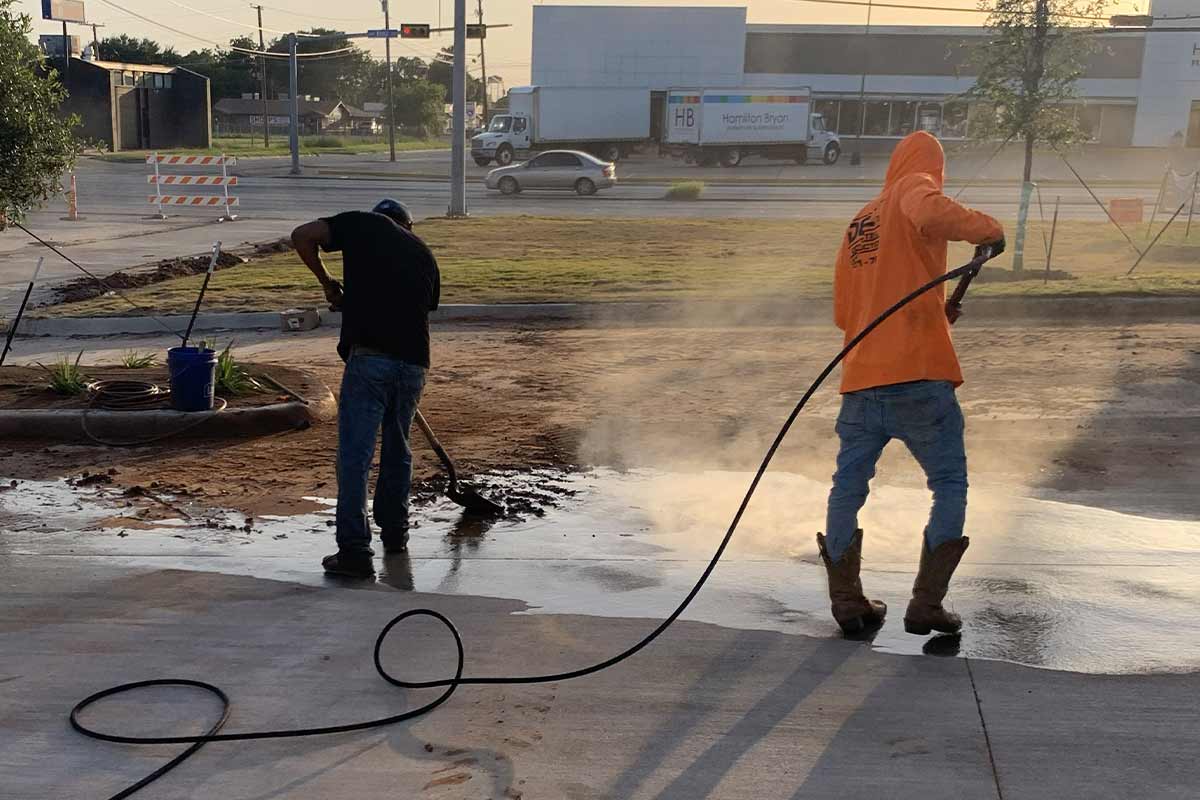
A commercial lot collects whatever the property throws at it. Tire rubber at the entries, cart tracks near the doors, spills in front of the tenant spaces, and drips under the loading area. Pressure washing takes that off the pavement so the lot reads as maintained instead of tired. We clean lots, sidewalks and walkways, entry aprons, dumpster pads, and parking structures for retail centers, office parks, medical buildings, schools, and industrial properties across Clackamas, Multnomah, and Washington counties — Tigard, Tualatin, Lake Oswego, West Linn, Beaverton, and Milwaukie included, and the rest of the south metro besides.
Every job runs the same five steps:
- Survey — we walk the lot with you, identify what is on the pavement, and note the drains, the slope, and anything that needs protecting.
- Pre-treat organic growth — moss and algae get a pre-treatment and time to work before any water hits them.
- Wash — commercial equipment sized to the surface, with the pressure set for the pavement, not cranked to maximum.
- Rinse and contain — washwater is contained and handled responsibly, not chased into the nearest open drain.
- Inspect — a second walk-through, so you sign off on the clean lot instead of on a promise.
Moss, Algae, and Organic Growth on Pacific Northwest Lots
This is the part a national cleaning franchise never gets right here. Moss on asphalt is not a housekeeping problem; it is a climate outcome, and the climate is measurable. In the 1991–2020 climate normals published by NOAA’s National Centers for Environmental Information for Portland International Airport, roughly 89 percent of the year’s 36.9 inches of rain falls between October and May. November and December alone bring 11.22 inches. July and August together bring 1.05.
Eight months of that, landing on pavement that sits in the shade of a building line or a stand of firs, is exactly the condition moss and algae want. It shows up first along curb lines and against the north face of a structure, where the pavement never fully dries, then spreads into the stalls.
Two things follow. The growth is slick when wet, which is a traction problem in the months when your lot is busiest and darkest. And it holds moisture against the asphalt long after the rain stops. Pulling it off is a deep clean, not a rinse — the root mat has to be broken down before washing, or it comes back within the season. Shaded lots in this metro generally need it on a schedule, not once.
Oil, Gum, and Stain Removal
Different soils come off different ways, and blasting everything with the same wand is how you end up with a striped-looking lot and untouched stains. We match the method to what is on the pavement:
- Moss, algae, and organic film — pre-treatment with dwell time, then washing.
- Oil and grease at stalls and the loading area — degreaser applied and agitated first, so the wash lifts the soil instead of spreading it.
- Gum at entries and walkways — targeted spot treatment, piece by piece.
- Tire rubber and traffic film across drive lanes — surface-cleaner passes at consistent overlap for an even result.
- General grime on concrete walkways and structure decks — cleaning pass with pressure dialed to the substrate.
Concrete and asphalt do not take pressure the same way, so the settings change when we move from the walkway to the drive lane. Old oil that has soaked in may lighten rather than disappear. We will tell you which stains those are before we start, not after.
Washing Before Restriping
Paint bonds to pavement, not to what is sitting on top of it. Stripe over moss, dust, or an oil film and the line lifts early — usually in patches, which looks worse than a faded line did. Washing first is cheap insurance on the striping that follows.
If we are restriping your lot, we wash the areas that need it as part of sequencing the work: clean, let the pavement dry, then lay the lines. It also gives you an honest look at the surface. A clean lot shows its cracks, its low spots, and its worn markings clearly, which makes the striping plan a real plan. Call for a free estimate and we will scope what your pavement needs.
For a full list of our pavement marking services, visit our parking lot striping in South Portland page.
Businesses We Serve




How it Works

GET A FREE ESTIMATE
Contact us today and we’ll have a quote to you in 24 hours

SCHEDULE AN INSTALLATION
We’ll have your installation scheduled in less than 7 days, without affecting your business hours

GET A PARKING LOT THAT POPS
For a budget-friendly price, you’ll get a parking lot that looks like new
We proudly work with:


We proudly work with:
Frequently Asked Questions About Parking Lot Pressure Washing in South Portland, OR
What does commercial parking lot pressure washing cover?
We wash parking lots, drive aisles, walkways, entryways, dumpster pads, and parking structures — removing moss and algae, oil and fluid staining, gum, dirt build-up, and general grime. Property managers across Tigard, Tualatin, Lake Oswego, West Linn, Beaverton, and Milwaukie use it both as regular upkeep and as preparation before restriping. Power washing and pressure washing describe the same service.
Why do Portland-area lots grow so much moss?
Because the climate is close to ideal for it. NOAA’s 1991–2020 normals for Portland International Airport show about 36.9 inches of rain a year with roughly 89% of it falling between October and May, and mild temperatures throughout — December and January average around 42 degrees. Persistent wet plus shade from buildings and tree canopy is exactly what moss and algae need, which is why shaded corners and north-facing edges go green first.
Is moss on a parking lot actually a problem?
It is a traction problem before it is an appearance problem. Wet moss and algae are slick underfoot, and they concentrate in exactly the places pedestrians walk — shaded walkways, curb edges, and the route between parked cars and the entrance. Left alone the growth also holds moisture against the surface. Regular washing keeps those areas usable through the wet months rather than only looking better.
Should we wash the lot before restriping?
Yes, wherever the surface is dirty or has organic growth on it. Paint bonds to the surface it is applied to, so moss, dust, and oil films work against a clean line lasting. Washing first is why we often quote the two together — the lot gets cleaned, the surface is given time to dry, and then the striping goes down onto a prepared surface instead of onto whatever was there.
How often should a commercial lot be washed?
It depends on shade, tree cover, and traffic more than on a fixed schedule. Lots with heavy canopy or permanently shaded sections need attention more often, because those are where growth returns fastest through our long wet season. Sites with food service or heavy vehicle traffic tend to be driven by staining instead. We will look at your property and suggest an interval that matches what it actually accumulates.