
Wheel Stop Installation
IN BELLEVUE, WA
Concrete and Rubber Wheel Stops
1-800-STRIPER® installs commercial wheel stops in Bellevue, WA — concrete, rubber, and recycled plastic parking bumpers anchored to asphalt and concrete for retail, office, and industrial properties.
1-800-STRIPER® of Bellevue PROVIDes Wheel Stop Installation in Bellevue, WA Services NEAR YOU
Need to protect vehicles or walls from accidental damage?
Wheel stops (also called parking blocks) protect your property, enhance safety, and improve parking lot organization.
Benefits:
Wheel stops prevent vehicles from parking too far into a space or overextending into other spots, pedestrian walkways, and other areas, while also helping with vehicle alignment. They can prevent damage to buildings, curbs, or landscaping. Wheel stops also serve as clear visual cues for proper parking and are sometimes used on slopes to prevent cars from rolling.
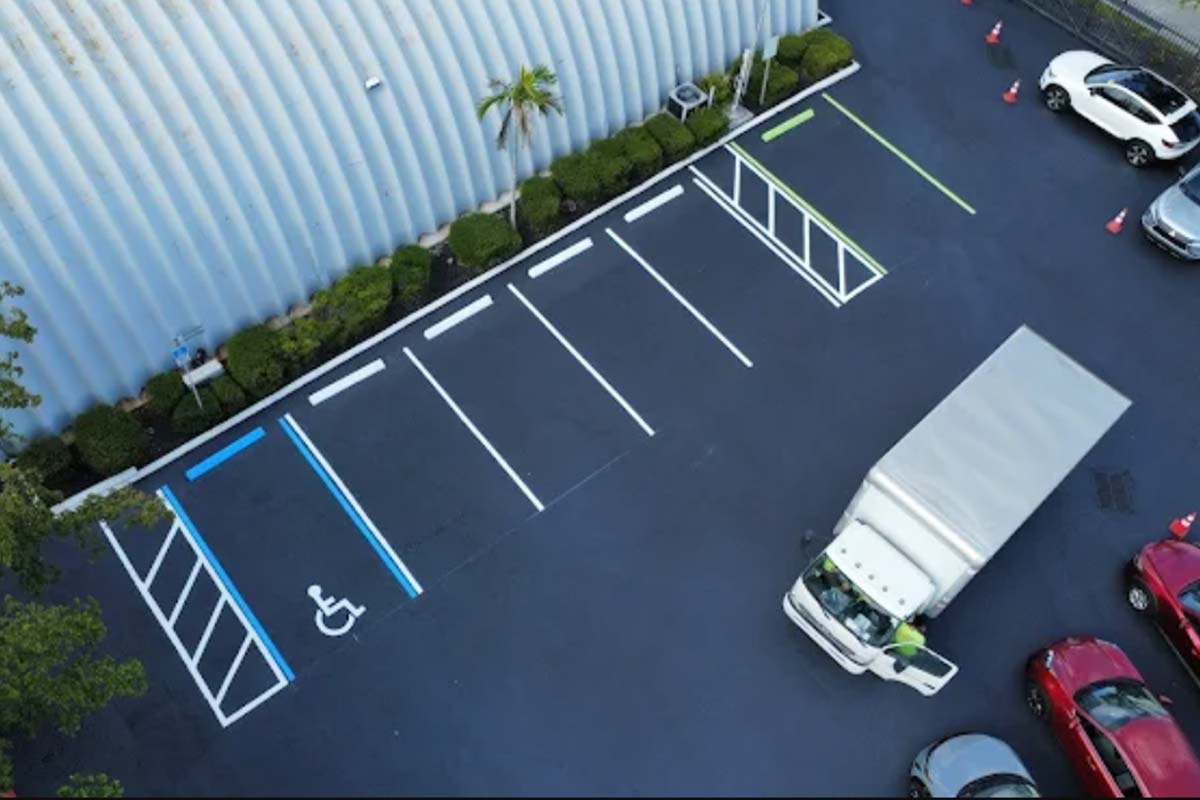
For a full list of our pavement marking services, visit our parking lot striping in Bellevue, WA page.
Businesses We Serve




How it Works

GET A FREE ESTIMATE
Contact us today and we’ll have a quote to you in 24 hours

SCHEDULE AN INSTALLATION
We’ll have your installation scheduled restriped in less than 7 days, without affecting your business hours

GET A PARKING LOT THAT POPS
For a budget-friendly price, you’ll get a parking lot that looks like new
We proudly work with:


We proudly work with:


Frequently Asked Questions About Wheel Stop Installation in Bellevue
Are wheel stops required by building code?
Washington state building code does not universally require wheel stops in every parking stall. However, they are required in specific situations — particularly where vehicles could encroach on sidewalks, landscaping, building facades, or accessible routes. ADA guidelines require careful placement to maintain the required 36-inch clear passage width on adjacent pedestrian paths. Many Bellevue property managers install them for liability protection.
What is the difference between concrete, rubber, and recycled plastic wheel stops?
Concrete wheel stops are the most durable and economical for large commercial lots, typically lasting 30 years or more. Rubber stops are lighter, absorb impact, and resist cracking in freeze-thaw conditions. Recycled plastic stops resist moisture damage, are lightweight, and are an environmentally sustainable option. Selection depends on traffic volume, climate exposure, and budget.
How are wheel stops anchored to the parking surface?
Wheel stops are anchored using steel rebar pins driven into drilled holes with construction adhesive for asphalt surfaces, or expansion bolts for concrete. Each stop is secured at two anchor points to prevent displacement from vehicle contact. Proper anchoring is critical — loose wheel stops become tripping hazards and liability risks.
What is the standard wheel stop placement distance?
Standard placement is 2 to 3 feet from the front edge of the parking stall, centered on the stall width. This prevents vehicle bumpers from overhanging into adjacent sidewalks or landscaping while allowing car doors to open. ADA-accessible stalls have specific placement requirements to maintain the 60-inch access aisle clearance.
Do wheel stops create tripping hazards?
They can, which is why the ADA notes this trade-off. Proper mitigation includes high-visibility yellow paint, reflective striping, and careful placement away from primary pedestrian travel paths. Some property managers opt for alternative vehicle control methods like raised curbs or bollards in high-pedestrian areas.
How long do wheel stops last?
Concrete wheel stops typically last 30 years or more. Rubber stops last 8 to 12 years. Recycled plastic stops last 15 to 20 years. All types should be inspected annually for loose anchors, cracks, or displacement. Repainting for visibility is recommended every 2 to 3 years.