Warehouse Floor Markings
IN BELLEVUE, WA
Indoor Line Striping for Warehouses and Facilities
1-800-STRIPER® provides OSHA-compliant warehouse floor markings in Bellevue, WA — forklift aisles, pedestrian walkways, safety zones, and equipment areas with epoxy and traffic paint on concrete surfaces.
1-800-STRIPER® of Bellevue PROVIDes Warehouse Floor Markings in Bellevue, WA Services NEAR YOU
Want your indoor space to operate more efficiently?
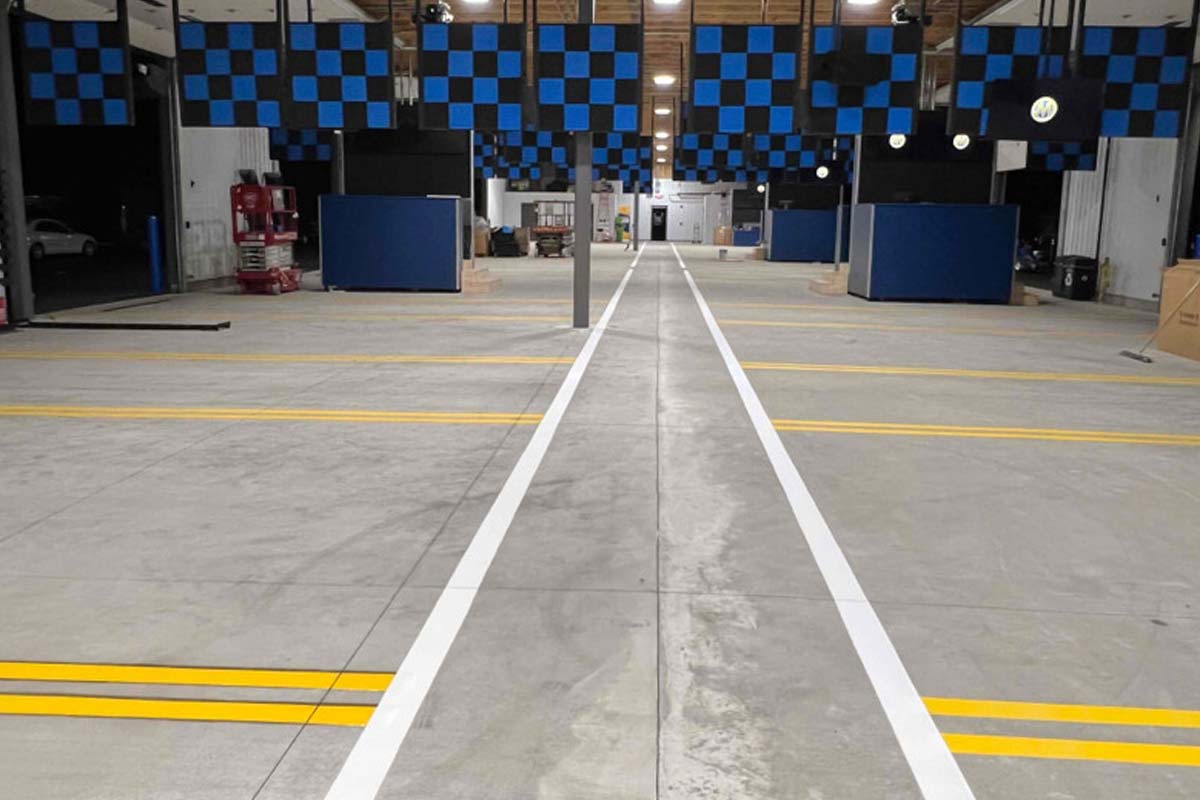
Warehouse and interior markings ensure clear traffic lanes, organized storage zones, and designated spaces designed to help your business operate safely and efficiently.
Benefits:
For a full list of our pavement marking services, visit our parking lot striping in Bellevue, WA page.
Businesses We Serve




How it Works

GET A FREE ESTIMATE
Contact us today and we’ll have a quote to you in 24 hours

SCHEDULE A STRIPING
We’ll have your space restriped in less than 7 days, without affecting your business hours

GET A PARKING LOT THAT POPS
For a budget-friendly price, you’ll get a parking lot that looks like new
We proudly work with:


We proudly work with:

Frequently Asked Questions About Warehouse Floor Markings in Bellevue
What are OSHA requirements for warehouse floor markings?
OSHA Standard 1910.176(a) requires that permanent aisles and passageways in warehouses be appropriately marked. In Bellevue, WA warehouses and distribution centers, this means visible floor lines marking pedestrian walkways, forklift lanes, loading zones, and hazard areas. Lines must be at least 2 inches wide, though 4–6 inches is the industry standard. 1-800-STRIPER® installs OSHA-compliant markings across the Puget Sound region.
What do the different warehouse floor marking colors mean?
Per ANSI Z535 safety color standards used in Bellevue, WA facilities: yellow marks aisles, walkways, and caution areas; red indicates fire equipment and emergency stops; white delineates production and equipment areas; green marks first aid stations; and blue or black indicates raw materials and work-in-progress. Consistent color coding across your warehouse floor improves both safety and operational efficiency.
Is epoxy or paint better for warehouse floor markings?
For high-traffic Bellevue, WA warehouses with heavy forklift use, two-part epoxy is the most durable option — lasting 3–5 years with proper concrete surface preparation via shot blasting. Standard acrylic traffic paint costs less and dries faster but may need repainting annually in heavy-use areas. Polyurea coatings offer a middle ground with faster cure times. We recommend epoxy for permanent lanes and paint for areas that may change.
How wide should warehouse floor lines be?
OSHA requires a minimum of 2 inches, but 4-inch-wide lines are the industry standard for warehouse aisles in Bellevue, WA. High-visibility areas like pedestrian crossings and forklift zones often use 6-inch lines. Wider lines are more visible to forklift operators and pedestrians on concrete floors.
How long do warehouse floor markings last?
In a typical Bellevue, WA warehouse, epoxy floor markings last 3–5 years while standard traffic paint lasts 1–2 years depending on traffic volume. Polyurea coatings can last 3–4 years. Facilities with heavy forklift traffic or frequent pallet jack use see faster wear. Proper surface preparation on concrete — including cleaning and shot blasting for epoxy — dramatically extends lifespan.
What aisle width is required in a Bellevue warehouse?
OSHA requires aisles to be at least 4 feet wide, or at least 3 feet wider than the largest equipment using the aisle. For forklift aisles in Bellevue, WA warehouses, typical widths are 10–12 feet for standard forklifts. Pedestrian walkways should be at least 4 feet wide with clearly marked boundaries on the concrete floor.
How do you prepare a warehouse floor for striping?
Proper surface preparation is critical for adhesion in Bellevue, WA warehouse environments. We start by power washing or shot blasting the concrete surface to remove dirt, oil, and loose material. For epoxy applications, shot blasting creates the surface profile needed for a strong bond. The floor must be completely dry before applying markings. Clean, profiled concrete ensures lines last years.