
Thermoplastic Striping
IN BELLEVUE, WA
Thermoplastic Pavement Markings
1-800-STRIPER® provides thermoplastic striping in Bellevue, WA — heat-fused pavement markings with retroreflective glass beads that last significantly longer than standard traffic paint for crosswalks, stop bars, and ADA symbols.
1-800-STRIPER® of Bellevue PROVIDes Thermoplastic Striping in Bellevue, WA Services NEAR YOU
Want to reduce the maintenance requirements for your parking lot?
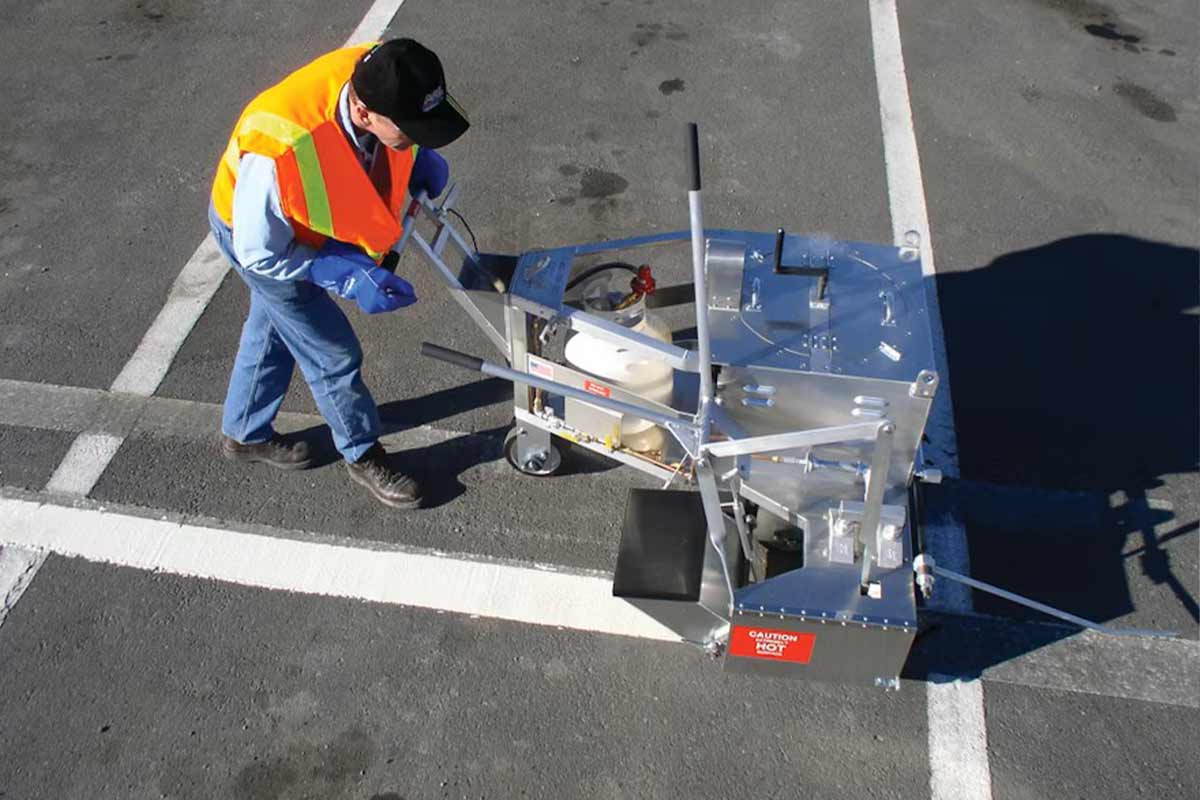
Thermoplastic pavement markings are a durable, weather and vehicle-resistant striping option for your parking lot or facility.
You can utilize them for stop bars, ADA stalls, no-parking zones, directional arrows, crosswalks, or your entire parking lot.
Benefits:
For a full list of our pavement marking services, visit our parking lot striping in Bellevue, WA page.
Businesses We Serve


How it Works

GET A FREE ESTIMATE
Contact us today and we’ll have a quote to you in 24 hours

SCHEDULE AN INSTALLATION
We’ll have your installation scheduled restriped in less than 7 days, without affecting your business hours

GET A PARKING LOT THAT POPS
For a budget-friendly price, you’ll get a parking lot that looks like new
We proudly work with:


We proudly work with:

Frequently Asked Questions About Thermoplastic Striping in Bellevue
What is thermoplastic striping?
Thermoplastic is a durable pavement marking material applied as a hot-melt compound heated to approximately 400 degrees Fahrenheit. Unlike standard traffic paint, thermoplastic fuses directly to the pavement surface as it cools, creating a thick, permanent bond. It includes retroreflective glass beads for superior nighttime visibility and meets ASTM D4505 specifications for traffic marking materials.
How long does thermoplastic striping last?
Thermoplastic striping typically lasts 5 to 8 years, compared to 1 to 2 years for standard water-based traffic paint. The material thickness (60 to 90 mils versus 15 mils for paint) and its thermal bond to the pavement provide superior wear resistance, even through the Pacific Northwest’s frequent rain and freeze-thaw cycles.
Is thermoplastic striping worth the higher upfront cost?
Thermoplastic costs more per linear foot than standard paint, but its 5-to-8-year lifespan versus 1-to-2 years for paint makes it more cost-effective over time for high-traffic properties. The reduced frequency of reapplication means less business disruption and lower total cost of ownership. It is best suited for lots with 5 or more years of remaining pavement life.
Is thermoplastic better than paint for the Pacific Northwest climate?
Thermoplastic performs well in Bellevue’s wet climate. It offers superior water resistance, better retroreflectivity in wet conditions (especially with embedded glass beads), and resistance to UV degradation. Standard paint fades more quickly in alternating rain and sun cycles. For high-traffic commercial lots, thermoplastic provides a measurable durability advantage.
What temperature is needed to apply thermoplastic?
Thermoplastic application requires pavement temperatures of at least 50 degrees Fahrenheit and dry surface conditions. The material is heated to 375 to 425 degrees Fahrenheit during application and cools to a hard finish within minutes. The optimal application season in Bellevue runs from late spring through early fall.
Can thermoplastic be applied over existing paint?
Thermoplastic can be applied over well-adhered existing paint, but loose, flaking, or heavily layered paint must be removed first through grinding or shot blasting. Surface preparation determines adhesion quality and longevity. A professional assessment ensures the existing surface condition supports proper thermoplastic bonding.
What are the best applications for thermoplastic markings?
Thermoplastic is ideal for high-wear markings: crosswalks, stop bars, ADA accessible space symbols, directional arrows, and lane lines in high-traffic commercial lots. The three main application methods are extrusion (direct contact for lines), ribbon (gun held above surface for symbols), and spray (atomized for large areas). Preformed thermoplastic shapes are also available for logos and complex symbols.