
Temporary Parking Lot Striping
In West Fort Worth, TX
Event and Construction Markings
1-800-STRIPER provides professional temporary parking lot striping in West Fort Worth, TX — short-duration event markings, construction zone striping, and overflow parking layouts on grass, gravel, pavement, or any surface using removable water-based traffic paint.
1-800-STRIPER® of West Fort Worth PROVIDes Temporary Striping Services NEAR YOU
Need Temporary Stripes?
Use temporary stripes to direct traffic and create parking areas at your special event or to keep construction sites safe without a long-term commitment. We paint on grass, gravel, pavement, or any other surface where temporary striping is needed.
Striping solutions for:
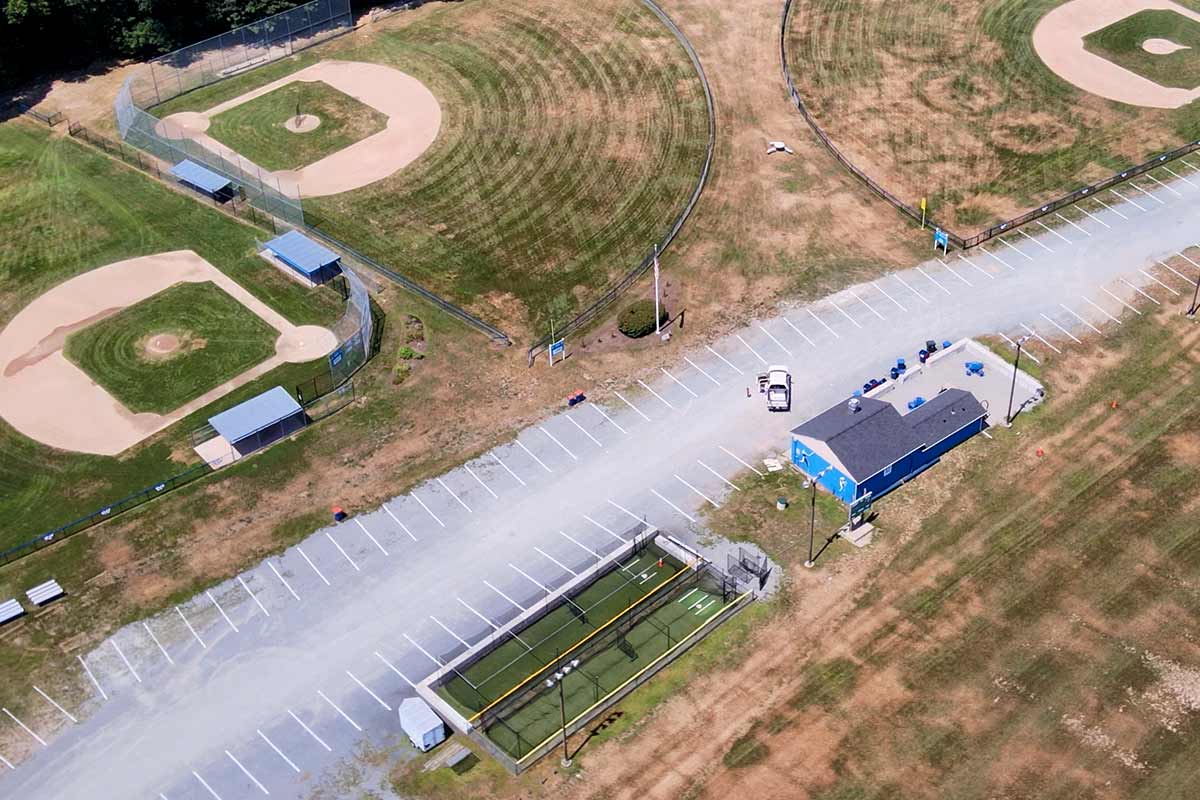
When You Need Temporary Parking Lot Striping
Temporary striping is the right call when the parking need is real but the layout should not be permanent — and there is no shortage of those situations across Tarrant, Parker, Johnson, and Hood counties.
Special events at fairgrounds, festival grounds, and stadium overflow lots need defined stalls and clear ingress and egress lanes the day before the event and gone within two weeks after. Churches and schools in Benbrook, Azle, and Crowley see overflow crowds on peak Sundays, holiday services, and graduation weekends — temporary markings let the grassy overflow field or the back gravel lot function like an organized parking area without committing paint that is meant to last five years. Construction projects in Aledo, Weatherford, and Hudson Oaks routinely close sections of permanent lots and push traffic to compacted gravel staging areas; temporary striping defines those zones during the build-out phase and gets moved as the project progresses.
Farmers markets, outdoor concerts, county fair parking, sporting tournaments, and school carnival weekends are the events most people picture first. But construction-phase traffic control — where the active layout shifts every two to six weeks as a project moves through phases — is easily the highest-volume use case 1-800-STRIPER handles in the greater West Fort Worth area. The layout is temporary. The organization requirement is not.
—
Surface-by-Surface — Paint and Marking Options
Temporary striping works on every surface type, but the right marking product depends on what you are striping and how long the layout needs to hold.
Paved surfaces (asphalt and concrete) are the straightforward case. Removable water-based traffic paint goes down cleanly and holds crisp edges in the North Texas heat. In hot weather above 90°F — common from June through September across Tarrant and Parker counties — water-based latex is also the safest choice for temporary use because it does not bond as aggressively as oil-based paint, which means removal is a pressure-wash job rather than a grind. Expect temporary water-based lines to last four to eight weeks on asphalt under active vehicle traffic; longer on concrete and on lots with low to moderate use.
Gravel and compacted-dirt surfaces need a different approach. Standard traffic paint does not bond to loose aggregate the way it bonds to sealed pavement. Chalk-based marking compound or temporary field-marking paint — the same product used for athletic fields — is the standard for gravel and compacted-dirt event lots. It sits on the surface, is highly visible, and wears away naturally with rain and traffic over one to three weeks. For very short events of one to three days, a hybrid approach works well: paint the primary traffic lanes with chalk-based marking, and use traffic cones and portable delineator posts to define stall rows rather than painted lines.
Grass and turf surfaces — overflow fields at churches, school campuses, fairgrounds, and outdoor event venues — use water-based field-marking paint applied at low pressure so the paint coats the grass blades and dries without killing the turf. This is the same chemistry as standard athletic field striping. Natural rain and mowing cycles clear the markings within two to four weeks. For weekend-only events, a single application typically reads clearly on Saturday and still holds by Sunday without needing a touch-up.
| Surface | Recommended Marking | Typical Lifespan | Removal Method |
|---|---|---|---|
| Asphalt / concrete | Removable water-based traffic paint | 4–8 weeks under traffic | Pressure wash |
| Gravel / compacted dirt | Chalk-based field-marking compound | 1–3 weeks (weather-dependent) | Rain / traffic wear |
| Grass / turf | Water-based field-marking paint | 2–4 weeks / mow cycles | Mowing + rain |
| Any surface, 1–3 days | Traffic cones + delineator posts | Event duration | Remove and store |
—
Construction-Phase Traffic Control — Staging a Lot Through a Build-Out
Construction sites need organized parking from groundbreak through certificate of occupancy — and the layout changes every few weeks as the project progresses.
A typical commercial build-out in Willow Park or Granbury moves through three to five distinct phases where available parking shifts: demo and grading, foundation and underground utilities, structure and framing, finish and punch list. Each phase opens different portions of the site and closes others. Temporary striping — applied at the start of each phase and repainted or repositioned as the project advances — keeps subcontractor and visitor parking organized without anyone relying on verbal instructions or improvised cones. Clear lane and stall markings also help keep equipment access, pedestrian routes, and emergency-vehicle lanes open as the site changes from week to week.
For larger commercial projects, we work with the general contractor’s site logistics plan to align the temporary lot layout with crane swing radii, material-staging zones, and emergency-vehicle access. The layout is drafted before the first stripe goes down, reviewed at each phase transition, and adjusted with a fresh marking rather than a repaint over the top of old lines — which creates a visual conflict that confuses drivers.
—
Event Parking Layout — Ingress, Egress, and ADA Temporary Stalls
A well-marked event lot moves vehicles in and out faster than any number of parking attendants alone — and ADA temporary accessibility is not optional even for short-duration events on temporary surfaces.
Ingress and egress lane marking is the highest-impact element of a temporary event lot layout. Marking a clear entry lane separate from the exit lane reduces the single biggest cause of post-event gridlock: opposing vehicle flows meeting mid-lot with nowhere to go. For events in Cleburne, Saginaw, or at fairgrounds on the Parker and Hood county edges of the service area, where lots are large and natural traffic flow is not obvious, temporary directional arrow stencils and lane-separation lines cut exit times significantly.
Temporary ADA-accessible stalls are required when any portion of an event is open to the public, regardless of whether the surface is paved or unpaved. The 2010 ADA Standards for Accessible Design (§206.2.3) do not create a surface-type exemption for temporary events. Temporary accessible stalls need to be the closest marked stalls to the accessible event entrance, meet the width requirements of §502.2 to the extent the surface allows, and be signed with the International Symbol of Accessibility (ISA). On grass and gravel, a portable ISA sign post and chalk-marked boundaries satisfy the standard far better than no marking at all.
—
Overflow Capacity Planning — How Many Stalls Fit Your Surface
Overflow capacity planning starts with a measurement of the available surface and a decision about how the stalls will orient relative to the traffic aisle.
A standard 90-degree parking stall is 9 feet wide by 18 feet deep in most configurations. Add a 24-foot two-way drive aisle and a single bay — one row of stalls, one aisle, one row of stalls — takes up 60 feet of lot width. A 300-foot-wide grass overflow field, measured conservatively, fits five bays with a drive path at the perimeter: roughly 200 stalls depending on length. For angled parking (45 or 60 degrees), drive aisles can narrow to 12 to 16 feet one-way, which increases stall count but requires one-way traffic flow and clear directional marking to prevent opposing flow.
For gravel overflow lots at fairgrounds or outdoor venues, the math is the same but the surface quality dictates how tightly you can actually stripe. Uneven compaction, drainage swales, and surface obstacles reduce usable stall count by 10 to 20 percent compared to a paved surface of the same dimensions. Planning for that reduction before the event avoids the situation where you mark 150 stalls and only 120 are actually usable — which is more disruptive than marking 120 stalls correctly in the first place.
—
The Temporary Striping Process — From Walkthrough to Post-Event Removal
Getting a temporary lot striped correctly takes four steps, and none of them should be skipped.
- Site walkthrough and layout plan. We walk the surface, measure the available area, identify access points and perimeter constraints, and draft a stall layout and traffic-flow plan. For events with specific ADA requirements, ingress/egress separation, or construction-phase constraints, the plan gets reviewed and confirmed before we mark a single line.
- Surface-appropriate marking. We apply the right product for the surface — water-based traffic paint on paved lots, chalk-based field compound on gravel and compacted dirt, water-based field paint on grass — at the coverage rate and application pressure appropriate for the substrate. On grass and gravel, lower application pressure distributes the marking without saturating the surface or creating adhesion that exceeds what the surface can support.
- Stall layout, lanes, and signage. Stalls get marked first, then drive-aisle lane lines and directional arrows, then ADA stall borders and ISA sign placement. Working in that order prevents re-painting conflicts and ensures the finished lot reads cleanly from the entrance inward.
- Post-event removal or natural wear. On paved surfaces where removable water-based paint was used, removal is a pressure-wash job — typically a single pass with a surface cleaner attachment. On grass and gravel, the markings clear naturally with rain and traffic without any active removal step. For time-sensitive removal on paved surfaces — when the event space reverts to another use immediately — we schedule the pressure-wash as part of the same project.
Call (682) 262-7612 to talk through your surface, your timeline, and your stall-count target before your event or project start date.
—
How Long Do Temporary Markings Last in the North Texas Climate
North Texas heat accelerates both paint performance and paint wear — which means temporary markings stay crisp longer than in cooler climates but also wear faster under the high UV load and dry summer traffic.
On asphalt under direct sun in Tarrant, Johnson, or Hood county from May through September, removable water-based traffic paint typically reads at full visibility for three to six weeks under moderate vehicle traffic. After six to eight weeks, expect fading at the line edges — still visible, but no longer sharp. On shaded concrete surfaces or in cooler months (October through March), the same paint holds closer to eight to twelve weeks before visible fading begins. On grass, a standard water-based field-marking application holds four to fourteen days depending on rainfall and mowing frequency. A single heavy rain event after application is typically not a problem — the paint sets within 30 to 60 minutes of application and resists light rain once cured.
For events or construction phases that run longer than the paint’s natural lifespan, a re-mark is more cost-effective than any attempt to protect or extend the original application. The re-marking visit takes a fraction of the time of the original layout because the existing (faded) lines serve as guides.
—
For a full list of our pavement marking services, visit our parking lot striping in West Fort Worth page.
Businesses We Serve




How it Works

GET A FREE ESTIMATE
Contact us today and we’ll have a quote to you in 24 hours

SCHEDULE A STRIPING
We’ll have your space restriped in less than 7 days, without affecting your business hours

GET A PARKING LOT THAT POPS
For a budget-friendly price, you’ll get a parking lot that looks like new
We proudly work with:


We proudly work with:


Frequently Asked Questions About Temporary Parking Lot Striping in West Fort Worth, TX
Can you stripe a grass overflow field for a weekend event in West Fort Worth?
Yes — grass and turf are standard surfaces for temporary striping. We use water-based field-marking paint applied at low pressure so the paint coats the grass blades without saturating the root zone. The markings are clearly visible within 30 to 60 minutes of application and hold through normal weekend event traffic. Natural mowing and rain cycles clear them within two to four weeks after the event. We can lay out stall rows, ingress/egress lanes, and ADA temporary stall markings on grass the same as on pavement.
How long does removable water-based traffic paint last on asphalt in the Texas heat?
On asphalt in Tarrant, Parker, or Johnson county under direct sun and regular vehicle traffic, expect three to six weeks of sharp, clearly visible lines. Hot weather and UV exposure from June through September will push wear toward the shorter end of that range. On lower-traffic areas or in cooler months, the same paint can hold eight weeks or longer. If your event or construction phase runs longer than six weeks, a scheduled re-mark keeps the lot organized without a full layout re-do.
Do temporary event lots still need ADA-accessible stalls?
Yes. The 2010 ADA Standards for Accessible Design (§206.2.3) apply to temporary lots serving public events regardless of surface type. Temporary accessible stalls need to be the closest marked stalls to the accessible event entrance and need ISA signage. On unpaved surfaces, the accessible stall dimensions should match the standard dimensions as closely as the surface conditions allow. Portable ISA sign posts and chalk-marked borders satisfy the requirement on grass and gravel. We plan ADA stall placement as part of every event layout.
What is the difference between removable water-based paint and chalk-based marking for a gravel lot?
Removable water-based traffic paint bonds to sealed or semi-sealed surfaces and requires pressure washing for removal from pavement. On loose gravel, it does not adhere reliably — the aggregate shifts and the paint flakes off within days. Chalk-based field-marking compound is designed for loose, granular surfaces; it sits on the aggregate, dries to a highly visible white or yellow, and wears away naturally with rain and traffic over one to three weeks without any active removal step. For gravel and compacted-dirt event lots, chalk-based compound is the right product.
Can you re-mark the lot between phases of a construction project?
Yes — construction-phase re-marking is one of the most common temporary striping jobs we handle across the West Fort Worth area. As a project moves through demo, foundation, structure, and finish phases, the available parking area shifts. We schedule re-marking visits to align with each phase transition, clearing the old layout where needed and applying the new layout for the next phase. The per-visit cost is lower than the original layout job because the area and stall count are typically smaller at each sub-phase.
How do we remove temporary markings from a paved lot after an event?
Removable water-based traffic paint on asphalt or concrete comes off with a pressure washer using a surface-cleaner attachment — typically one pass across the marked area. Hot water accelerates the removal on older or more porous asphalt. On concrete, which is denser and less porous than asphalt, the removal is typically faster and cleaner. For events where the paved lot reverts to another use immediately after, we schedule the pressure-wash removal as part of the same project so you are not managing two separate contractors and two separate scheduling windows. —