Warehouse Line Painting
In Cherry Hill, NJ
OSHA-Compliant Safety Markings
1-800-STRIPER® provides professional warehouse line painting in Cherry Hill, NJ — OSHA-compliant aisle lines, pedestrian walkways, and safety zone markings per OSHA 1910.22 requirements using durable epoxy coatings and traffic paint for industrial facilities.
1-800-STRIPER® of Cherry Hill PROVIDes Warehouse Floor Markings Services NEAR YOU
Want your indoor space to operate more efficiently?
Warehouse and interior markings ensure clear traffic lanes, organized storage zones, and designated spaces designed to help your business operate safely and efficiently.
Benefits:
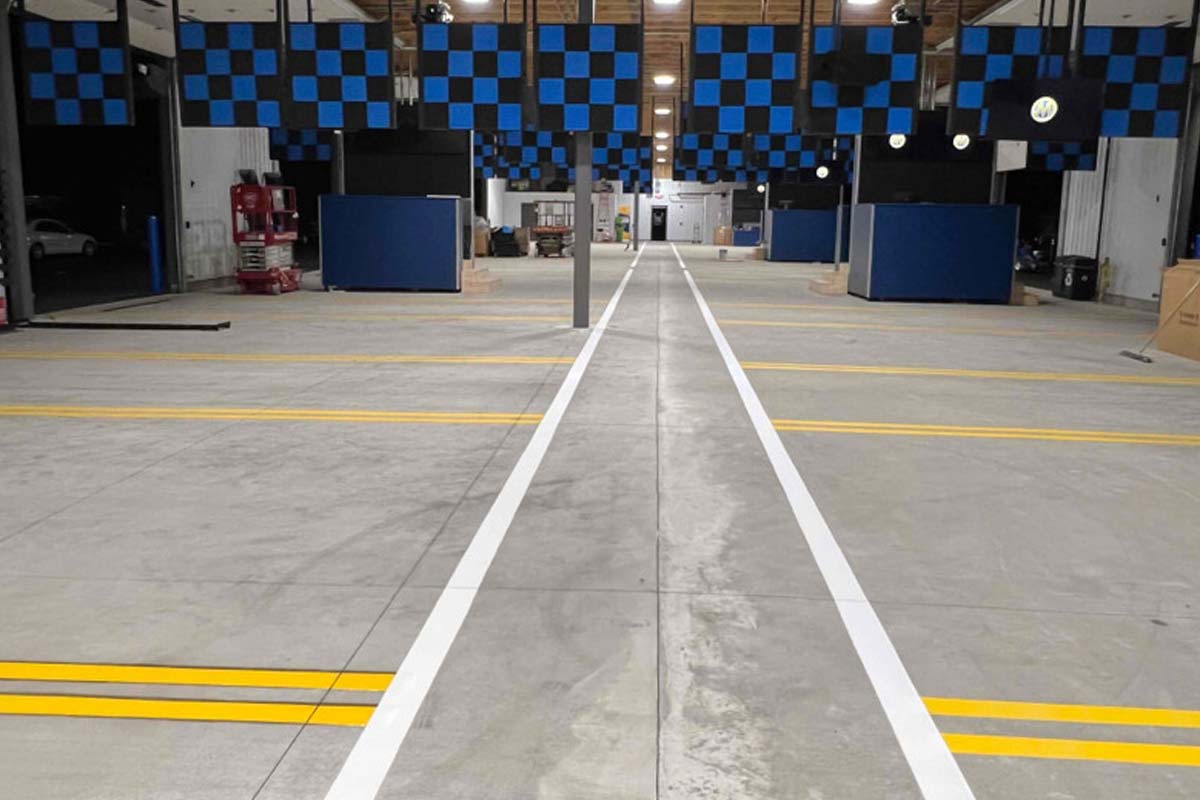
Warehouse Line Painting Services in Cherry Hill, NJ
Warehouse floor markings organize movement, separate people from equipment, and keep a facility compliant with safety regulations. We paint warehouse and industrial floors across Camden and Burlington counties — the heart of South Jersey’s logistics corridor along the NJ Turnpike and I-295. That work covers forklift aisles, pedestrian walkways, safety and hazard zones, dock and staging areas, and 5S color-coded organization markings.
The South Jersey logistics belt runs on distribution centers, third-party logistics (3PL) operations, manufacturing plants, and cold storage. Each has different traffic patterns, but the compliance baseline is the same: clear, durable markings that hold up under forklift wheels and meet federal safety standards.
OSHA-Compliant Aisle and Safety-Zone Markings
OSHA 1910.22(b) requires that aisles and passageways be kept clear and in good repair, with no obstruction that could create a hazard — and where mechanical handling equipment is used, aisles must be marked. In practice that means painted, maintained lines that define where forklifts travel and where people walk.
OSHA references appropriate line width but doesn’t mandate a single number; the widely-used industry range is 2 to 6 inches, with 4-inch lines the most common balance of visibility and cost. Forklift aisles are sized to the largest vehicle that uses them plus safe clearance on each side. We lay out aisles, walkways, and clear zones so the traffic plan is obvious from the floor — which is exactly what an OSHA inspector and a new employee both need.
ANSI Z535.1 Safety Color Coding
Color is what makes a floor plan readable at a glance, and the ANSI Z535.1 Safety Color Code standardizes what each color means:
- Yellow — caution; aisles, traffic lanes, and physical hazards
- Red — fire-related: fire equipment, flammable-liquid storage, emergency stops
- Green — safety equipment, first-aid stations, and emergency egress
- Orange — machinery and energized-equipment hazards
- Blue — informational or mandatory-action markings
- Black-and-white stripes — areas to keep clear, such as electrical-panel access and equipment service zones
Using a consistent color code across the facility means a forklift operator, a picker, and a visitor all read the floor the same way. We apply the ANSI color system so your markings communicate hazard and function, not just boundaries.
Epoxy Floor Coatings vs. Traffic Paint
Two marking systems dominate industrial floors, and the right one depends on traffic and substrate:
- Durable traffic paint goes down fast, cures quickly, and refreshes easily — a strong fit for most aisles and walkways and for facilities that re-layout periodically.
- Epoxy coatings bond hard to concrete and stand up to heavy forklift traffic and abrasion longer, at a higher cost and with more surface prep and cure time.
High-traffic lanes, dock aprons, and zones that take constant wheel wear are the usual candidates for epoxy; lighter-duty walkways and zones that may move are well served by traffic paint. Surface prep is decisive either way — markings only last on a clean, sound, properly profiled floor — so we assess the substrate before recommending a system.
Markings We Apply
A complete warehouse marking package typically includes:
- Forklift travel aisles and directional markings
- Pedestrian walkways and marked crossing points
- Hazard and safety zones — keep-clear areas, pinch points, machine boundaries
- Dock and staging areas — inbound/outbound, hold, and quality zones
- 5S color-coded organization — material locations, equipment homes, and workstation boundaries
Each marking is placed to the facility’s actual traffic flow, not a generic grid, so the plan supports how the warehouse really runs.
5S and Visual-Management Floor Marking
5S floor marking turns the warehouse floor into a visual-management tool. By assigning every item, lane, and zone a marked home and a consistent color, a facility makes problems obvious — a pallet outside its zone, a blocked aisle, a missing piece of equipment. White lines commonly define workspaces, equipment positions, and storage footprints, while the ANSI colors flag hazards and safety resources.
For distribution and 3PL operations where layouts shift with the season, we plan the marking scheme so it’s easy to read, easy to maintain, and easy to update when the floor plan changes.
Industries We Serve
We mark floors for the operations that define the South Jersey logistics corridor: regional distribution centers, third-party logistics (3PL) warehouses, light and heavy manufacturing plants, and cold-storage and food-grade facilities. Cold storage in particular demands marking systems chosen for low-temperature performance and frequent washdown. Whatever the facility type, the markings are laid out to the building’s real traffic and compliance needs.
The Camden and Burlington county corridor along the New Jersey Turnpike and I-295 is one of the densest distribution belts in the Northeast, feeding the Philadelphia and New York metros. Facilities here run high pick volumes and constant forklift traffic, which wears floor markings faster and makes clear, durable aisle and pedestrian lines a continuous safety priority rather than a one-time install.
For a full list of our pavement marking services, visit our parking lot striping in Cherry Hill page.
Businesses We Serve




How it Works

GET A FREE ESTIMATE
Contact us today and we’ll have a quote to you in 24 hours

SCHEDULE A STRIPING
We’ll have your space restriped in less than 7 days, without affecting your business hours

GET A PARKING LOT THAT POPS
For a budget-friendly price, you’ll get a parking lot that looks like new
We proudly work with:


We proudly work with:

Frequently Asked Questions About Warehouse Line Painting in Cherry Hill, NJ
What does OSHA require for warehouse floor marking?
OSHA 1910.22(b) requires aisles and passageways to be kept clear and in good repair, and aisles to be appropriately marked where mechanical handling equipment such as forklifts is used. The standard doesn’t dictate a single line color or exact width, but it does require that traffic lanes and walkways be clearly defined and maintained so people and equipment stay separated.
What do warehouse floor-marking colors mean?
Under the ANSI Z535.1 Safety Color Code, yellow marks aisles, traffic lanes, and caution hazards; red marks fire equipment and flammable storage; green marks first-aid and safety equipment; orange marks machinery hazards; blue marks informational or mandatory points; and black-and-white striping marks keep-clear zones like electrical-panel access. A consistent color system lets everyone in the facility read the floor the same way.
How wide should warehouse floor lines be?
The common industry range is 2 to 6 inches, and 4-inch lines are the most widely used because they’re highly visible without wasting paint or floor space. OSHA references appropriate width rather than mandating one number. Forklift aisle widths are set separately, sized to the largest vehicle that uses the aisle plus safe clearance on each side. We confirm widths for your facility’s traffic during the layout.
Should I use epoxy or traffic paint for my warehouse floor?
It depends on traffic and budget. Epoxy coatings bond hard to concrete and resist heavy forklift wear longer, but cost more and need more surface prep and cure time. Durable traffic paint goes down faster, cures quickly, and is easy to refresh — a good fit for most aisles and for facilities that re-layout periodically. We assess your substrate and traffic before recommending a system.
What is 5S floor marking?
5S is a visual-management method that gives every aisle, zone, and item a marked, color-coded home so problems are obvious at a glance — a misplaced pallet, a blocked lane, equipment out of position. White lines typically define workspaces and storage footprints, while ANSI safety colors flag hazards and safety resources. It’s especially useful in distribution and 3PL warehouses where keeping the floor organized directly affects throughput.
How wide does a forklift aisle need to be?
A forklift aisle should be sized to the largest vehicle that travels it plus safe clearance on each side, so operators have room to maneuver and pedestrians stay protected. The exact width depends on your equipment and whether the aisle is one-way or two-way. We measure your forklifts and traffic pattern, then mark aisles wide enough for safe operation while preserving as much storage and rack space as possible.