Parking Lot Pressure Washing
In West Fort Worth, TX
Surface Prep Before Restriping
1-800-STRIPER provides professional parking lot pressure washing in West Fort Worth, TX — removing oil stains, tire marks, gum, and grime from asphalt and concrete surfaces with controlled wash-water capture per EPA NPDES stormwater requirements for commercial properties across Parker and Tarrant counties.
1-800-STRIPER® of West Fort Worth PROVIDes Parking Lot Power Washing Services NEAR YOU
Need to blast away years of grime?
If your parking lot or parking garage looks dull and dirty, our professional crew can wash away grime, oil, stains, and slippery buildup to restore the appearance of your property.
Benefits:
What Parking Lot Pressure Washing Removes
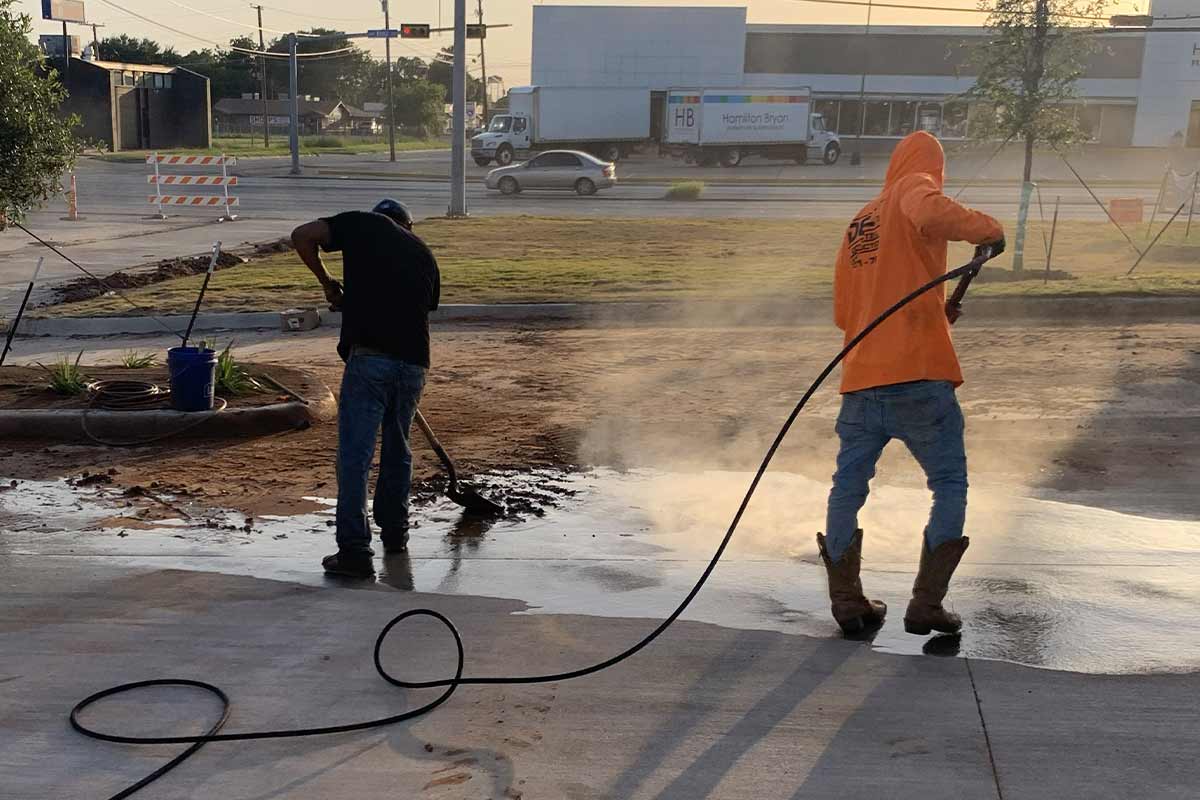
Commercial pressure washing strips the buildup that ordinary sweeping leaves behind — oil stains, tire-rubber marks, chewing gum, ground-in dirt, and the mildew that grows in shaded corners. These are the things customers see first when they pull into a lot, and they are the things sealing and striping cannot hide.
Oil and grease are the worst offenders on a Texas commercial lot. They drip from parked vehicles, spread under the summer sun, and bake into the pavement until they read as dark, permanent shadows. Tire marks from delivery trucks and tight turns leave black scuffing across drive lanes and loading zones.
Gum, bird droppings, and tree sap collect near entrances and under landscaping, while mildew and algae take hold on the north-facing edges of buildings where the pavement stays damp. A full pressure wash lifts all of it, and the lot reads as a managed property again instead of deferred maintenance.
Why Texas Heat Bakes Oil Into Asphalt and Concrete
North Texas heat is the reason oil and grease set into pavement faster here than in cooler climates. When summer surface temperatures push asphalt past 130°F, petroleum stains soften, spread, and migrate down into the binder rather than sitting on top where a quick rinse could lift them.
Asphalt is itself a petroleum product, so motor oil and hydraulic fluid actually bond with it chemically under heat — the stain stops being a surface mark and becomes part of the pavement matrix. Concrete behaves differently but is no easier: it is porous, and Tarrant and Parker County heat draws oil deep into the capillaries before it ever fully cools.
The practical takeaway for a West Fort Worth property is that timing and temperature matter. The longer a fresh spill bakes under the Texas sun, the harder it is to remove, which is why periodic washing beats waiting for the lot to look bad.
Hot-Water vs. Cold-Water Pressure Washing
Hot water is what actually breaks the bond between baked-in grease and pavement, while cold water handles general dirt and surface grime. The difference comes down to chemistry: heat lowers the viscosity of oil and emulsifies it so the pressure can carry it away, which cold water alone cannot do.
For routine washing — pollen, dust, light surface dirt, mildew — cold-water pressure washing at the right PSI is efficient and effective. For the deep, set-in stains common in Texas drive lanes, dumpster pads, and loading zones, hot-water washing in the 180°F to 200°F range is the tool that lifts what cold water leaves behind.
On most commercial lots the right answer is a mix: cold water across the open lot, hot water focused on oil zones, gum, and grease traps. We match the method to the stain rather than blasting the entire lot at maximum heat and pressure, which wastes water and can damage the surface.
Surface-Safe PSI for Asphalt vs. Concrete
The single most important rule of parking-lot washing is matching pressure to the surface, because too much PSI does more damage than the dirt it removes. Asphalt and concrete have very different tolerances, and treating them the same is how aggressive contractors leave pitting and stripping behind.
| Surface | Typical safe PSI | Notes |
|---|---|---|
| Asphalt (aged/sealed) | 1,500 – 2,500 | Wider fan tip, lower pressure; high PSI tears out fines and binder |
| Concrete (parking, sidewalks) | 2,500 – 3,500 | Tolerates more pressure; surface cleaner attachment for even results |
| Painted lines / stencils | < 1,500 | Protect existing striping; over-pressure removes paint |
| Oil/grease zones | Hot water + degreaser | Heat and detergent, not raw pressure, do the work |
Asphalt is the more delicate of the two. Excessive pressure on asphalt tears out the fine aggregate and exposes the binder, which accelerates raveling and shortens pavement life — so the goal is the lowest pressure that still lifts the soil, paired with hot water and detergent where needed. Concrete handles higher pressure and benefits from a rotary surface cleaner that produces an even, streak-free finish.
Pressure Washing as Restripe Prep
Clean pavement is the foundation of good striping, because traffic paint only bonds to a surface that is free of oil, dirt, and loose debris. This is why pressure washing is the first step we recommend before any restripe — paint applied over a greasy or dusty lot peels and fades within months.
Oil and grease are paint repellents. A new stall line laid over a shadowed oil stain will lift at the edges, while dust and pollen create a powdery barrier that keeps paint from keying into the asphalt. A focused hot-water wash on the line paths and high-traffic lanes removes those contaminants so the new paint cures with full adhesion.
When a property is planning both services, sequencing them together saves time and money. We wash, let the surface dry to specification, then stripe — one mobilization, one closure window, and a markedly longer-lasting result than striping over an uncleaned lot.
How Often Should a Commercial Lot Be Pressure Washed
Most high-traffic commercial lots benefit from pressure washing on a periodic schedule, with the industry baseline landing somewhere between twice a year and quarterly depending on use. This is a norm, not a one-size promise — the right cadence depends on traffic, tenants, and how fast a given lot collects oil and grime.
Retail centers, restaurants, and medical office parks with heavy daily turnover tend toward the more frequent end, because food spills, grease-trap drips, and constant tire traffic accumulate fast. Lower-traffic lots — office buildings, churches, light-industrial sites — often hold up well on a twice-yearly schedule.
Dumpster pads and drive-through lanes are the exception that usually needs its own, tighter cadence regardless of the rest of the lot. We walk the property, look at where the staining actually concentrates, and recommend a schedule built around the lot’s real wear pattern rather than a generic calendar.
Wash-Water Runoff Is Regulated — Here Is How We Handle It
Commercial wash-water carrying detergents and oil cannot legally flow into a storm drain untreated, and a compliant pressure-washing contractor plans for that before the first hose comes off the truck. This is the part of the job most property owners never think about, and it is exactly where a cut-rate washer creates liability for the property.
Under the federal EPA NPDES stormwater regulations, the municipal separate storm sewer system — the MS4 — is meant to carry rainwater only. Detergent, emulsified oil, and grime washed off a parking lot are pollutants, and discharging them into a storm drain is a regulated act, not a free pass.
In Texas, the program is state-delegated and enforced through the TCEQ Texas Pollutant Discharge Elimination System, the TPDES. The same principle applies across Tarrant, Parker, Johnson, and Hood counties — wash-water with detergents or hydrocarbons may not enter the storm-drain system untreated.
Controlled Wash-Water Capture and Disposal
We contain wash-water at the source rather than letting it run to the nearest inlet. The method is straightforward: berms, vacuum recovery, and storm-drain mats keep the dirty water from reaching the MS4, and the captured water is filtered or hauled for proper disposal.
The typical controlled-capture sequence runs like this:
- Identify and protect drains. Locate every storm-drain inlet in the wash zone and seal it with a drain mat or cover before washing begins.
- Berm and contain. Set up berms or weighted booms to corral wash-water toward a low collection point instead of letting it sheet across the lot.
- Recover the water. Use a wet-vacuum or recovery system to pull the contaminated water off the pavement as washing proceeds.
- Filter or haul for disposal. Run recovered water through filtration where appropriate, or hold and haul it to an approved disposal facility — never back into the storm drain.
- Document the process. Keep the lot, the drains, and the disposal step accounted for so the property has a clean compliance record.
This is more work than a pump-and-run wash, but it is what keeps a commercial property on the right side of EPA and TCEQ rules. We serve commercial properties across Aledo, Weatherford, Willow Park, Granbury, Cleburne, Azle, Benbrook, and Saginaw, and the containment standard is the same everywhere we work.
Get a Free Pressure-Washing Estimate in West Fort Worth
A clean parking lot protects your pavement, your tenants’ first impression, and your stormwater compliance all at once. 1-800-STRIPER serves commercial and industrial properties throughout western Tarrant, Parker, Johnson, and Hood counties and the surrounding North Texas communities, and every job starts with a walk-through and a free written estimate.
Call us at (682) 262-7612 to schedule a site visit. We will assess the pavement, identify the oil zones and problem areas, and recommend a wash method, PSI range, and cadence built around how your lot actually gets used. If you are also planning to restripe, we will sequence the wash and the striping together so you get one closure window and a longer-lasting finish.
For a full list of our pavement marking services, visit our parking lot striping in West Fort Worth page.
Businesses We Serve




How it Works

GET A FREE ESTIMATE
Contact us today and we’ll have a quote to you in 24 hours

SCHEDULE AN INSTALLATION
We’ll have your installation scheduled in less than 7 days, without affecting your business hours

GET A PARKING LOT THAT POPS
For a budget-friendly price, you’ll get a parking lot that looks like new
We proudly work with:


We proudly work with:
Frequently Asked Questions About Parking Lot Pressure Washing in West Fort Worth, TX
Can pressure washing remove old oil stains from my Texas parking lot?
In most cases, yes — but set-in stains need hot water and degreaser, not just high pressure. Texas heat bakes oil into asphalt and concrete, so a baked-in stain has migrated below the surface and a cold-water rinse will not lift it. We use hot water in the 180°F to 200°F range with a degreaser on oil zones to break the bond and pull the grease out. Very old, deeply absorbed stains may lighten rather than vanish completely, and we will tell you honestly what to expect after walking the lot.
Will pressure washing damage my asphalt?
Not when the pressure is matched to the surface. Asphalt is more delicate than concrete — excessive PSI tears out the fine aggregate and exposes the binder, which speeds up raveling. That is why we wash asphalt at lower pressure with a wider fan tip and let hot water and detergent do the work on tough stains instead of raw force. The goal is the lowest pressure that still lifts the soil, which cleans the lot without shortening its life.
Do I need to pressure wash before restriping?
Yes — clean pavement is what lets traffic paint actually bond. Paint applied over oil, dust, or loose debris peels and fades within months, so washing the line paths and high-traffic lanes first is the difference between striping that lasts and striping that fails early. When you plan both services together, we wash, let the surface dry to specification, and then stripe in one mobilization, which saves you a second closure window.
Where does the dirty wash-water go?
We capture it — it does not go down the storm drain. Under the federal EPA NPDES program and the state-delegated TCEQ TPDES program, wash-water carrying detergents or oil cannot enter the storm-drain system untreated. We seal the drains, berm and contain the runoff, recover it with a wet-vacuum, and filter or haul it for proper disposal. That containment is required for any compliant commercial wash, and it keeps your property out of stormwater trouble.
How often should I have my commercial lot pressure washed?
The industry baseline runs from twice a year to quarterly, depending on traffic and tenant mix. Retail centers, restaurants, and medical parks with heavy daily turnover usually need the more frequent end because of spills and grease, while lower-traffic office, church, and light-industrial lots often hold up well twice a year. Dumpster pads and drive-through lanes typically need their own tighter schedule. We recommend a cadence based on where staining actually concentrates on your lot rather than a generic calendar.
Do you offer hot-water pressure washing, or only cold water?
Both — and we choose based on the stain. Cold water at the right PSI handles general dirt, pollen, and mildew across the open lot efficiently. Hot water in the 180°F to 200°F range is what breaks down baked-in grease, gum, and oil in drive lanes, loading zones, and dumpster pads. On most commercial properties the right approach is a mix: cold water across the lot and focused hot water on the oil zones, which cleans thoroughly without wasting water or over-treating the whole surface.