Parking Lot Layout Design
In Cincinnati, OH
Customized Parking Lot Layouts
1-800-STRIPER provides professional parking lot layout design in Cincinnati, OH — custom-engineered layouts that maximize parking capacity, ensure ADA compliance per the 2010 ADA Standards and Ohio Building Code Chapter 1106, and meet MUTCD pavement marking specifications using Graco LineLazer precision striping equipment.
1-800-STRIPER® of Cincinnati PROVIDes New Layouts Services NEAR YOU
Are you ready to create a great first impression?
A proper parking lot layout with clear markings is critical for any business that serves the public. Let us help you make a great first impression with an attractive, well-organized, and safe parking lot.
Benefits:
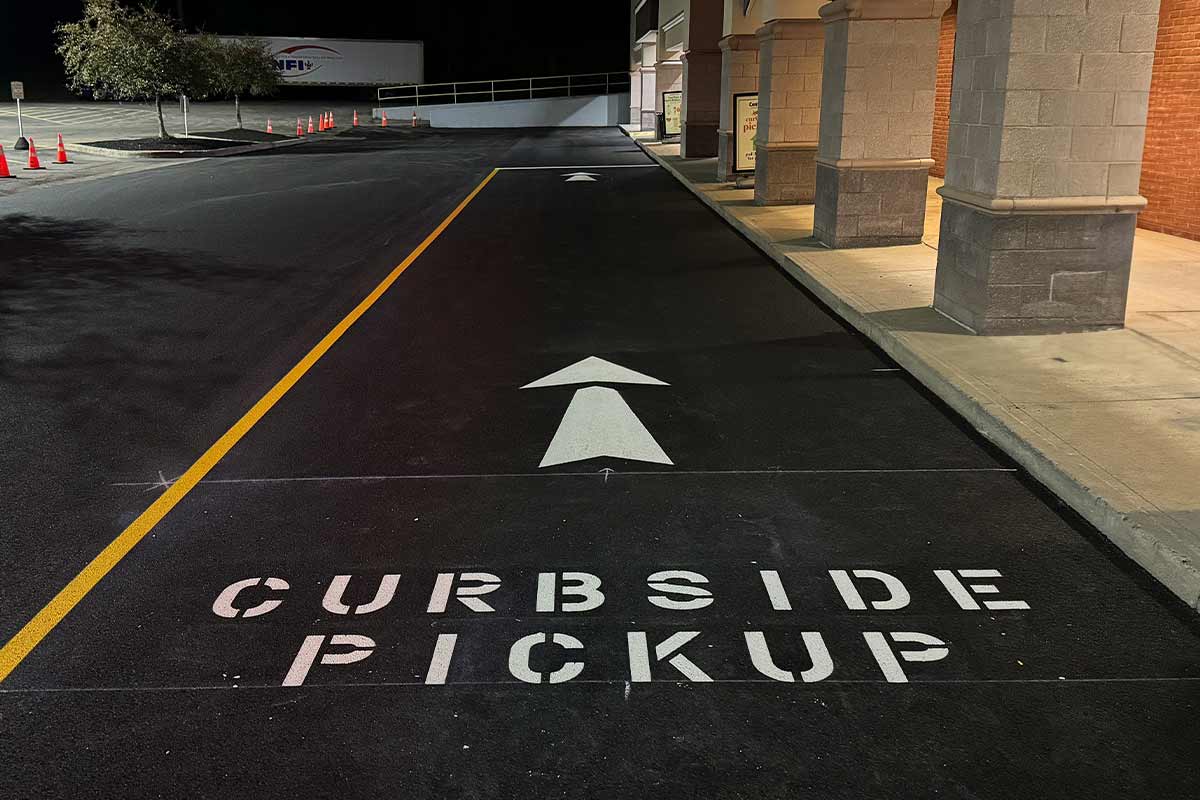
Parking Lot Layout Design in Cincinnati, OH
Good parking lot layout balances three things at once — how many stalls you can fit, how smoothly traffic flows, and whether the design meets accessibility code. We design and stripe parking layouts for new construction and for existing lots being reconfigured across Greater Cincinnati, engineering the plan to your lot’s footprint and your local zoning requirements.
A layout is not just painting stalls where they fit. It is a plan that squeezes the most usable capacity out of the space you have while keeping drive aisles wide enough, accessible spaces compliant, and traffic moving in a direction that makes sense. Get it right and the lot fills efficiently and passes inspection; get it wrong and you lose stalls, create bottlenecks, or fail an accessibility review.
Maximizing Capacity While Meeting ADA and Ohio Building Code Chapter 1106
Capacity and compliance are the two constraints every layout has to satisfy together. Capacity comes from geometry: a 90-degree double-loaded aisle layout fits the most stalls into a given area, while 60-degree or 45-degree angled layouts trade some capacity for easier one-way flow on tight or oddly shaped lots. Drive aisles need to stay wide enough for their traffic pattern — generally 24 feet for two-way 90-degree parking and less for one-way angled aisles.
Compliance comes from accessibility code. The 2010 ADA Standards for Accessible Design, authored by the U.S. Access Board, set the accessible-stall count by total lot size — 1 accessible space for 1–25 total stalls, 2 for 26–50, 3 for 51–75, 4 for 76–100, and up from there — plus at least one van-accessible space for every six accessible spaces. Ohio adopts and enforces these through Ohio Building Code Chapter 1106 (OAC 4101:1-11), which incorporates the federal stall-count tables and dimension requirements with Ohio amendments. A layout has to clear both the federal standard and the Ohio code, and the accessible spaces have to sit on the shortest accessible route to the building entrance.
Our Layout Design Process
Our layout work follows a straightforward sequence from measurement to finished stripes.
- Site measurement. We measure the lot’s dimensions, note the building entrances, and identify the constraints — islands, drainage, existing drive access.
- Capacity and code plan. We design the stall layout to maximize capacity within your zoning’s parking ratios while meeting the ADA and Ohio Building Code Chapter 1106 accessible-stall counts, van ratios, and dimensions.
- Traffic flow. We set drive-aisle widths and direction so the lot fills and empties without bottlenecks or pedestrian conflict points.
- Layout marking. We chalk the plan onto the lot for review before paint.
- Striping. We stripe the finished layout with Graco LineLazer precision equipment — stalls, aisles, accessible spaces, and directional arrows.
Stall Types, Drive Aisles, and Traffic Flow
The building blocks of a layout are the stall angle, the stall dimensions, the drive-aisle width, and the flow direction. Standard stalls are typically around 9 feet wide by 18 feet deep, though local zoning can adjust that. The stall angle drives the trade-off: 90-degree stalls maximize count and allow two-way aisles, while angled stalls at 60 or 45 degrees make one-way flow easier and can suit narrow lots, at a modest cost in total capacity.
Drive aisles tie it together. Two-way 90-degree parking needs about 24 feet of aisle; one-way angled parking needs less. Accessible spaces and their access aisles go on the shortest route to the entrance, and the flow direction is planned so drivers move through the lot in a logical loop rather than doubling back. We work all of this into the plan before any paint goes down, so the finished layout gives you the capacity you need with the compliance you are required to have.
For a full list of our pavement marking services, visit our parking lot striping in Cincinnati page.
Businesses We Serve




How it Works

GET A FREE ESTIMATE
Contact us today and we’ll have a quote to you in 24 hours

SCHEDULE AN INSTALLATION
We’ll have your installation scheduled in less than 7 days, without affecting your business hours

GET A PARKING LOT THAT POPS
For a budget-friendly price, you’ll get a parking lot that looks like new
We proudly work with:


We proudly work with:


Frequently Asked Questions About Parking Lot Layout Design in Cincinnati, OH
How do you maximize parking capacity in a new layout?
Capacity comes mostly from stall angle and aisle geometry. A 90-degree double-loaded aisle layout — stalls on both sides of a two-way drive aisle — fits the most cars into a given area, so that is the starting point whenever the lot shape allows it. On narrow or irregular lots we may use angled stalls with one-way aisles, which flow better but fit slightly fewer cars. We measure your lot and design to the highest compliant capacity the footprint supports.
How many ADA spaces does my Cincinnati lot need?
The count is set by your total stall count under the 2010 ADA Standards and Ohio Building Code Chapter 1106: 1 accessible space for 1–25 total stalls, 2 for 26–50, 3 for 51–75, 4 for 76–100, and climbing from there. At least one of every six accessible spaces must be van-accessible. We calculate the required number for your specific lot size and place them on the shortest accessible route to the entrance.
Do you handle new construction and redesigns?
Both. On new construction we design and stripe the layout on freshly paved asphalt. On an existing lot we can redesign the layout to add capacity, correct accessibility gaps, or change the traffic pattern, then restripe to the new plan — often blacking out the old lines where the layout changes.
What codes govern parking-lot layout in Ohio?
Two main ones for accessibility: the federal 2010 ADA Standards for Accessible Design, authored by the U.S. Access Board, and Ohio Building Code Chapter 1106 (OAC 4101:1-11), which adopts the federal requirements with Ohio amendments. On top of that, your local zoning code sets minimum parking ratios and stall/aisle dimensions. A compliant layout satisfies all three.
Can you design for traffic flow and drive aisles?
Yes — traffic flow is part of every layout. We set the drive-aisle widths for the parking angle (about 24 feet for two-way 90-degree parking, less for one-way angled aisles) and plan the flow direction so drivers move through the lot in a logical loop without bottlenecks or pedestrian conflict points. Good flow is often the difference between a lot that fills smoothly and one where customers hunt for a way through.
How do I start a layout-design project?
Call (513) 776-2043 for a free estimate and site visit. We measure the lot, talk through your goals — maximum capacity, better flow, accessibility compliance, or a full redesign — and put together a layout plan and a firm estimate before any work begins.