
Dec 19, 2025 | 1-800-Striper Bellevue
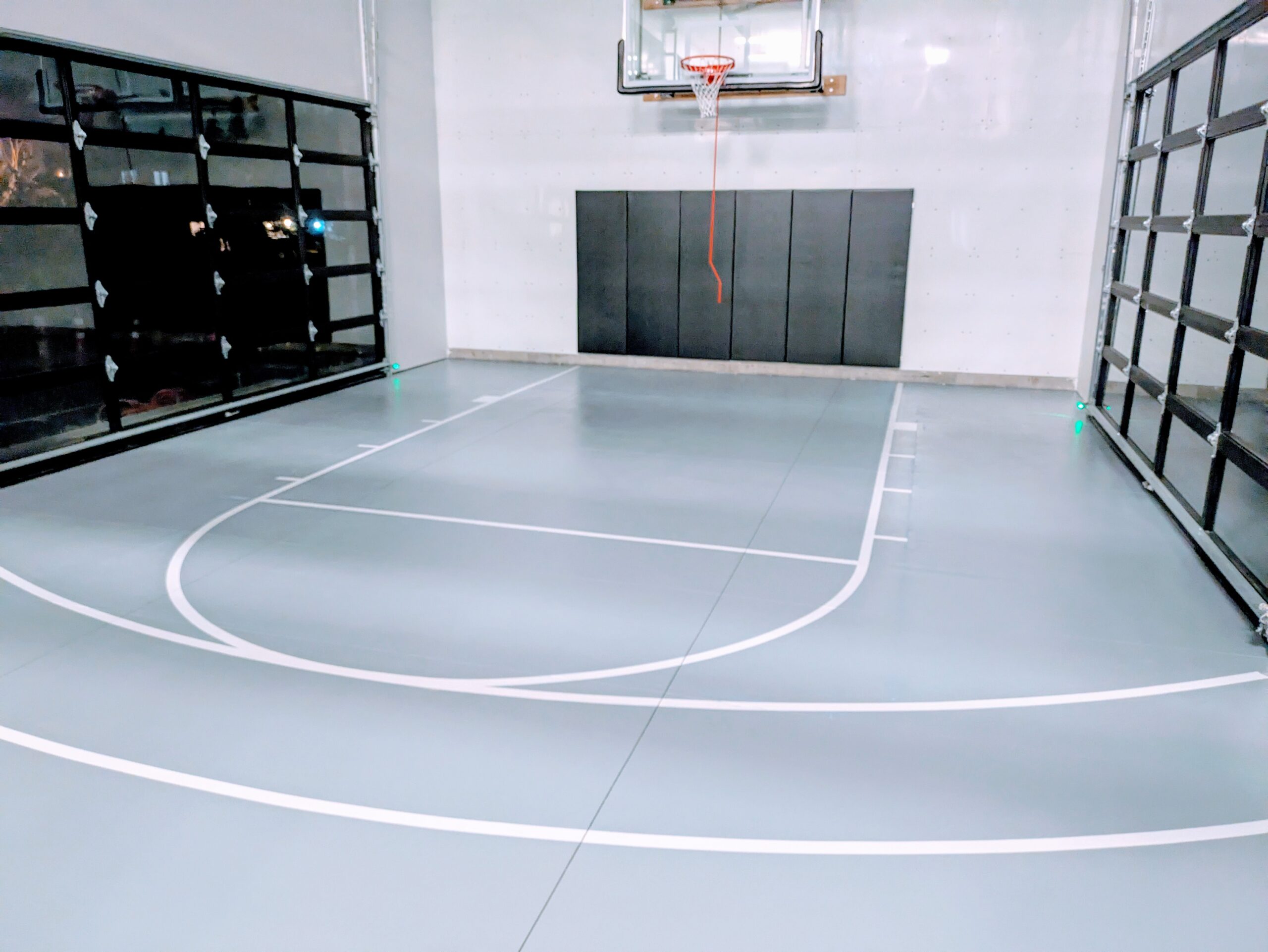
Most people assume court aging is mainly about:
Those things matter, obviously. But what I see in the real world is that courts are like little ecosystems. The environment around them decides how they behave over time.
That’s why two courts can start out identical and then drift apart year after year. It isn’t random. It’s just not always visible on day one.
Western Washington gives courts a pretty specific set of challenges:
If you want a simple way to think about it: in our region, the question is often
“How long does moisture sit?” not “Does it get wet?”
Shade is a big deal, but it’s not binary. The real question is: when does the court get sun?
A court that stays shaded until 2pm can hold moisture way longer than a court that gets morning sun, even if both get “some sun.”
Courts don’t need dramatic puddles to have drainage issues. Small low spots and slow-drain corners can turn into problem areas that get worse every season.
If you’re in the City of Seattle and want to see how seriously drainage is treated (even at the public level), Seattle’s drainage and wastewater info is here: Seattle Public Utilities – Drainage & Sewer.
This one is sneaky: court edges get buried over time. Landscaping changes. Mulch gets added. Soil creeps up. Suddenly the slab edge can’t “breathe” the same way it used to, and moisture hangs out right where coatings and cracks love to fail.
Two courts can sit on totally different soil conditions, even in the same neighborhood. One side yard might have saturated soil most of the year. Another might drain well.
This is where topics like vapor barriers and moisture transmission come into play.
I’m not trying to turn this into a chemistry lecture, but the concept is simple: moisture doesn’t only come from above. It can move up through concrete over time depending on how the slab was built and what’s under it.
In a lot of Eastside and Seattle neighborhoods, the court is basically living under trees. Needles and leaves create a mat that holds moisture, and you get that slippery “film” that shows up even when the court looks clean from a distance.
Two courts can see wildly different wear:
This matters because high-wear zones often start looking “older” first, even if the court overall is fine.
I know this one isn’t exciting, but it’s real: some courts get blown off, rinsed, and kept clear. Others get ignored until spring, then pressure-washed aggressively, then ignored again.
Consistency tends to beat intensity.
Bottom line: courts don’t just “wear out.” They respond to where they live.
This is why I’m not a fan of one-size-fits-all recommendations like: “Resurface every X years” or “This coating always lasts Y years.”
In the Greater Seattle area, your court might be a best-case site (sun + drainage + clean edges) or it might be living in a constant damp microclimate (shade + debris + saturated soil). Those are not the same project, even if the court dimensions are identical.
Want a realistic assessment of your court?
We resurface and repaint sport courts across Seattle and the Eastside, and we’re big on giving honest expectations. If your court is shaded, moss-prone, or has drainage quirks, it doesn’t mean it’s hopeless, it just means we plan accordingly.
If your court seems to be aging faster than you expected (or faster than a neighbor’s), here are a few quick checks that usually reveal the story:
If you’re in the Eastside and want to see examples of how local governments think about stormwater and runoff,
King County’s stormwater resources are a decent starting point: King County Stormwater.
You’ll see “environment-driven aging” on both, but it shows up differently. Concrete courts with coatings can be less forgiving when moisture hangs around, while asphalt courts tend to show wear through oxidation, cracking, and movement in different ways.
Not automatically. Moss is often a symptom of shade + moisture dwell time. Sometimes cleaning and small repairs are enough. Other times the surface texture and coating condition make resurfacing the smarter move.
Often you can improve it a lot, but the best outcome depends on the root cause (drainage, edges, below-slab moisture, etc.). The main thing is setting expectations and choosing an approach that matches the site.
We’re based on the Eastside and commonly work in Seattle, Bellevue, Kirkland, Redmond, Sammamish, Issaquah, Mercer Island, Renton, Woodinville and surrounding areas.
The boring stuff helps the most: keep debris off the surface, keep edges clear (don’t let soil/mulch bury the slab), and address drainage issues early.
Courts that dry faster tend to stay cleaner and last longer.
Had our parking lot paved and found ourselves needing lines. Their team was fantastic from start to finish. They took the time to give great advice and listened closely to our company’s needs.
They are very responsive and complete the work in a timely fashion. I have used them for 18 years and have never had any issue with their work. Very highly recommended.
They are very easy to work with and have a highest level of attention to detail. They are very knowledgeable and passionate about parking lot striping. Their quality of work is outstanding!
COPYRIGHT © 1999-2025 | ALL RIGHTS RESERVED STRIPER INDUSTRIES, INC. | Privacy Policy