
Dec 16, 2025 | 1-800-Striper Bellevue
What schools, churches, and gyms should know before repainting court lines.
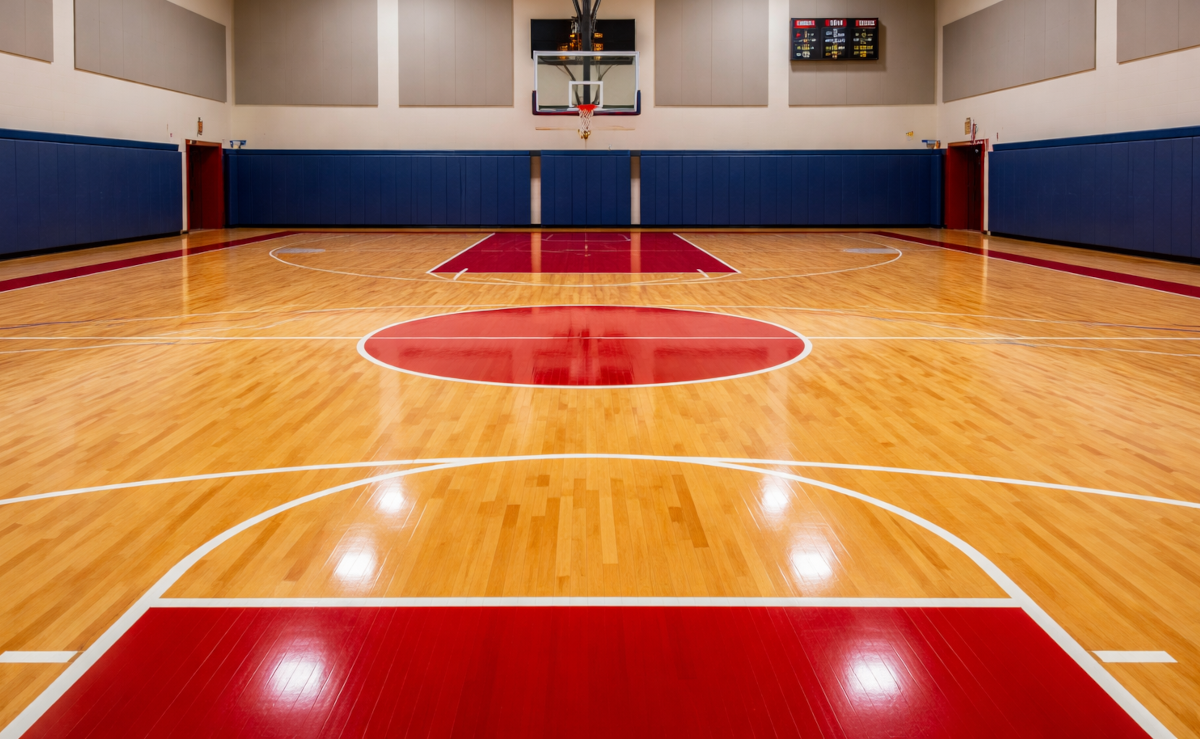
Hardwood court line painting is rare work in our area, and for a good reason: a hardwood gym floor is expensive, and it’s surprisingly easy to mess up if you treat it like a normal “paint job.”
I’m writing this for facilities in Seattle, Bellevue, Kirkland, Redmond, Sammamish, Issaquah, Mercer Island, and nearby areas that want their lines to look sharp without taking unnecessary risks with the floor.
A lot of the advice you’ll find online assumes newer facilities with consistent HVAC and stable indoor conditions. That’s not always what we’re working with in the Seattle area. Here, many gyms are in older buildings or are used intermittently (especially churches and community spaces), and our regional humidity swings matter more than people expect.
If you’ve ever wondered why some gym floors look great for years while others start ghosting, hazing, or peeling, it usually comes down to finish condition, prep, product compatibility, and curing conditions, not just “who painted it.”
Yes, often you can. But the real question is whether the existing finish layer is a good foundation for new lines. Hardwood isn’t like concrete where you can just grind and go. Most of the “risk” lives in the finish.
In Greater Seattle, humidity and HVAC consistency can make or break adhesion and curing. Hardwood moves with seasonal changes: heating season dries the air, summer humidity pushes it back the other direction. Most of the time that movement is normal, but timing line painting during unstable conditions can lead to long-term issues.
This is one reason many facilities schedule court work during summer windows, it’s not just the school calendar. It’s often the most stable time to get predictable results.
This often comes from compatibility issues, wrong paint type, poor sealing, or layers interacting over time. The fix is usually about correct materials and process, not “more coats.”
Usually moisture-related: trapped moisture during curing, inconsistent HVAC, or coating under high humidity. It’s preventable with proper scheduling and cure assumptions.
That’s typically a product/finish interaction problem. Hardwood court lines should use gym-floor-compatible line paint, not general-purpose coatings.
Most often from painting over compromised finish or skipping prep steps. If the finish is failing, repainting lines may just inherit the same failure.
In Western Washington, a lot of gyms are multi-use: basketball, volleyball, sometimes pickleball, sometimes futsal, plus events. The temptation is to add every sport and every layout. The result is usually a floor that looks like a map.
If you’re a facility manager, you’re probably weighing downtime, budget, and risk. Here’s my simple rule:
Many older gyms around Seattle have been refinished multiple times already. Refinishing is sometimes necessary, but doing it unnecessarily can shorten the floor’s long-term lifespan.
This is where DIY or “general painting” approaches go wrong. Hardwood court lines should use products intended for gym floors and compatible with the finish system being used.
If you’re in doubt, the safest approach is to confirm compatibility through manufacturer guidance before anything touches the floor.
For many Seattle-area facilities, late June through August is the cleanest window: stable conditions and built-in downtime. Holiday breaks can work too, but only if the building maintains consistent HVAC during the full cure period.
(For sports line standards, many schools also reference governing bodies like
WIAA for Washington athletics, depending on use and level.)
If you’re comparing bids, I’d want to see these items clearly addressed. If they’re missing, you’re taking on avoidable risk.
This is especially relevant for:
If you’re managing a gym floor in Western Washington, the goal is simple: get crisp, compliant lines without creating a future refinishing problem.
It depends on the number of courts/lines, complexity (multi-use layouts), and cure requirements. Many gyms plan on at least a few days from prep through completion and cure. If the gym is shaded, humid, or HVAC is inconsistent, you should plan extra buffer.
Cure time depends on the paint/finish system and building conditions. Some floors may be ready for light foot traffic sooner, but athletic use (especially pivoting and sliding) often needs more time. The safest approach is to plan closure windows based on your specific HVAC and humidity conditions, not a generic “overnight” assumption.
Often, yes, if the existing finish is in good shape and properly bonded. If the finish is failing or there are widespread adhesion issues, refinishing may be the more responsible option.
Line hierarchy and restraint. Pick the primary sport and make those lines dominant. Keep secondary lines limited and intentional, and confirm readability under your gym lighting. In smaller gyms, fewer layouts usually means a better user experience.
Not even close. Outdoor court coatings are a different world. Hardwood involves compatibility with existing finish systems, humidity-driven movement, and higher risk if the wrong materials are used.
Helpful basics: photos of the floor, known floor history (approx. last refinish date if available), the sports you want lined, and any constraints on downtime. If you’re a school/church/community center, your schedule window matters as much as the scope.
Hardwood court painting is worth doing when it’s done carefully, with the right products, the right prep, and realistic cure assumptions. In Greater Seattle, stable indoor conditions matter. If you’re trying to protect a valuable floor, caution beats shortcuts every time.
Need an estimate for your gym in Seattle, Bellevue, Kirkland, Redmond, Issaquah, Sammamish, or Tacoma? Give us a call at our number or request an estimate here!
Had our parking lot paved and found ourselves needing lines. Their team was fantastic from start to finish. They took the time to give great advice and listened closely to our company’s needs.
They are very responsive and complete the work in a timely fashion. I have used them for 18 years and have never had any issue with their work. Very highly recommended.
They are very easy to work with and have a highest level of attention to detail. They are very knowledgeable and passionate about parking lot striping. Their quality of work is outstanding!
COPYRIGHT © 1999-2025 | ALL RIGHTS RESERVED STRIPER INDUSTRIES, INC. | Privacy Policy